
Bristol Bay boats generally do a year’s worth of fishing in a few weeks, and spend the rest of the year hauled out. Crowded into yards in places like Naknek and Dillingham, the 32-foot boats head into the long dark Alaska winter and wait for their owners to return in June the following year.
Finn Furth, from Edmonds, Maine, finished his second season in the bay, helped put away the vessel he worked on, a thru-picker that his captain told him not to name. “He likes to keep his business private,” says Furth, but he notes that the rituals are pretty similar between most boats.
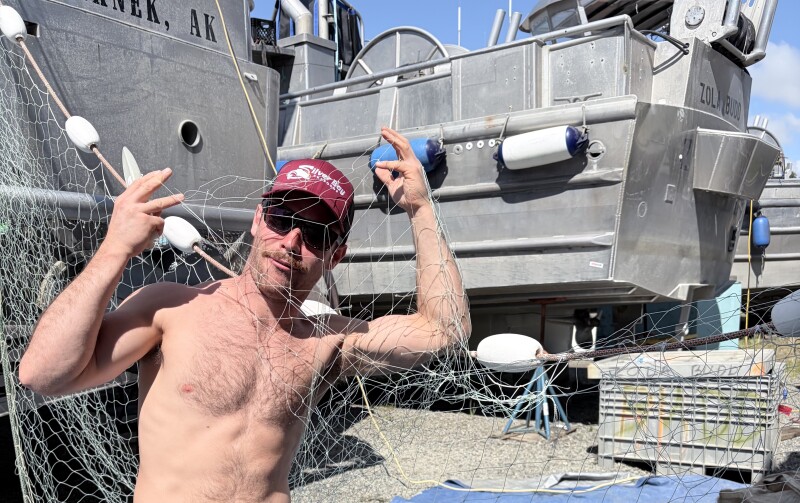
After a tractor hauled the boat up into a yard in Naknek and Furth and the rest of the crew blocked up the keel and put two jacks on each side to hold the boat in position, he went to work stripping nets. “I’m at the bottom of the totem pole. I just stripped nets the whole time,” says Furth. “But I saw what they did.”
Furth and a fellow crewmember, one on the leadline, one on the corks, cut away the old nylon web. “They burn the twine, and put the old web in drop boxes for Net Your Problem. They recycle it if it’s clean,” says Furth. “Then we coil the lines and put them into numbered bags, and I guess they send them someplace to have new web hung.”
Up on deck, the crew tapes all the hydraulic fittings and power heads with Denso tape to prevent corrosion. “They painted some stuff on the hydraulic lines to protect them. Then they taped trash bags over the bow and stern rollers and the anchor winch. Inside the wheelhouse, they taped aluminum foil over all the windows to protect the upholstery and stuff,” says Furth. “And the captain took the Starlink dish down.”
“One thing that surprised me is that they don’t drain the fuel tanks,” says Furth. “They leave them full and add a bunch of fuel stabilizer. It’s so they don’t get condensation and then water in the fuel. We did flush the RSW and drained the wet exhaust. We disconnected them from the engines, then pulled the cans, and I vacuumed them out and put them back.”
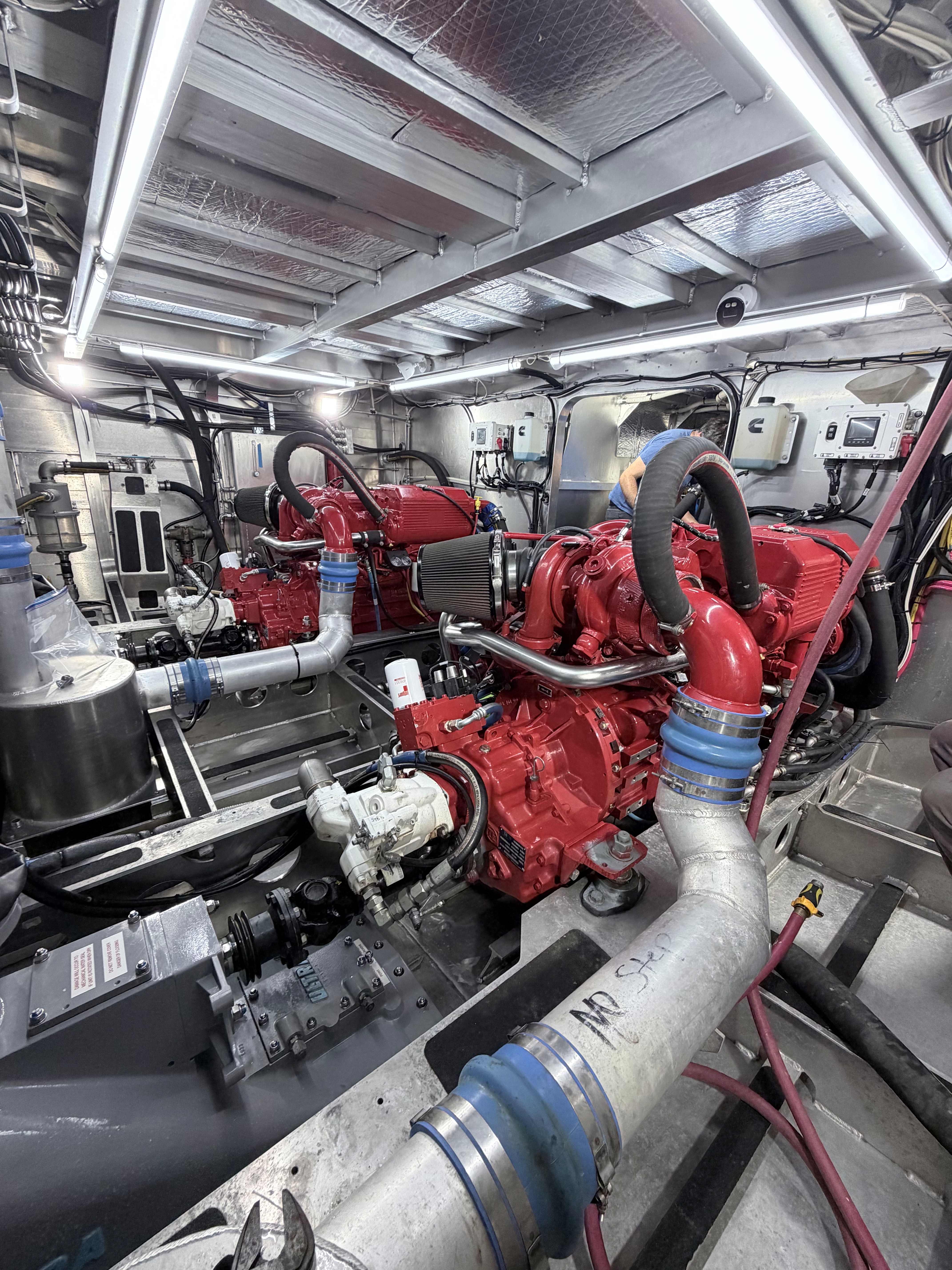
Down in the engine room, crew members changed the oil, cleaned everything, and sprayed the engine and metal fittings and surfaces with Corrosionx rust inhibitor. “On the way up from Egegik, all we did was clean,” says Furth. “We soaked and scrubbed the brailer bags, and cleaned the deck and fish holds.”
One of the last things Furth and the crew do is take the jets off. “That’s a bear,” he says. “We take off the buckets, and carry them into the storage containers they have here. I think it’s pretty simple: a couple of big bolts to separate it from the gear and then we pull that whole impeller housing and the jet itself out. Two or three of us can carry it over to the storage container, and that’s pretty much it.”
.jpg.small.400x400.jpg)