

State officials say the proposed changes would make Alaska’s water reservation process more efficient, consistent and cost-effective, while supporting development that aligns with the public interest.
A document issued by the Alaska Department of Natural Resources (DNR) on May 29 states that if approved that state and federal resource management agencies would then become holders of certificates of reservations of water that the agencies apply for. DNR would hold those certificates of reservations for all other applicants, the document said.
Comments on proposed changes are being accepted through June 30.
A number of those commenting on the proposed changes urged an extension of the comment period due to the time of the year of the public notice, when the commercial salmon fishery was getting underway and several other fisheries, including halibut/black cod, were in progress.
Among the commenters was Chrstopher Estes, a fisheries scientist with Alaska Department of Fish & Game (ADF&G) from 1977 to 2010 who established what is now known as that agency's Statewide Instream Flow Program/Water Shop.
Estes said that without a 90-day extension of the deadline to Sept. 30 he would not be able to provide meaningful deliberative feedback.
DNR's response to Estes and all the others was "at this time DNR is not proposing an extension of time for this public notice period." No further explanation was given. DNR also said the revised regulations "would reinforce that water is a public resource managed by the state for the benefit of the public."
Opponents of such changes, including former Alaska Senate President Rick Halford, contend that current water reservations are one of the few tools available to ensure rivers and streams when industry is seeking to extract water. "The proposed changes would reverse 50 years of past government policies," Halford said. "Every other governor in this state's history has worked with this program whether they liked it or not."
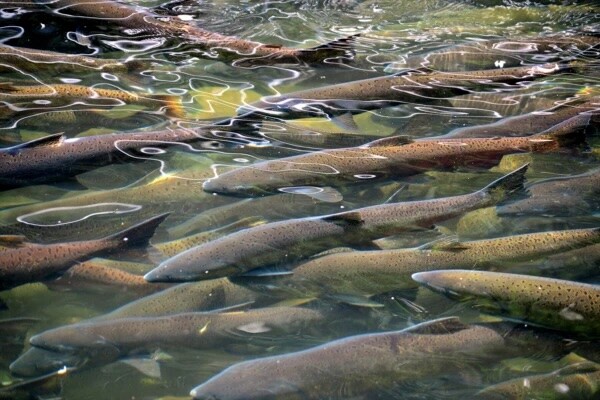
Former Commissioner of ADF&G Frank Rue noted that the proposal was brought forth at a time when competition for Alaska water resources is likely to increase. "With proposals for energy projects, mining developments and potential large data centers on the horizon, now is exactly the wrong time to make it harder to reserve water for fish," Rue sad. "Salmon don't hire lobbyists, but they depend on us getting these decisions right."
"Filing for an appropriation of water regardless of who files it and whether it's for a withdrawal, diversion, impoundment or reservation of water use does not guarantee the applicant will obtain the water requested," Estes said. "The system can only be abused if DNR doesn't objectively fulfill its water management responsibilities in the best public interest per the Alaska Constitution and companion statutory laws and regulations." Estes said he often hears false claims that extreme environmental interests use reservations of water to stop development. "The truth is that's not possible unless DNR determines that type of extreme decision outcome is in the best public interest."
"The law on the books for over 40 years clearly grants Alaskan citizens and organizations the statutory right to apply for and secure on behalf of the public enough water in rivers and lakes to support fish habitat and all the activities we like to pursue on the water,” said Tim Troll, an attorney, executive director of the Bristol Bay Heritage Land Trust and a longtime advocate for healthy fish habitat. In 2023 under the direction of then DNR Commissioner, now U.S. Sen. Dan Sullivan, "legislation was introduced to remove this right. That effort garnered widespread public opposition and the Legislature decided not to change the law. DNR is now doing an end run around both the public and our legislators. It wants to do by administrative decree what it could not do by legislation," Troll said. "The proposed changes are a devious, indirect approach that "would impose burdensome long-term monitoring costs on top of the already expensive five-year process for proving up a water reservation application," he said.
"A salmon stream without enough flow to move woody debris and scour pools where fish can rest and stay cool isn't a very good salmon stream," said Kendra Zamzow, an environmental chemist and Alaska representative for the Center for Science in Public Participation who has worked on stream health issues for over 20 years. A reservation of water or instream flow reservation is a tool that matters, she said. "For salmon, it can make the difference between a stream that continues to function and one that does not, between a stream with cool spots and one that gets so warm fish can’t breathe." Zamzow said in a June 26 commentary published by the Anchorage Daily News. "Before DNR is given more control over future water reservations, it should first show that it can process the applications already before it. It should clear the backlog and fund the program."
As the deadline approached, more comments on the proposed changes to the water regulations continued to come in.
Estes contends that to date the state has also failed to adequately inventory of the majority of water bodies in the state. "There is no current water use plan to meet existing and future water needs and uses of all water stakeholders as intended by the constitution versus the state's limited but also important focus and expenditures of funds on inventories of mineral, oil and gas, forest resources etc.," he said.