Seattle-based Zin Boats designs and builds complete electric propulsion systems for new vessels and repowers, a technology it developed on its own high-performance boats and now offers to commercial operators through Zin Power. Working out of Fishermen’s Terminal, the company has several workboat and tender projects underway, including a 37-foot aluminum vessel for the Confederated Tribes of the Colville Reservation. In this interview, Zin founder and CEO Piotr Zin discusses how duty cycle shapes system design, how electric and diesel costs compare over time, and what owners should ask before buying, ahead of its appearance at Pacific Marine Expo.
Please give a brief overview of Zin Boats and the services it provides.
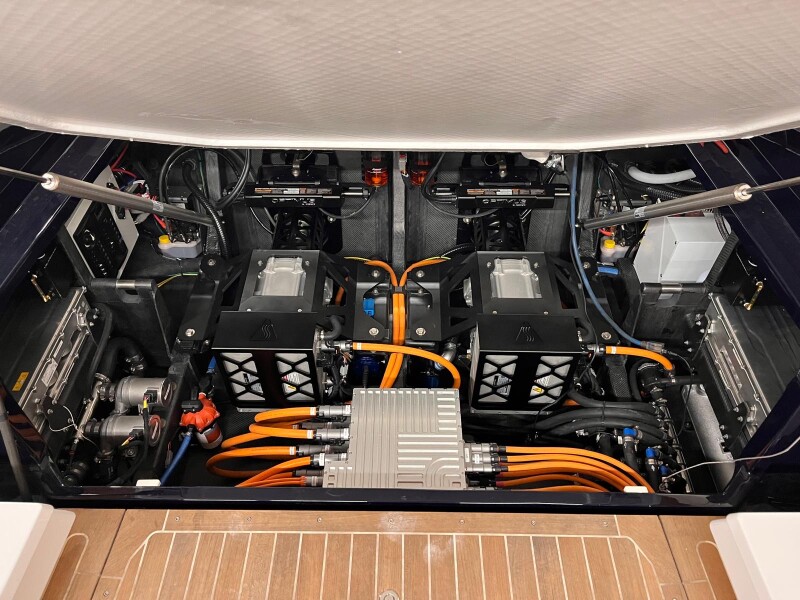
Zin Boats is a Seattle-based electric marine technology company specializing in high-performance electric propulsion. We design, engineer and build in-house complete, integrated, plug-and-play propulsion systems for both new vessels and repower projects.
Our technology was developed, tested, and proven through our own high-performance electric vessels, giving us firsthand, real-world experience with every part of the system—from motors and batteries to controls, cooling, software, and system integration. That experience has allowed us to develop a proven, scalable propulsion platform that can be adapted to a wide range of vessel types and applications.
Today, we're bringing that technology to commercial operators, boat builders, and fleet owners through Zin Power, the propulsion arm of our business.
What is the company's connection to the Pacific Northwest commercial fishing fleet, and how does it work with and support the industry?
Being based at Fishermen’s Terminal in Seattle puts us at the heart of the Pacific Northwest’s working waterfront and gives us a direct connection to the region’s commercial maritime industry. We are currently working on multiple commercial vessel projects, including 30–40-foot tenders designed for demanding working applications.
As a Washington-based company, we engineer and build our systems locally and work closely with Pacific Northwest suppliers, fabricators, and marine vendors. This allows us to support the commercial fishing industry in two ways: by helping operators transition to efficient, lower-emission propulsion, while also keeping engineering, manufacturing, and marine-industry work within the local economy. Our goal is to develop practical technology that supports the people and businesses already working on the water.
Please walk us through a specific problem you solved for a fishing customer recently.
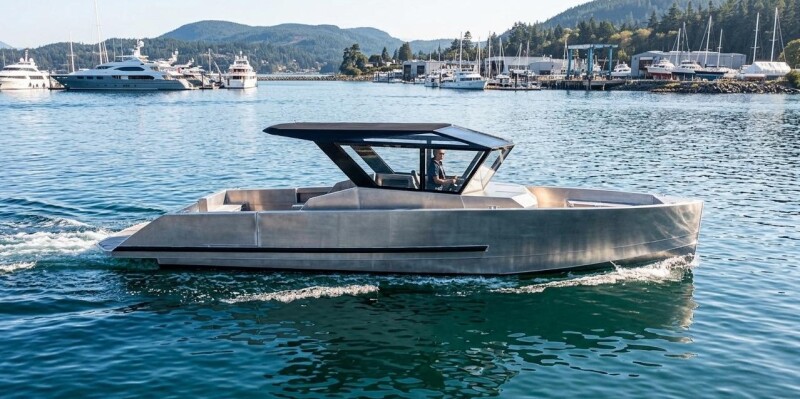
One of the projects we're working on is an all-electric workboat for the Confederated Tribes of the Colville Reservation here in Washington state. The challenge is designing a single 37-foot aluminum vessel that can perform several very different jobs—from salmon tendering during subsistence and ceremonial harvests to monitoring and research, while also transporting Tribal members, including elders, to culturally significant places accessible only by water.
Those different missions create very different requirements. The vessel needs accessible ingress and egress for elders and passengers, while also being able to handle working loads, equipment, and crates of ice and salmon. We incorporated fully-opening hull sides that allow heavy crates to be transferred directly from the dock onto the vessel, rather than having to be lifted over the side. At the same time, the overall layout has been designed around passenger accessibility and the day-to-day demands of a working fishing vessel.
Because we're building the vessel from the ground up, we're able to design the boat and electric propulsion system together around its complete operating profile. We're looking at passenger and cargo loads, range, power requirements, charging, battery capacity, controls, accessibility, and reliability as one integrated system rather than treating propulsion as a separate component.
That's where our experience designing, building, and proving complete electric vessels and propulsion systems becomes especially valuable. We're not simply putting an electric motor into a workboat—we're engineering the vessel around how the customer actually needs to use it.
What has changed for your customers in the past year or two, and how has that changed what you offer?
Upfront cost remains one of the biggest hurdles. Electric vessels can require a larger initial investment, but that doesn't tell the full story. Reduced fuel, maintenance, and operating expenses can create substantial savings over the life of the vessel. Our five-year cost analysis shows that, despite the higher upfront investment, the combined purchase and operating costs of an electric vessel can be approximately 50% lower than those of a comparable diesel vessel.
We're also working to overcome outdated perceptions around electric range and capability. The technology has advanced significantly, and electric propulsion can support a much broader range of commercial applications than many operators realize. The key is understanding a vessel's actual duty cycle—how far it travels, at what speeds, under what loads, and how many hours it operates each day—and engineering the system around those real-world requirements.
What is Zin Boats bringing to PME this year, and what are the company's goals for the expo?
This year we're showcasing our propulsion system and putting much more emphasis on the technology behind our boats.
Our goal is to meet commercial vessel owners, operators, shipyards, naval architects, and boat builders who are evaluating electric or hybrid propulsion. We want people to understand that Zin isn't just building electric boats—we've developed a scalable propulsion platform that can be integrated into other vessels and applications.
Why does PME matter to your business? Has anything come out of a past show — a deal, a partnership, a project — that stuck with you?
PME matters because it's a working-industry show. The people there understand vessels, operating requirements, maintenance, and the economics of running a fleet. Those are exactly the conversations we want to be having.
For a company developing commercial electric propulsion, there's tremendous value in being able to sit down directly with operators, builders, suppliers, and industry partners. Those conversations help us identify real applications for the technology and, just as importantly, understand where electrification does and doesn't make sense yet.
If a fisherman or vessel owner is shopping for what Zin Boats provides, what should they be asking that most people don't?
They should always ask for real-world performance numbers and, more importantly, ask how those numbers have been proven. Our propulsion technology has been developed, tested, and validated through our own boats, so the performance numbers we provide come from operating complete systems on the water—not simply component specifications, simulations, or idealized calculations. Many manufacturers can provide projected range, power, and efficiency figures, but vessel owners should be asking whether those numbers have actually been demonstrated in comparable real-world conditions.
That distinction is especially important with electric propulsion because performance depends on the entire system working together. The motor, inverter, batteries, cooling, controls, and software all affect range, efficiency, reliability, and overall performance. A collection of good components doesn't automatically make a good propulsion system.
Owners should understand what has actually been tested, under what conditions, and whether the system has a proven operating history. Ultimately, they shouldn't just be asking what a system is designed to do—they should be asking what it has already proven it can do.
What's next for Zin Boats after the show? Anything in development heading into 2027?
2027 is shaping up to be an important year for us. We're continuing to expand and working on commercial applications across a broader range of vessel types and power requirements.
We're also progressing with multiple all-electric workboat projects, which are scheduled for delivery in 2027. At the same time, we're continuing to develop partnerships with boat builders, commercial operators, tribes, ports, and other organizations looking at practical ways to transition their fleets toward electric propulsion.
Anything else you'd like to add, or that our readers should know?
We've spent years developing and proving our technology in high-performance boats because we believe electric propulsion should deliver the performance and reliability operators expect. Our approach is to start with the mission of the vessel and engineer the propulsion system around it—not ask the operator to change the mission to accommodate the technology.
We're also proud to be building this technology in the Pacific Northwest, working with local partners and contributing to a marine industry that has been part of this region for generations.