Pacific Marine Expo draws the Northwest fleet to Seattle each year, and ZF Marine Propulsion Systems has been part of that crowd for decades. With a Mukilteo, Wash., location that has served the region’s commercial marine market for more than 30 years, ZF supplies transmissions, thrusters, propellers, and vessel-control systems to fishing boats, workboats, and processing vessels. In this Q&A, David Santos, ZF Senior Manager and Commercial Fast Craft Manager for North America and Central America, explains how the company approaches keeping working boats productive. He covers how fishermen’s needs have shifted toward efficiency, precise control, and hybrid-ready options, what ZF is bringing to this year’s show, including its new TotalCommand control system, and the questions he thinks every vessel owner should ask before buying a transmission.
Please give a brief overview of your company and the services it provides?
ZF’s propulsion division is focused on propulsion and vessel-control technologies for both commercial and recreational/pleasure craft. Its portfolio covers complete driveline solutions as well as supporting electronics and aftermarket services.
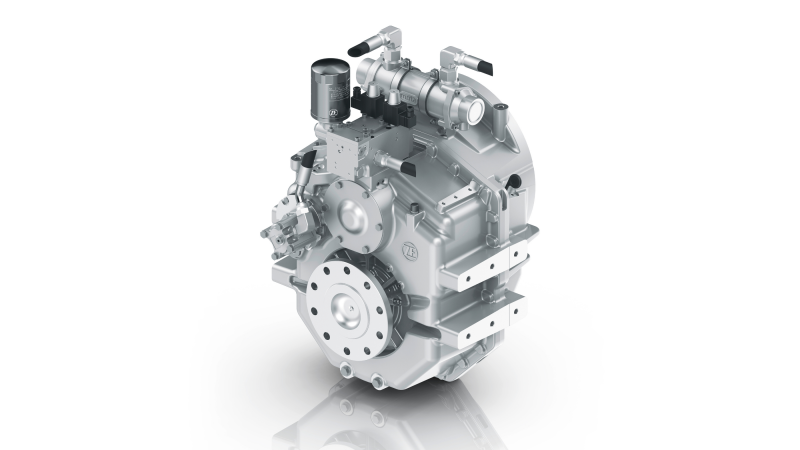
ZF’s marine transmissions and propulsion systems include transmissions/gearboxes and integrated propulsion solutions for diverse vessel types. Its POD propulsion systems integrate propulsion, steering, and electronics, with options designed to support hybrid applications. ZF also offers thrusters and vessel-control systems, including technologies that improve maneuvering and control of a vessel, as well as electric and hybrid propulsion technology aimed at the continued electrification of marine drivetrains.
On the aftermarket side, ZF provides spare parts and professional support for marine transmissions, propulsion systems, thrusters, and control systems. Repair and maintenance support is available through an extensive network of marine service centers and service partners, along with extended warranty options. Technical and service resources include lubricant guidance, product and warranty registration, and access to qualified technical service personnel at 1-833-ZF-WRENCH.
ZF Propulsion Systems, LLC has its regional competence center in Miramar, Fla., supporting North America, Central America, and the Caribbean.
What is the company's connection to the Pacific Northwest commercial fishing fleet, and how does it work with and support the industry?
ZF has had a direct connection to the Pacific Northwest commercial marine marketplace for over three decades. It maintains a ZF Mukilteo, Wash., location (near Seattle) that works with OEMs, shipbuilders, naval architects, fleet operators, distributors, and vessel owners, and supplies propulsion and control technology used in demanding commercial applications, including all types of fishing vessels.
ZF’s North American site lists its Mukilteo operation alongside its Miramar, Fla., operation. ZF describes its local account-management role as the primary customer contact, covering technical applications, parts, field service, product availability, and customer support. That role works with distributors, OEMs, shipbuilders, naval architects, fleet operators, and end users, which is important in the Northwest because propulsion selection and support can involve several parties around a vessel, rather than just the vessel owner and equipment manufacturer.
For fishing vessels, ZF’s commercial portfolio includes its W (workboat/cast iron) family of transmissions, specifically designed for severe-duty applications ranging from fishing boats to processing vessels. Options include PTOs, PTIs, “get-home” capability, and trolling modes for slow-speed vessel operation. The offering goes beyond transmissions, with azimuth and tunnel thrusters and vessel control systems also available. ZF’s propeller factory supplies many commercial fishing boats with a large range of NiBrAl and bronze propellers designed for specific vessels.
On the aftermarket side, ZF says its marine customers have worldwide spare-parts availability through its service network, while its Service Readiness Program uses selected and qualified service partners to make parts and service expertise available 24/7 worldwide. This aligns with ZF’s stated commercial vessel focus on minimizing downtime and life-cycle costs.
ZF also exhibits at Pacific Marine Expo in Seattle every year to support West Coast operators through propulsion, electronic controls, service readiness, and technical expertise developed through collaboration with commercial fleets, shipyards, and industry partners. The Expo serves commercial mariners from Alaska to California and Hawaii, which illustrates why the Seattle-area ZF location is an important industry touchpoint.
Please walk us through a specific problem you solved for a fishing customer recently?
A good example of the kinds of problems we solve involves keeping a commercial fishing vessel productive when its propulsion system needs attention. In this industry, downtime is particularly important, so our focus isn’t simply supplying a transmission. It’s supporting the propulsion system throughout its operating life.
We work closely with the vessel owner, shipyard, dealer and service network to understand the application and get the right technical and aftermarket support behind it. That can involve the transmission, controls and other components of the propulsion system.
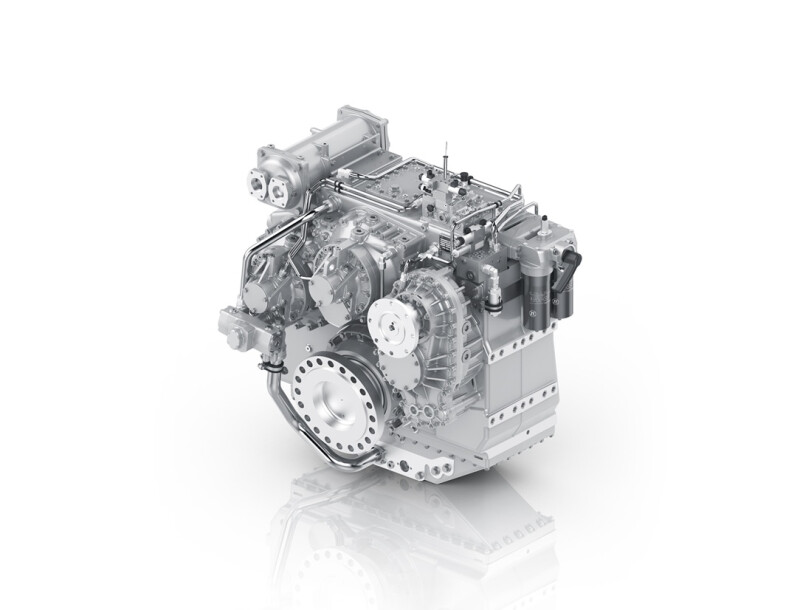
We’ve also continued developing that offering. The W340 transmission, for example, was developed specifically for commercial fishing boats and other workboats. It combines a cast-iron transmission with ZF’s Supershift2 technology and can be also paired with the TotalCommand electronic control system. We back those products with our dealer support network, mobile service app, and 24/7 support hotline.
So, for us, solving the customer’s problem means more than fixing or replacing a component. The objective is to help get that vessel operating reliably again and give the customer the local and technical support they need to keep fishing.
What has changed for your customers in the past year or two, and how has that changed what you offer?
What we’ve seen over the last year or two is that customers are asking more from their propulsion systems. Reliability is still absolutely the fundamental need, particularly in commercial fishing, but operators are also putting more emphasis on efficiency, precise vessel control, serviceability, and reducing operating costs.
At the same time, vessels are becoming more complex. There’s growing interest in hybridization and electrification, and regulatory requirements are increasing. ZF has identified larger vessels, tighter operating schedules, regulation, efficiency, and availability as major challenges facing marine operators and shipbuilders.
So, our offering has evolved from individual components toward a more integrated propulsion approach. We’re combining the transmission with increasingly sophisticated electronic controls, propulsion solutions and service support.
We’re also preparing customers for where propulsion is going next. ZF continues to expand its hybrid-capable portfolio. In 2026, for example, we introduced the ZF 9200 A/V PTI to extend our hybrid transmission offering into higher power classes, while our broader hybrid portfolio integrates transmissions, electric motors, inverters and control components.
Ultimately, customers still want the same fundamental thing: a vessel that works when they need it to work. What has changed is how many factors now go into delivering that. Our job is to give customers reliable mechanical hardware, better control and integration, efficient propulsion options, and the service support behind all of it.
What is ZF bringing to PME this year, and what are the company's goals for the expo?
We are bringing to PME and the marine market our ZF team members who all have decades of service to ZF. Also, our new TotalCommand controls system that adds sophisticated electronic control and CAN-bus communication, including transmission and engine coordination.
Our goal for ZF at PME is to be close to the working fleet. We're there to listen to operators, fishermen, builders, and our partners, understand what's changing in their businesses, and demonstrate how ZF can support them with reliable propulsion, advanced vessel controls, and strong lifecycle support. At the same time, we want to start conversations about what's next, whether that's greater efficiency, smarter digital systems, or hybrid propulsion. The goal is to make sure customers see ZF not simply as a component supplier, but as a long-term propulsion partner.”
Why does PME matter to your business? Has anything come out of a past show — a deal, a partnership, a project — that stuck with you?
It’s not just an opportunity to display equipment. It gives us direct feedback from the people using it in demanding commercial applications, and those relationships help us understand where customers need better reliability, controls, service availability, and long-term support.
What stands out to me isn't necessarily one deal. It's the conversations that continue after the show. Last year we had fishermen coming to us with real questions about their gearboxes, controls, troubleshooting, maintenance, and replacement. That kind of interaction is valuable because these aren't hypothetical issues. They're problems operators are dealing with on working boats.
And that's where our presence in the region and our dealer network become important. The show can start the conversation, but ultimately, we want to make sure that customer knows where to go and who to call when they need support.
If a fisherman or vessel owner is shopping for what your company provides, what should they be asking that most people don't?
I wish more owners would ask if equipment is rated for the way they actually operate the boat.
Horsepower is only part of the equation. ZF distinguishes from different duty ratings, and its products offer different ratios and configurations depending on the application. For a commercial fishing vessel that may spend long hours working under load, getting that application right is extremely important.” ZF's technical documentation distinguishes pleasure, light, medium, and continuous-duty applications, while its commercial transmission range offers multiple ratios and configurations
The second question I'd ask is, 'Who supports me when I'm away from my home port?’ You aren't only buying the equipment. You're buying the support behind it. Ask where the service people are, whether parts are available, and what support exists when something happens during the season. ZF describes lifecycle support that includes spare parts, workshop solutions and service partners, while its aftermarket network supports repair and maintenance.
Another overlooked question is, 'What functionality will make this boat easier to operate?’ Depending on the application, that could mean considering gear ratio, trolling capability, controls, PTO/PTI requirements, or emergency capability. ZF’s commercial transmission portfolio includes options such as PTO/PTI integration, AutoTroll G2 and ‘get-home’ capability, while TotalCommand adds advanced electronic control and diagnostic and maintenance alerts.”
And finally, I would ask, 'Am I buying something that works for today’s boat, or something that gives me flexibility for tomorrow?’ For example, some of ZF’s transmission portfolios include PTI integration that can make a transmission hybrid-ready. That doesn’t mean every fishing vessel needs hybrid propulsion today, but future requirements are worth discussing when you’re making a long-term capital investment.
What’s next for the company after the show? Anything in development heading into 2027?
After the Thanksgiving holiday, we will be right back at, attending the 2026 International Workboat Show in New Orleans. Then, after the Christmas and New Year holidays, the Passenger Vessel Association Annual Convention at MariTrends Jan 21-24, 2027, in Tampa, Fla.
Heading toward 2027, I think the story is about combining the mechanical reliability ZF is known for with smarter controls, greater visibility into equipment condition, and more flexible propulsion architectures. At the end of the day, all that technology must translate into something meaningful for the operator: reliability, availability, and better control of the vessel.”
Anything else you’d like to add, or that our readers should know?
ZF has a lot of technology to talk about, but at the end of the day this business is about relationships and keeping boats working. We want fishermen to know that when they choose ZF, our goal is to be a partner throughout the life of that vessel, not simply a supplier when the boat is built.