

Four conservation groups have petitioned the Oregon Fish and Wildlife Commission to strengthen risk reduction measures to prevent whale entanglement during the state's Dungeness crab fishery.
The petition filed on Dec. 11 in Salem, Oregon, also calls for creating a pathway for authorization of safer pop-up fishing gear and establishing a process for timely public reporting of marine mammal or sea turtle entanglements in Oregon Commercial Dungeness crab fishing gear.
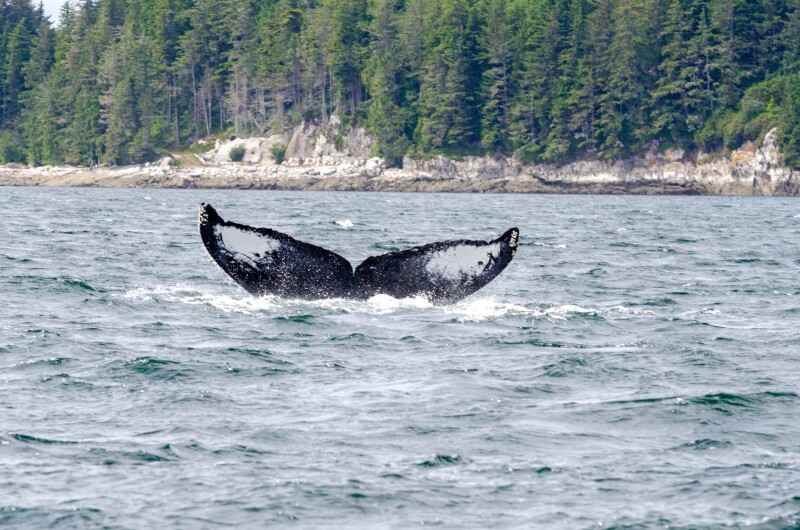
Four humpback whales were confirmed to have been entangled in 2025 in Oregon commercial Dungeness crab fishing gear, including one that beached and had to be euthanized.
Petition signers included the Center for Biological Diversity, Oceana, Natural Resources Defense Council, and the American Cetacean Society.
"If state officials don't move to adopt whale-safe fishing gear, like pop-up buoys for Dungeness crab pots, endangered whales will continue to suffer and die preventable deaths," said Ben Grundy, an oceans campaigner at the Center for Biological Diversity.
The petitioners contend that the true number of entanglements in Oregon commercial Dungeness crab gear this year is likely much higher than just the four humpback whales confirmed entangled. Preliminary results released by the federal government in September show that accurate estimates may be five times as high, they said.
Entanglements of humpback whales or sea turtles in Oregon's commercial Dungeness crab fishery violate the Endangered Species Act.
State law requires the commission to respond in writing within 90 days of receipt of the petition, by either denying it or beginning rulemaking proceedings. Officials with OFWC acknowledged receipt of the petition but said they had no comment at this time.
Oceana spokesman Ben Enticknap said that California has been testing the pop-up Dungeness gear for three years now, with much success, and plans to do more testing in 2026. Last year, 12 California fishermen participated in experimental trials, setting 25,700 traps with pop-up gear, and harvested 218,000 pounds of Dungeness crab worth $1.4 million, he said.
Oregon Sea Grant hosted a workshop with California fishermen to talk about their success with the experimental program, but the state of Oregon has not yet tested the pop-up gear at all, he said. Oregon put out a draft on the project in 2021, but it is still a draft.
There are multiple components to such a change, with an initial cost of about $20,000 to cover the deck box that sends the acoustical signal down to the pop-up gear, plus the cost of the release mechanisms that go on the pots. "Some fishermen make enough money so they can make that cost back in three days of fishing," he said. Current pots can be used with the pop-up gear, but some California fishermen have chosen to buy new pots," he said.
" When the whales start showing up on the Oregon coast in April, we are hoping to have a better set of conservation measures, but we understand it will take some time to put the pop-up gear measures in place," Enticknap said. "We are proposing that in April 2028, fishermen transition between April and August to pop-up gear when there is a peak of whales on the Oregon coast." The whale pods are mainly humpbacks, but by June, blue whales, grey whales, and fin whales are also on the Oregon coast.
The humpbacks start to arrive at the end of March and April, and they stay through the summer, and by November, they are normally gone, off to Mexico and Costa Rico. Mexico and Central American population.
There are also bigger issues afoot, including the theory that there are increasing shifts in the ocean's habitat due to climate change, he said.