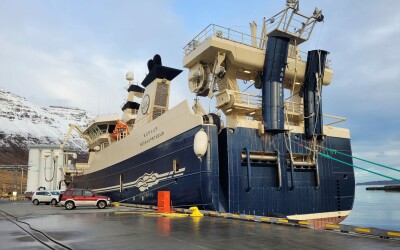


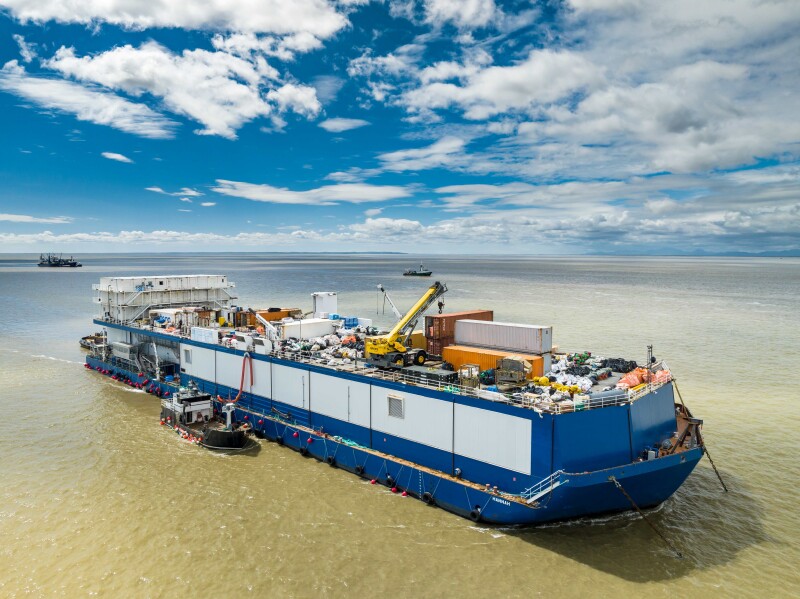
Flash freezing of millions of pounds of whole salmon fresh from the waters of Bristol Bay is already in the works for 2026 for Northline Seafoods, aboard its 100-foot freezer barge, the Hannah.
While the goal is still to get wild Alaska salmon on the dinner table for as many people as possible, the whole process of doing so is now strictly state-of-the-art 21st-century technology.
Northline Seafoods, owned by second-generation seafood processor Ben Blakey, flash-freezes each salmon whole to minus 30 degrees Fahrenheit within hours of harvest, then transports and stores that fish all the way back to Washington state. At full capacity, the Hannah can hold over 10 million pounds of frozen salmon.
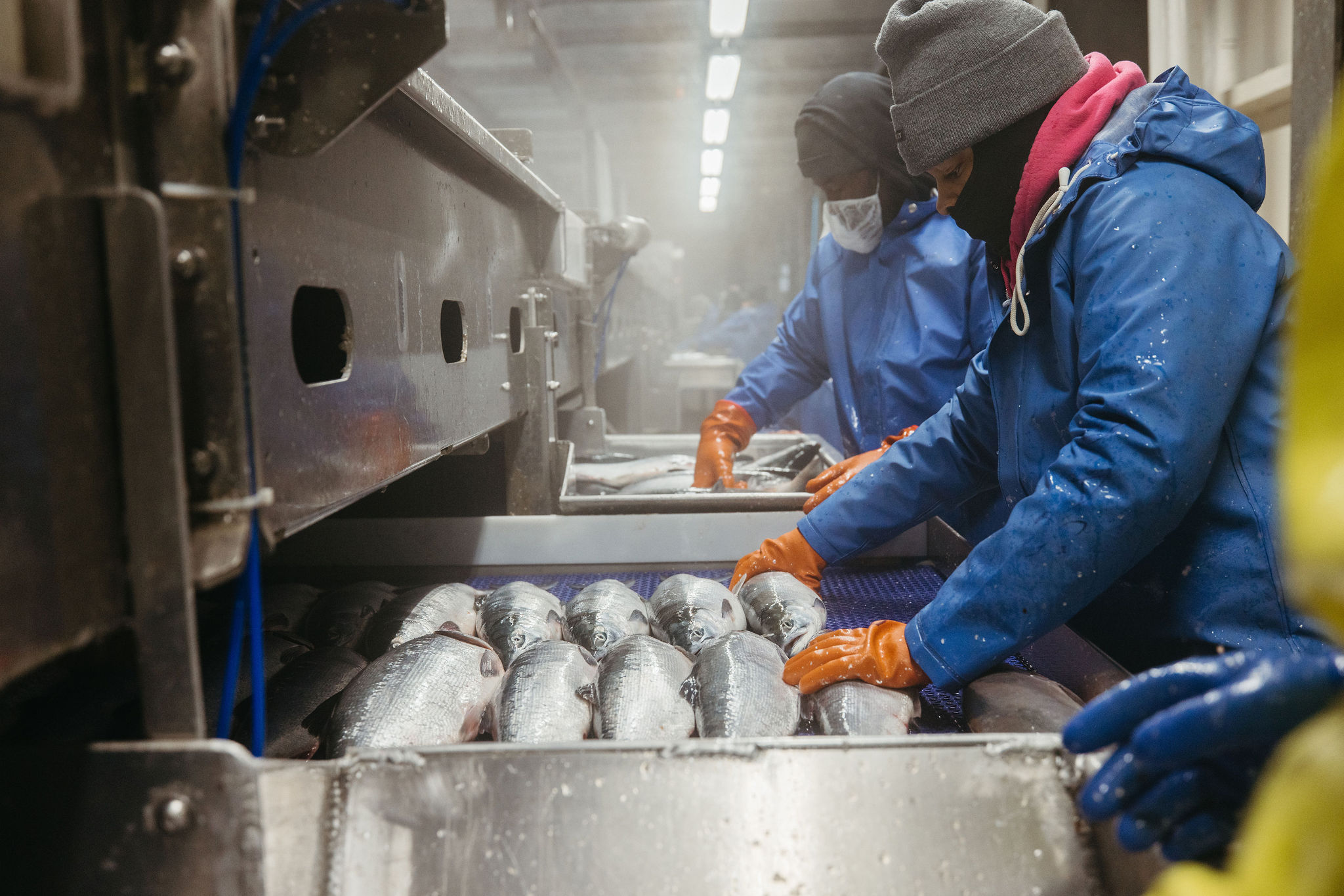
During peak summer operations in Bristol Bay, the world's largest wild sockeye salmon fishery, the Hannah carries up to about 100 employees, including processing crews, engineers, maintenance teams, quality assurance, and support staff. Anchored at Clark's Point in the Nushagak District, the barge is accessible to boats fishing across Bristol Bay while sheltered in a safe anchorage.
The Miss Molly, the Hannah's sister vessel and support platform, serves as a buyer and storage vessel, with a much smaller team, typically five to seven people. Miss Molly is the company's main ice and fleet-support ship, producing up to 120 tons of slurry ice every day and can hold roughly 400,000 pounds of fish. Miss Molly works the fishing grounds, in 2025 operating out of the Naknek-Kvichak District, often at the "Y" where she can support boats from multiple river systems.
"The Hannah relies on far more advanced freezing technology than a traditional cannery," said Blakey, who spent his summers as a youth at his parents' salmon processing facility in Dillingham. "We use ultra-low-temperature, cascade CO2 systems that freeze whole salmon in under two hours. Freezing fish in whole, round form means we can operate with a smaller seasonal head count than most companies in Bristol Bay."
Still, the technology doesn't eliminate processing jobs. It shifts the value-added work of heading, gutting, and filleting out of the short, high-intensity summer window and into stable, year-round processing roles.
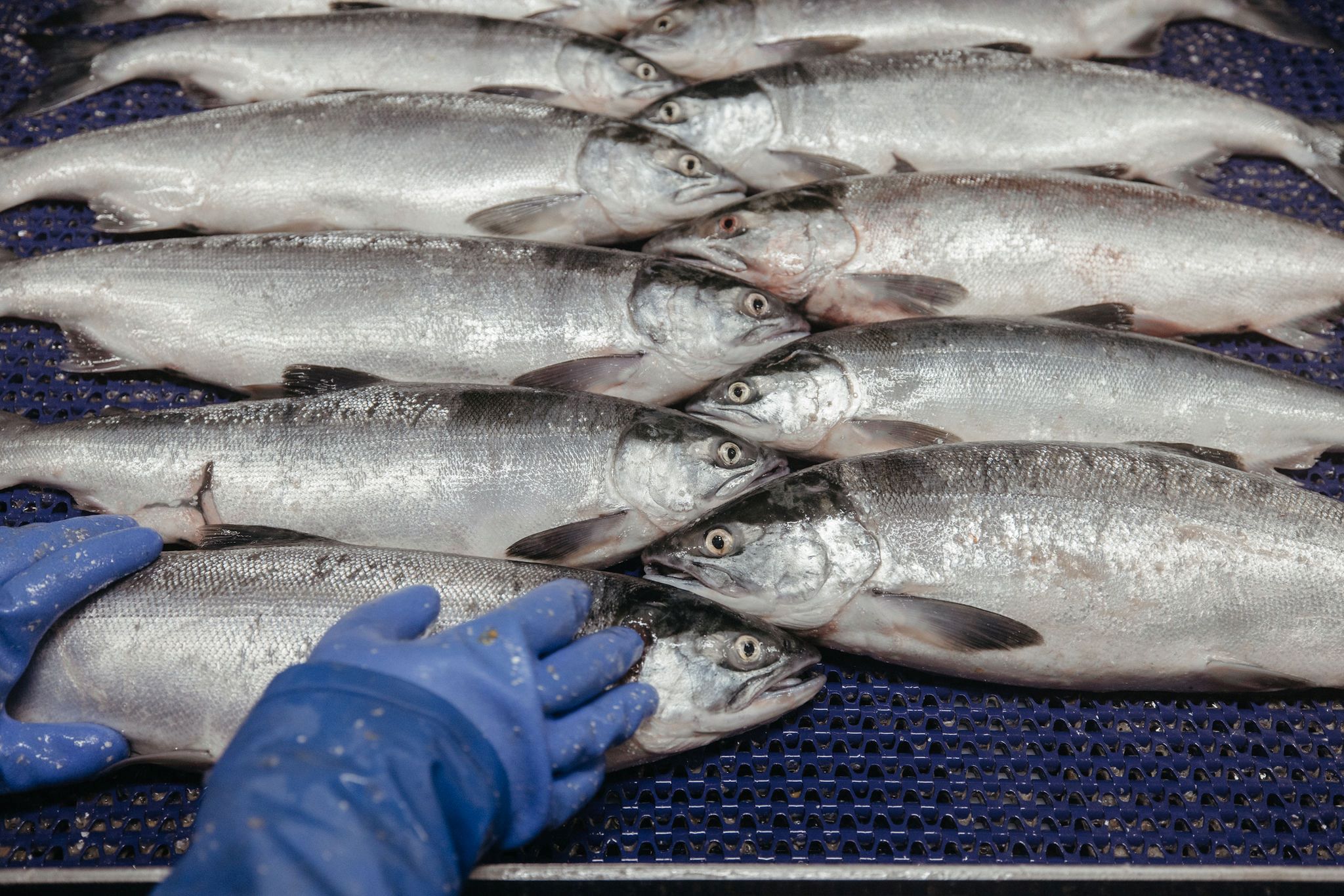
Hannah's systems include highly automated freezing and conveying equipment, integrated data collection on temperature, dwell time, and throughput, and remote monitoring and control for critical functions. All of this lets Northline operate more efficiently, but it doesn't replace the need for skilled people. "The human element remains essential," Blakey said. "You still need trained operators running these systems, inspecting fish, and making judgment calls. "That's true for us, just as it is for every serious salmon processor."
Northline also utilizes every part of the salmon they buy. Salmon roe is sold block-frozen to markets in Europe and Asia. The fillet trim and frames become salmon burgers, salmon jerky, and other value-added products, while heads, viscera, and remaining parts are used in pet food and related applications.
Blakey said he was first introduced to the idea of freezing salmon in the whole round form by Pat Glaab, now the CEO and co-founder of Circle Seafoods. Since the early days of Northline, freezing whole/round salmon on the water has gone through many iterations. The Hannah was the first version to integrate whole fish freezing with large-scale cold storage on the same vessel, a concept developed by the company's current chief technology officer, Drew Cohen.
Northline's customer base includes supermarket and warehouse chains, seafood specialty shops, restaurant chains, and more, all of whom want consistent, high-quality Bristol Bay sockeye in fillet and portion form. Northline also works with specialty and e-commerce partners, premium seafood retailers, and direct-to-customer brands who demand quality, traceability, and a steady, year-round supply of Bristol Bay sockeyes.
Northline employs roughly 50-60 people in Bellingham all winter in its offices, on board the Hannah, and in their land-based processing facility. In the summer, the teams swell to over 100 people. "Many of our Alaskan seasonal processors now work with us full time, spending winters in Bellingham and summers in Alaska," Blaskey said.
The Hannah was designed to deal with rising costs of fuel, freight, labor, insurance, and more by buying, freezing, transporting, and storing fish on a single platform. In Bellingham, the Hannah plugs into shore power, operating primarily on electricity rather than diesel while in port, which is both more efficient and more sustainable, he said.
Like others in the industry, Northline is concerned about the impacts of climate change.
"We're not scientists, but we stand firmly behind the state of Alaska and the world-class team of biologists who manage the state's fisheries," he said.
"The science is unequivocal: climate change is already reshaping the North Pacific and the Bering Sea, from rising ocean temperatures to changes in prey availability, and those shifts inevitably influence sockeye survival, migration, and distribution. As a compan,y we support the management practices and habitat protections that keep Bristol Bay's spawning systems intact, and we oppose large-scale developments that put salmon habitat at risk."
Northline has built its business for resilience, he said. "Our facility is mobile by design, and our entire model is centered on maximizing the value of every pound of fish we buy. We're structured to remain financially viable even without the massive volumes that our more consolidated competitors rely on."
Blakey's wife, Molly, serves as the company's community engagement manager, a role he said barely captures the breadth of roles she has taken on over the last 10 years when they founded the company. "Molly has been integral in building and maintaining relationships essential to success," he said. "She keeps us connected to our fishermen, to our neighbors in Bristol Bay, to our community in Bellingham and to one another as a team."
Like many others who have spent most or all of their working lives in commercial fisheries, Blakey said he has concerns about bringing the next generation along to fill jobs in the industry. The Blakeys don't know if their three sons will choose to work in Alaska's fisheries, but learning how to work, especially learning how to work in fisheries, builds skills and instincts that translate into any profession, he said.
"This is an industry where trust, reputation, and a handshake mean something, he said. "As the world accelerates toward artificial intelligence, algorithms, and the technologies built on top of them, these human elements will only grow more important.
"It's in everyone's interest that young people see both fishing and processing as viable, respected careers. If we want a strong domestic processing sector, we need the next generation of harvesters to thrive. As a processor, it's our responsibility to provide a stable market, fair prices, and conditions that make crew members want to return season after season.
"A healthy fleet and a healthy processing sector rise together. They depend on each other," he said.