The Science Center for Marine Fisheries (SCEMFIS) has announced that researchers from NASA’s Earth Science Division have joined the center’s Industry Advisory Board, a move aimed at expanding the use of satellite-based ocean data in fisheries science.
The partnership is expected to strengthen collaboration between NASA scientists and the fishing industry while helping SCEMFIS integrate earth observation data into future research projects focused on commercially important species and ocean conditions.
For decades, NASA satellites have collected data on the biological and physical characteristics of the world’s oceans– information that has become increasingly useful for fisheries research. Measurements such as sea surface temperatures can help scientists understand changes in the distribution and health of species like menhaden and Illex squid.
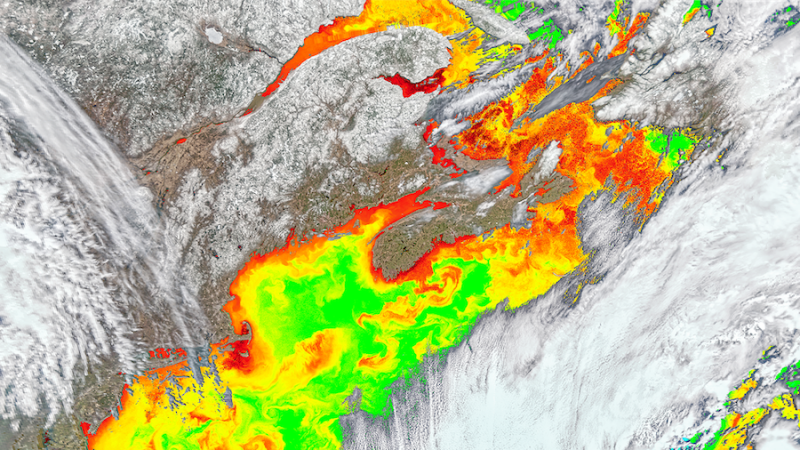
Another key measurement known as “ocean color” provides insight into the abundance and location of phytoplankton, microscopic organisms that form the foundation of the marine food web. Because different particles and organisms reflect light differently, satellite sensors can detect variations in ocean color that signal where phytoplankton are thriving.
Those organisms not only support fish populations but also play a major role in global oxygen production. According to SCEMFIS, decades of satellite observations tracking phytoplankton and other ocean conditions have helped scientists better understand marine ecosystem health and the environmental factors that influence fisheries.
By joining the CEMFIS advisory board, NASA researchers will help apply these satellite observations to new fisheries-focused studies and explore additional commercial applications for existing earth science data.