




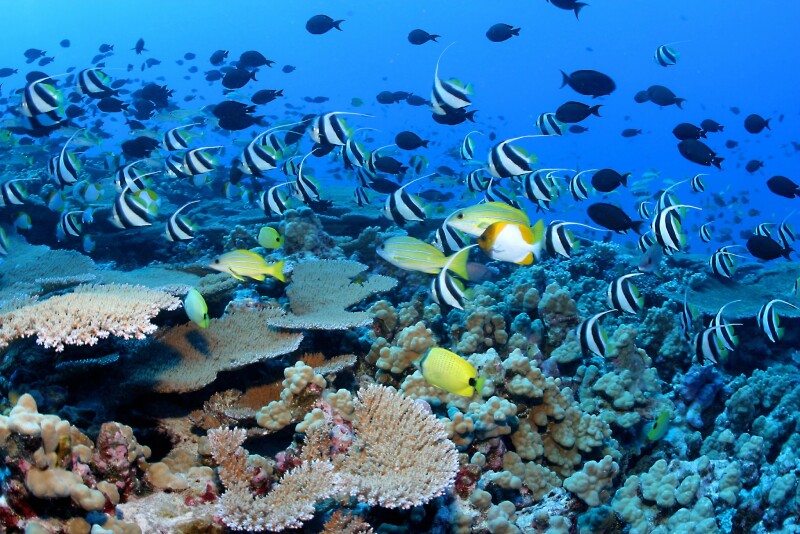
A renewed push to reopen the U.S. Pacific Marine National Monuments to commercial fishing is setting up another round of tension among fishing access, conservation priorities, and cultural protections in some of the most remote waters in the world.
Earlier this month, the Western Pacific Regional Fishery Management Council (Wespac) recommended allowing commercial fishing across all four Pacific monuments– Papahānaumokuākea, Pacific Islands Heritage, Marianas Trench, and Rose Atoll– areas that together span roughly 3.1 million square kilometers of protected ocean, according to Mongabay.
Wespac framed the move as a return to balance. The recommendation, the council said, is “about restoring sustainable fishing.” But the proposal has drawn criticism from conservation groups and Native Hawaiian advocates, who argue the monuments were established to safeguard ecosystems and cultural connections that extend far beyond commercial interests.
“I am sad that with all these restrictions in our areas, we are slowly losing some of our culture,” Wespac council member Pedro Itibus said in a press release.
Others see the issue very differently. “The practice of commercial fishing and the unavoidable and significant waste of marine resources caused by bycatch is an affront to Native Hawaiian practices and beliefs,” Solomon Pili Kaho’ohalahala, a native Hawaiian with Kāpaʻa, a local NGO, told Wespac in a statement.
At the center of the debate is how these water– long closed to commercial fishing– should be used, and who gets to decide.
The council’s recommendation follows a 2025 proclamation by President Donald Trump aimed at “unleashing American fishing in the Pacific,” which opened parts of the Pacific Islands Heritage Marine National Monument to commercial fishing, according to Mongabay. Shortly after, NOAA Fisheries notified permitted vessels that the area was open, triggering legal challenges
Earthjustice attorney David Henkin told Mongabay the process is far from settled. “There’s a whole process that you go through starting with Wespac suggesting changes to regulations,” Henkin said, which the council has now done. NMFS must review those suggestions and open them to public comment, he added.
For now, the future of commercial fishing in the Pacific monuments remains uncertain. Wespac’s recommendation marks the beginning of a formal regulatory process, not the end of it. NOAA Fisheries must still review the proposal, open it for public comment, and determine whether changes are consistent with federal law– all while ongoing legal challenges question whether protections can be rolled back under the Antiquities Act.
.jpg.small.400x400.jpg)
