Weeks after an oil spill released hundreds of barrels of crude into Gulf waters and onto nearby barrier islands, commercial fishermen in Terrebonne Parish, Louisiana, say they are still waiting for answers on cleanup progress, seafood safety, and the future of their operations.
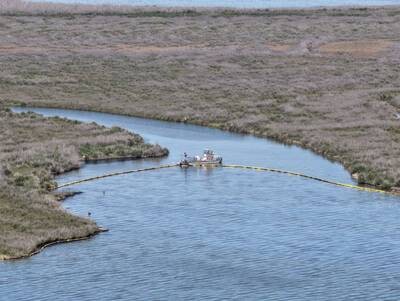
The spill occurred on Feb. 26, when approximately 750 barrels of crude oil were released by the Louisiana Offshore Oil Port (LOOP) into the Gulf and surrounding barrier islands. According to LOOP, 655 barrels have since been recovered, but fishermen and local officials say the oil has spread beyond initial containment areas and may be affecting fishing grounds and inventory.
The timing has compounded the pressure. The spill falls during spawning season, and oyster fisherman Jeffrey Gallet says activity has largely come to a halt.
"Everyone is on hold right now," Gallet told 4WWL news.
While Gallet noted some improvement in open waters, he said marsh areas remain a serious concern. "I think they've got it pretty controlled in the open waters, but our marshes haven't even been touched yet," he said. He also criticized the lack of direct outreach to fishermen: "They just tell you to call the 800-number."
On Wednesday officials announced a Unified Command, consisting of the Coast Guard, the Louisiana Oil Spill Coordinators Office (LOSCO), and the Louisiana Offshore Oil Port (LOOP), had launched a public information website to “provide timely, accurate updates regarding the ongoing response to the crude oil discharge that occurred Feb. 26.”
The website will serve as a hub for the public, news media, and stakeholders information on the response efforts, environmental impacts, safety information, and operational progress.
“Sampling of fish and shellfish is actively underway,” according to the command. “While laboratory analysis may take up to two weeks to complete, results will be published to the website as they become available. Users can also access detailed claims information and regular updates on the status of response operations.”
Response crews have worked to contain and recover oil, protect sensitive environmental areas, and minimize impacts on local industries and wildlife.
LOOP set up a hotline for the affected communities to file a claim. To file a claim, call the hotline (1-855-566-7558) between 8 a.m. and 7 p.m. An adjuster will be assigned and make contact within 48 hours.
Crab dock owner Lisa Tillman, whose business ships millions of pounds of crab nationwide, said the disruption is being felt throughout the supply chain. "It's definitely affecting us all the way from the dock to the fishermen," she said. Tillman also questioned inconsistencies in fishery closures. "Why was oyster closed and not crabs? The crabs are all over the oyster beds," she said. She added that some fishermen retrieving traps from affected waters have been told to discard their catch.
District 8 Councilwoman Kimberly Chauvin, who also works in the seafood industry, said commercial fishermen deserved better communication from the start. "Because as a common courtesy, I expect the commercial fishing industry to be notified of an oil spill," Chauvin said following a two-hour meeting with LOOP representatives and other stakeholders.
Chauvin said key questions about seafood safety, testing protocols, and cleanup timelines remain unanswered– issues she says directly affect both public confidence and fishermen's livelihoods. "What's needed for the public and what's needed for the fishing industry are two different things," she said. She called on responsible parties to provide definitive testing results: "I need you to come out and tell the public that this is safe."
No cleanup completion date has been set. Officials say the timeline depends on where the oil settles– in open water, marshes, or along rocky shorelines. Seafood testing can take up to two weeks, adding further delays for fishermen seeking compensation through LOOP's claims process.
Both industry members and parish officials say legal action remains a possibility if concerns are not addressed.