

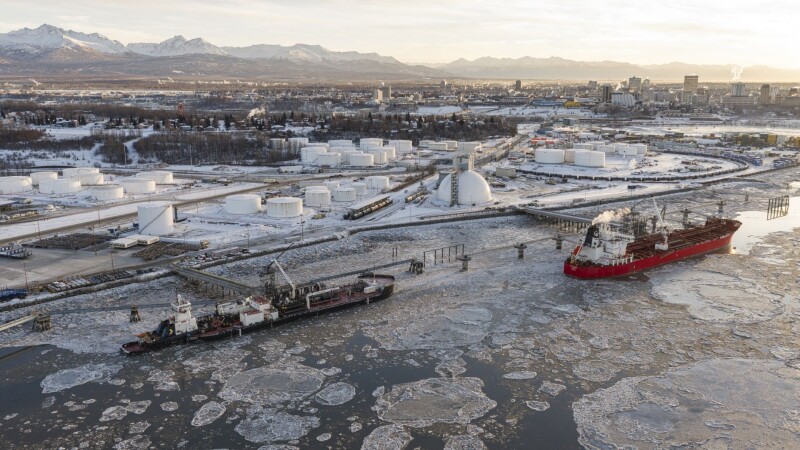
A multi-year modernization program estimated to cost about $2.25 billion is underway for the Don Young Port of Alaska in Anchorage, with aspirations to commission the new Terminal 1 dock by 2029.
The Port of Alaska Modernization Program (PAMP), a dock replacement program that aims to replace aging docks and related infrastructure before they fail, is expected to take about a decade, said Jim Jager, deputy port director.
It will improve operational safety and efficiency, accommodate modern shipping operations and improve the port's resiliency to survive extreme seismic events and Cook Inlet's harsh marine environment, he said.
In 2025 alone, the port handled some 5.5 million tons of fuel and cargo.
The port supports over $18 billion in commercial activity in Alaska, as the state's main inbound, containerized freight and fuel distribution center. Kodiak and Dutch Harbor are, by comparison, small markets that get regularly scheduled container service from Matson vessels sailing between Anchorage and Tacoma, Washington.
The final PAMP score is still being determined based on user needs and funding.
Initial funding has come through the Port Infrastructure Development Program (PIDP), through which new funds are available every year. State and local dollars will pay for one-third of each project within the overall program, Jager said. "We have the authority and ability to borrow money and pay it back with interest with cargo crossing our docks," he said.
"This facility services the federal government and federal initiatives, national security and the entire Alaska economy. We have enough money to build all of Terminal 1 right now. We are still waiting to hear if we got a PIDP grant from 2025."
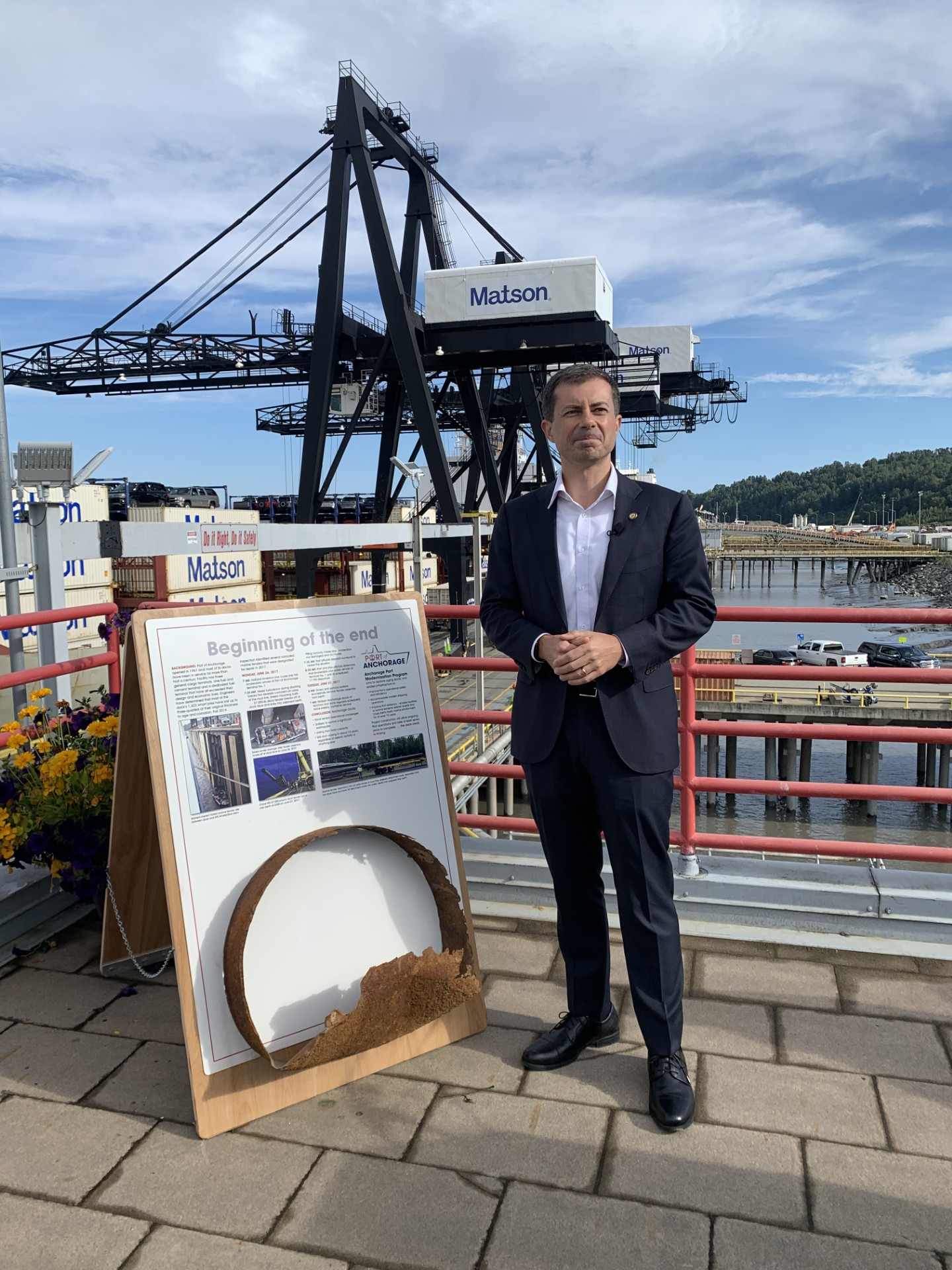
Former Transportation Secretary Pete Buttigieg and his staff did a lot of the advance work on the program, which got an initial $68.7 million grant. Buttigieg was in Anchorage in 2023 to tour the facility and see firsthand the corrosion and seismic risks faced by the port, which handles 90 percent of the state's essential goods.
On March 18, Anchorage Mayor Suzanne LaFrance issued an announcement to officially break ground on the project to ensure a functional, efficient port to serve Alaskans for the next 70 years. Initial work includes setting up contractor offices and site delineation to manage the massive scale of the Terminal 1 build, plus demolition of the existing Terminal 1. The mayor said the project would reach its next milestone in May, when the first barges carrying 240-foot pilings are expected to arrive at the North Extension of the port. Marine operations are expected to begin in mid-May or early June with piledriving at the north side of the new terminal.
The program will provide for about 175 union jobs all summer for four years, according to Joelle Hall, president of the Alaska American Federation of Labor and Congress of Industrial Organizations (AFL-CIO). "We are very happy to get this work in our own backyard," said Hall. "We can also train the next generation of construction workers in our hometown." Most but not all jobs in this program will be union jobs, offering prevailing wages, she said.
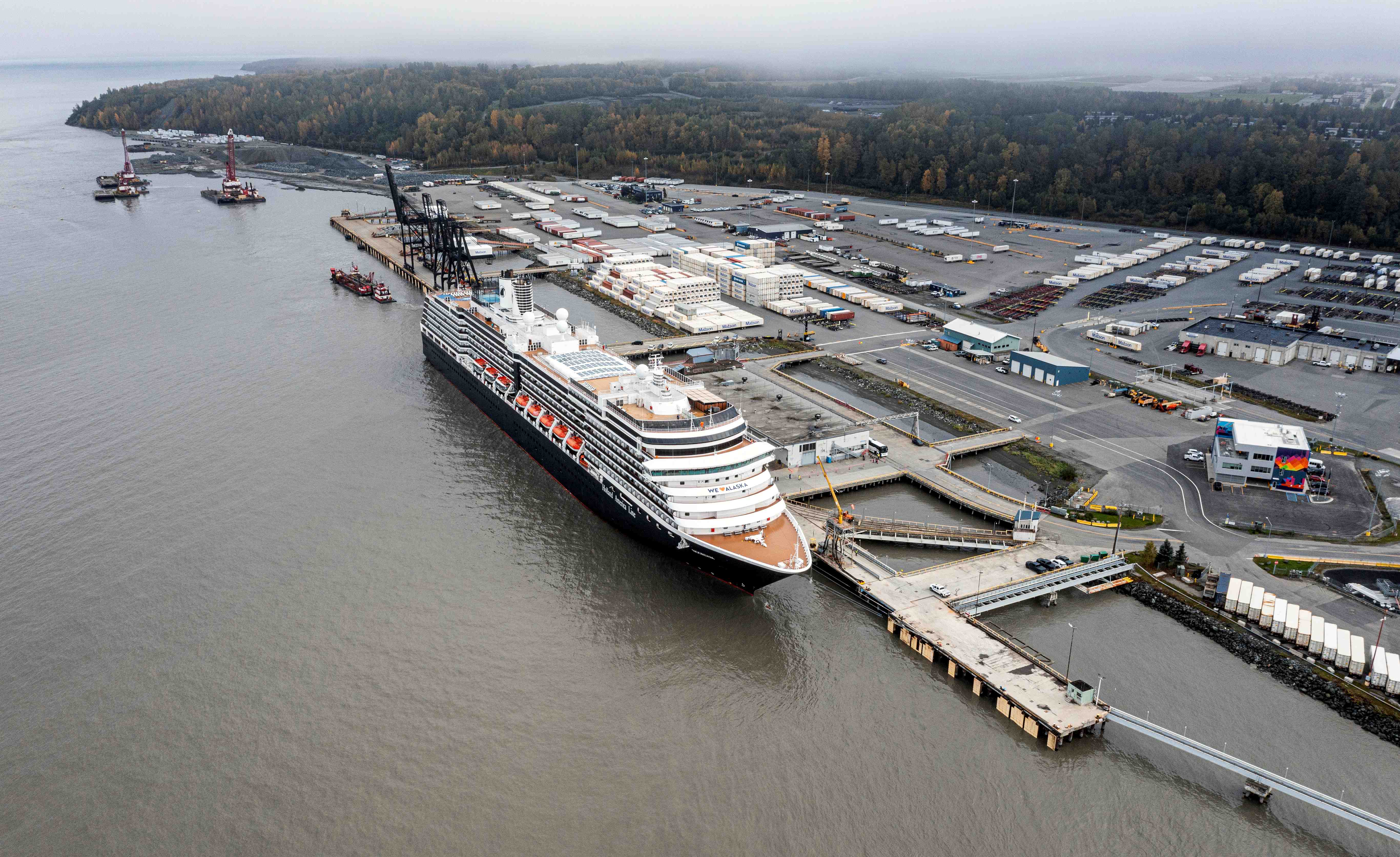
The original port, formerly the Port of Anchorage, was built in the late 1950s and officially began operations in Sept. 1961. Construction began around 1959, with the first barge docking in April 1961. The port survived the 1964 earthquake and became the primary shipping hub for Southcentral Alaska. In the aftermath of the earthquake, the port expanded throughout the 1960s to meet increased cargo demands.
Currently, about 40 percent of Alaskans live in Anchorage, and 60 percent of state residents live within a two-hour drive of the port. Port docks leverage and are leveraged by hundreds of millions of dollars of freight-related, private and public sector infrastructure. These include 125 acres of cargo-handling infrastructure, including intermodal cargo transport connections: 3.1 million barrels of liquid fuel storage, 60,000 tons of cement storage and dock cranes, roll on/roll off ramps, docksider cement-handling system, pipelines and more.
The port connects Alaska's primary cargo distribution systems, from air, marine, rail and pipeline to roadways.
"We have to get the dock built, new cranes on it and power for the new cranes and new longshore building, all of which will come together in 2028 with commissioning of the dock in 2029," Jager said. Alaska residents meanwhile will contribute to the project by the price they pay for every item that comes across the dock, he said.