

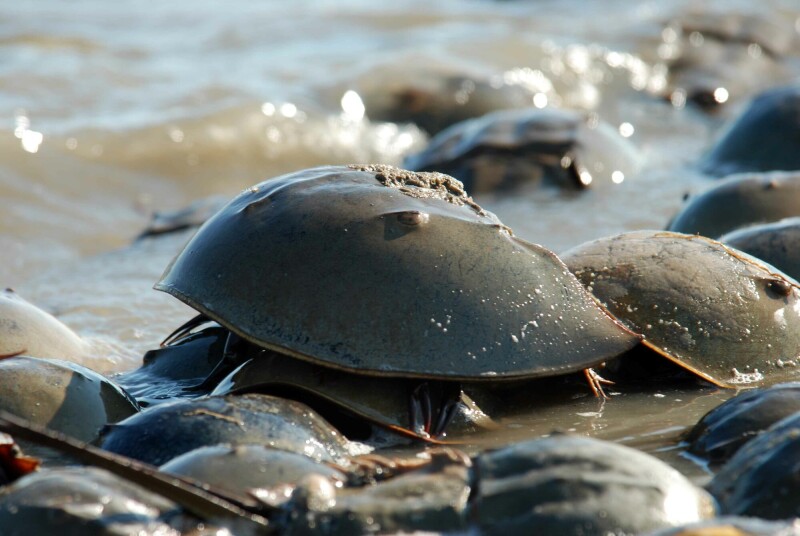
Some ideas sound noble in theory but collapse under the weight of the facts. That’s the case with New York State Assembly Bill 4997 and Senate Bill 4289, legislation that would ban the harvest and sale of horseshoe crabs by New York’s licensed commercial fishermen
Proponents call it “protection.” In reality, it’s an unnecessary ban that would wipe out livelihoods, damage sustainable local fisheries, and ignore the very science-based efforts that state and federal regulators have built together.
Gov. Kathy Hochul understood that last year when she vetoed the same bill. At a time when some were pushing hard for an outright ban, she stood instead with science, with regulators, and with the men and women who make their living on the water. For that, New York’s fishing families are deeply grateful, and hopeful that she will again make the tough but right decision.
The fishery already far beyond compliance
New York’s Atlantic States Marine Fisheries Commission (ASMFC) allocation for horseshoe crabs is 366,272 crabs per year. But since 2004, the state has voluntarily limited harvest to 150,000 crabs, cutting its allowable take by nearly 60 percent in the name of conservation.
In 2020, the New York State Department of Environmental Conservation (DEC) went further, imposing four separate five-day lunar closures each year during spawning season to protect mating crabs, measures that expanded again in 2025. As a result, horseshoe crab landings have dropped well below both the ASMFC and New York’s own voluntary limits.
But the reason for those declining harvests is not fewer crabs, it’s smarter fishing. New York’s commercial fleet has worked hard to use less bait, developing and adopting bait bags and cups that dramatically reduce the amount of horseshoe crab needed per pot in the conch and eel fisheries. These innovations have cut bait use by as much as 90 percent, without sacrificing catch or efficiency.
The results speak for themselves:
- Harvests have consistently remained below the ASMFC quota, and steadily below the 150,000-crab voluntary cap since the lunar closures began in 2020.
- In 2025, only 46 percent of the voluntary quota had been harvested as of September 29, just 19 percent of New York State’s ASMFC allocation.
- That represents a 48 percent decrease compared to 2024, driven by improved gear and responsible fishing, not by a shortage of crabs.
This is what real conservation looks like, practical, science-based, and collaborative. The partnership between DEC and New York’s fishermen has achieved measurable, data-driven reductions in harvest while maintaining healthy fisheries and stable crab populations.
The science is clear
Data collected by DEC, Cornell Cooperative Extension, and Stony Brook University show that horseshoe crab abundance in New York waters is stable and improving. Thirty monitoring sites across the New York Marine and Coastal District track spawning activity each year. Virtually all indices are trending in a positive direction, clear evidence that the conservation measures enacted in 2020 and expanded in 2025 are working as intended.
There is also broad consensus among experts. Across the Atlantic coast, the scientific network that manages these species under the ASMFC, from Maine to Florida, finds no basis for a moratorium and no support for a ban. Those calling for this legislation have cherry-picked a few outside voices while ignoring the unified, credible science that has guided responsible management for decades. The ASMFC’s data, the gold standard for coastal fisheries management, show a healthy, recovering population.
Real-world costs of a feel-good ban
The proposed ban would discard that science in favor of headlines. It would also devastate small, working fisheries that depend on horseshoe crab bait, particularly New York’s conch and American eel fisheries. Without access to this bait, those fisheries collapse. And when they collapse, so do the small businesses and Long Island traditions that depend on them, from family-run boats to the fish shacks serving conch fritters, to the markets selling local conch and eel in New York and beyond.
Governor Hochul showed us last year what real leadership looks like. She made the difficult but correct decision, rejecting easy applause to stand with science and the people who feed New York. That decision meant a great deal to Long Island fishermen, proving that their voices and sacrifices were heard.
As this bill returns to her desk, we can only express our deep appreciation for the strength and fairness she showed before, and our heartfelt hope that she will once again bring that same wisdom, courage, and compassion to bear. Governor Hochul has already proven she can rise above the noise and stand tall for what is right: for fishermen, for science, and for the stock itself.
Long Island fishermen thank her for that leadership and respectfully urge her to stay the course once more.
Bonnie Brady is executive director of the Long Island Commercial Fishing Association.