
For more than 50 years, Mel Allen has made a career out of telling stories about those in New England.
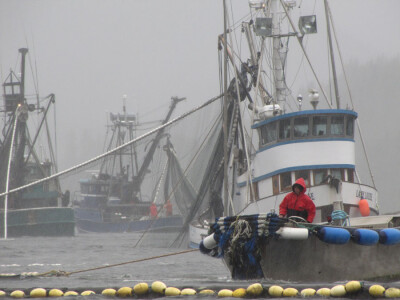
He has written about fishermen and island communities, sardine packers and chefs, scientists counting fish aboard NOAA research vessels, and people whose livelihoods disappeared as fisheries and working waterfronts changed around them.
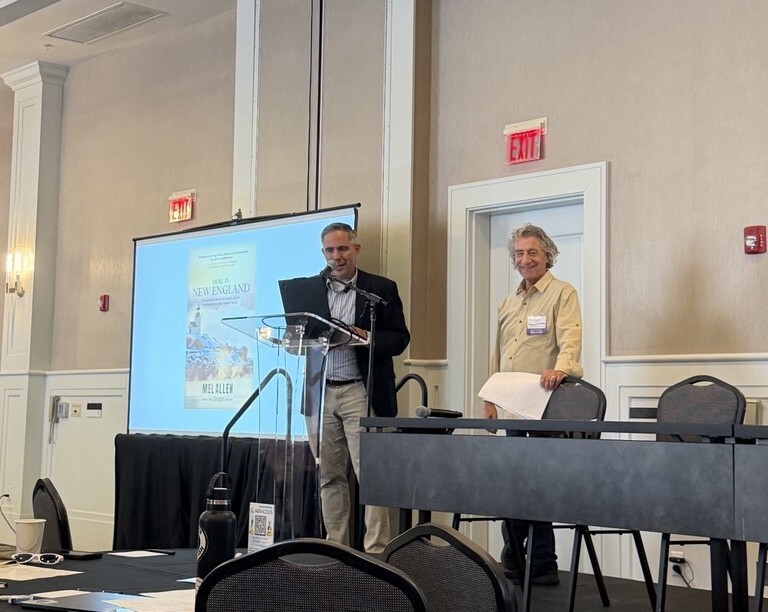
So when the former longtime editor of Yankee Magazine stood before a room filled with ocean scientists, researchers, and industry partners at the 2026 Northeastern Regional Association of Coastal Ocean Observing Systems (NERACOOS) Annual Meeting, he came with a message that was surprisingly simple.
Tell people a story.
“If you want people to care about something big, whether conflicts between nations, the dilemma of immigration, or our changing oceans, do not show the topic,” Allen said. “Show how people have been touched by the topic. That’s how we relate to each other.”
For NERACOOS, that message comes at an important moment.
NERACOOS helps coordinate sensors, models, data systems, and other technology used to track conditions across New England’s waters. Now, its work is expanding through the new National Science Foundation (NSF) Seafood Engine in New England, an initiative focused on supporting New England’s seafood industry.
The potentially 10-year initiative is designed to build an innovation network across the seafood supply chain, connecting work on the water with processing, distribution, and the consumer. Its focus includes environmental sensing and modeling, technology development, workforce training, and investment.
For commercial fishermen, that puts an industry accustomed to being on the receiving end of scientific data and management decisions closer to the center of a much broader effort to determine how New England seafood adapts to a changing ocean and economy.
But Allen’s keynote reminded everyone what all that technology and investment is ultimately intended to serve.
People.
A coast told through its people
Allen arrived in New England more than five decades ago as a 23-year-old schoolteacher headed for Matinicus Island, Maine.
He recalled arriving on one of the most remote lobstering islands on the Atlantic coast “white as a bedsheet,” beginning a relationship with New England’s coast that would eventually carry him through decades at Yankee.
Looking back through the magazine’s archives, Allen found 75 stories filed under “fishing industry” between Yankee’s founding in 1935 and 1978 alone, along with seafood recipes, photographs and stories from harbor communities.
Those stories documented an industry, but they also documented a culture.
Allen spent much of his keynote introducing the people who made that culture real.
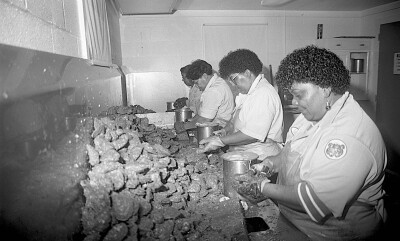
One was a sardine packer from Prospect Harbor, Maine, whom Allen met shortly after the Stinson Seafood cannery closed in 2010, ending the last operating sardine cannery in the United States.
She had packed sardines for 54 years.
“It got harder as I got older, but I could go with the best of them,” she told him. “I’m a packer. I will always be a packer.”
She cried when the plant closed.
It was more than the loss of a job. It was the disappearance of something that had helped define her life and her community.
Allen returned to that idea repeatedly.
He recalled fishermen who carried cameras aboard working boats despite losing them to saltwater and fish slime. He talked about photographers documenting generations of Maine lobster families and Rhode Island’s floating trap fisheries. He remembered the fishermen who once drift-netted for shad on the Connecticut River, working stretches of river passed from one generation to another.
In each case, the fishery was more than pounds landed.
Counting fish, and understanding why
One of the stories Allen assigned writer Rowan Jacobson brought him directly into the world where fishermen, science and management meet. In 2013, Yankee sent writer Rowan Jacobson aboard NOAA’s R/V Henry B. Bigelow in the Gulf of Maine. At its core, the assignment was about counting fish and was titled Counting Fish.
“We’re trying to count the fish in the sea,” Jacobsen wrote from the survey. By midnight, he described himself as covered in “blood and slime.”
Behind stock assessments, regulations, and management decisions are people doing the often messy work of trying to understand what is happening beneath the surface.
That connection is particularly relevant for NERACOOS.
Ocean observing can sound distant from the wheelhouse: sensors, models, cyber infrastructure, forecasts, and datasets. But those systems are measuring the same water fishermen work in every day.
Temperature, currents, storms and changing ocean conditions affect where species are found, when fishermen can safely leave the dock and what the future of a fishery may look like. The new NSF Seafood Engine in New England broadens that conversation further.
Rather than looking only at what happens in the ocean, the initiative is designed to work across the New England seafood supply chain, from harvesting and processing to distribution and markets. Research and development on the water, including environmental sensing and modeling, is one piece of a greater effort that also includes workforce development, technology and regional investment.
It creates an opportunity to connect the people who collect and analyze ocean data with the people who experience those changes firsthand.
What is worth preserving?
Allen did not frame New England’s fishing history entirely through nostalgia. There are fisheries that have disappeared. Others have shrunk dramatically. Communities have changed. But his keynote also pointed toward what could come next.
He highlighted chefs finding markets for lesser-known species, including monkfish. He talked about efforts to put invasive green crabs on restaurant menus. He pointed to mussel farming in Casco Bay and young people still choosing to make their living from the water.
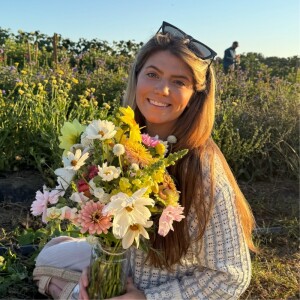
Among them was Paige Denison of Vinalhaven, Maine, who grew up lobstering alongside her brother Lincoln. Her catch helped pay for her first car and later for college.
Stories like hers are where Allen sees the stakes of the work being done by organizations such as NERACOOS. The goal is not simply to preserve an image of the New England coast as it once was. It is to give the people who still depend on it the tools and opportunities to remain part of what it becomes.
That is especially important as fishermen contend with changing ocean conditions, shifting species, tighter margins, regulatory uncertainty, and the continued loss of working waterfront infrastructure.
Data can help explain those changes. Technology can help the industry respond to them. Investment can help move new ideas from a research project into something useful on the deck of a fishing boat or inside a processing plant. But Allen argued that none of it should lose sight of the people behind it.
He told the NERACOOS audience that he had spoken over the years to tourism groups, farmers, colleges, and environmental organizations, but rarely to a room whose work held so much potential to influence the New England inherited by future generations.
His message also offered a useful lens for what comes next.
As NERACOOS and its partners begin building the NSF Seafood Engine in New England, the questions will inevitably turn toward technology, ocean data, workforce development, investment and how innovation can make the region's seafood more resilient.
For fishermen, another question may matter just as much: Where do they fit into it?
Allen’s stories suggest the answer should be at the center.
The Atlantic, he told the room, has been New England’s “constant companion,” shaping its culture as surely as its coastline. The technology used to understand that ocean will continue to change. So will the fisheries working within it.
But if New England wants those fisheries to have a future, Allen argued, it cannot simply count fish, measure temperatures or build better models.
It has to remember who all that information is for. “There is no greater mission than preserving this culture,” Allen said. “That’s why you’re here.”