On Thursday, December 11, 2025, the Northern Shrimp Section of the Atlantic States Marine Fisheries Commission meeting in Portland, Maine, voted to extend the moratorium on New England’s northern shrimp fishery for another three years. The Northern Shrimp Section, comprised of members from Maine, New Hampshire, and Massachusetts, made the decision to keep the fishery closed after hearing from the Northern Shrimp Technical Committee (NSTC).
The NSTC had set triggers for sea surface and bottom temperatures and recruitment, which could have started a discussion about reopening the fishery, and while sea surface temperatures reached the triggers, bottom temperature and recruitment did not.
But not everyone trusts those numbers. “You need data to manage the fishery,” says Glen Libby of Port Clyde, Maine. “And the NSTC doesn’t have any that’s reliable.”
According to the NSTC, the dedicated Summer Shrimp Survey was suspended after the 2023 sampling season, and data were drawn from the New England Fisheries Science Center Fall Bottom Trawl and the Maine-New Hampshire Spring Inshore Trawl Surveys, which are not focused on shrimp.
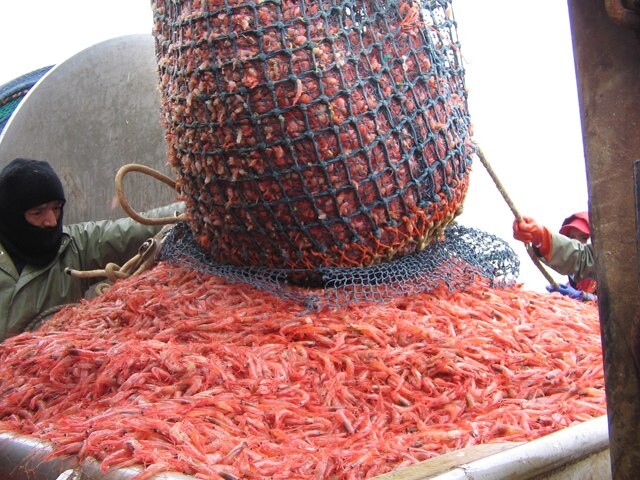
A six-week pilot fishery did take place in February and March of 2025, where five shrimp trawlers—including Libby’s son Justin—and four trappers sought to land a 26.5-ton research set-aside quota. “In total, the nine participants caught 70 individual northern shrimp weighing approximately 2.42 pounds, representing less than 1% of the research set-aside quota,” says a November 2025 report from the NSTC. “Catches included mostly assumed 4-year-old Female IIs and females with eggs. Based on the results of the 2025 pilot program, the Northern Shrimp Technical Committee (TC) does not recommend continuing the program in 2026,” the report says.
While the NSTC notes that 90 percent of the northern shrimp harvest historically came from Maine’s midcoast region—where egg bearing shrimp would start to arrive in December, drop their eggs by March, and be gone by April— Glen Libby points out that due to weather constraints and a late start, the pilot fishery missed many traditional fishing grounds and half the coast of Maine. “They’re not even doing the pilot fishery this year,” says Libby. “You have to keep trying. This doesn’t cost them anything. The fishermen pay for it. All they had to do was approve it.”
But the Northern Shrimp Section makes decisions based on the available data, which has shown a consistent decrease in shrimp abundance, which has primarily been attributed to warming water. Despite the observed lower sea surface temperature noted in two of the last three years, recruitment numbers hit an all time low, leading the NSTC to recommend continuation of the moratorium with the next sampling scheduled for 2027 and 2028.