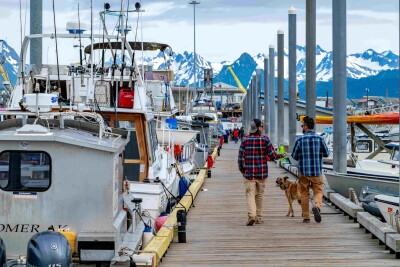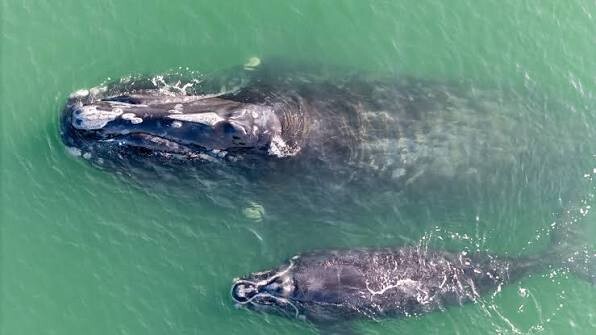
The Maine Lobstermen's Association (MLA) is welcoming a shift in federal right whale policy after NOAA Fisheries announced new preliminary scientific analyses suggesting U.S. fisheries may already be meeting federal standards for protecting endangered North Atlantic right whales.
The Nov. 5 announcement represents a significant change from previous federal assessments that threatened Maine's lobster industry with increasingly restrictive regulations, according to the MLA. The association said the findings follow its successful federal court challenge over how the National Marine Fisheries Service (NMFS) evaluated the lobster fishery's impact on right whales.
"This is what we fought for. MLA took the federal government to court and won because its claims about our fishery weren't supported by the science or the law," said Patrice McCarron, MLA executive director, in a Nov. 6 statement. "That court victory forced NMFS to change course. Now the government's own analysis is beginning to confirm what Maine lobstermen have been saying for years."
In 2023, the U.S. Court of Appeals for the D.C. Circuit unanimously rejected NMFS's approach to assessing fishing impacts on right whales, finding that the agency's reliance on worst-case assumptions was "egregiously wrong."
The ruling required NMFS to reconsider its assessments using the appropriate legal standards.
Under the newly announced preliminary analyses, NMFS expects estimated right whale deaths and serious injuries attributed to U.S. fisheries to be substantially lower than the agency estimated in 2022.
According to the MLA, those revised estimates may satisfy the federal Potential Biological Removal (PBR) standard, which is used under the Marine Mammal Protection Act to assess allowable human-caused mortality.
The findings remain preliminary and subject to scientific review, meaning the agency has not yet finalized its conclusions.
The MLA said its efforts continued after the 2023 court decision, with the association pressing federal officials to implement the ruling and ensure future regulations reflect available scientific evidence.
Working alongside industry partners and Maine's congressional delegation, the association also helped secure a pause in new whale regulations and federal funding for additional research.
That funding allowed the Maine Department of Marine Resources (DMR) to collect Maine-specific information about right whale distribution and interactions with lobster fishing gear.
According to the MLA, the research indicates right whales are extremely rare off Maine's coast and overlap with lobster gear far less frequently than federal regulators previously assumed.
"They told us we had to make drastic changes or risk losing our fishery. We knew the government's numbers didn't add up," said Sonny Beal, MLA chairman. "MLA stood up for Maine lobstermen, took on the federal government, and won. We never backed down, and now we're finally seeing the results."
The association also emphasized the conservation measures Maine lobstermen have adopted over more than 25 years to reduce entanglement risks.
Those changes include replacing floating groundlines with sinking rope, reducing vertical lines in the water, incorporating weak links and weak rope, marking fishing gear and complying with seasonal fishing restrictions.
The MLA said those requirements have imposed significant financial and operational costs on fishermen.
McCarron credited the association's members, legal team, Maine's congressional delegation, DMR researchers and coastal communities for supporting the effort.
"We all stood together when the future of our fishery was on the line," McCarron said. "We fought to keep Maine lobstermen fishing, protect our coastal communities, and preserve a way of life passed down for generations."
The MLA said it will continue monitoring the federal review process to ensure the preliminary analyses are finalized, and future regulatory decisions comply with the court ruling while protecting the long-term viability of Maine's lobster fishery.