


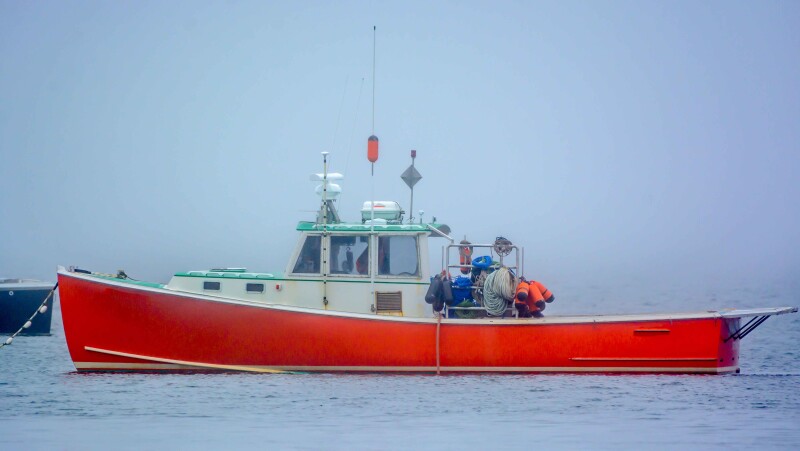
Maine lobstermen hauled in fewer lobsters again in 2025, marking the fourth straight year of declining landings for the state’s most valuable fishery.
According to the Maine Department of Marine Resources (DMR), fishermen landed 78.8 million pounds of lobster in 2025, down from more than 110 million pounds in 2021. The total marks the lowest harvest since 2028, though it remains higher than historic averages seen in the 1990s and early 2000s.
The value of the catch also dropped. State officials say the fishery brought in more than $461 million at the dock last year, a decline of over $75 million compared with the previous season.
“This combination of factors likely contributed to the decline from 2024 to 2025 in the lobster harvest of more than eight million pounds and a decrease in the overall value of more than $75 million,” said Carl Wilson, commissioner of the Maine DMR.
Wilson noted that the industry is facing a mix of pressures, including rising operating costs, inflation, tariff-related market uncertainty, and a later start to the busiest part of the fishing season. DMR data also showed more than 21,000 fewer fishing trips in 2025 than in 2024.
The Atlantic States Marine Fisheries Commission recently warned that lobster abundance has declined rapidly in parts of the region and declared the species to be experiencing overfishing.
Some fishermen dispute that assessment, arguing that the fishery is already tightly managed with conservation rules such as trap limits, size restrictions, and protections tied to endangered whales.
Despite the lower landings, prices remained relatively strong. The average dock price was $5.85 per pound in 2025, higher than the $3 to $5 range typical during much of the 2010s.
For fishermen like John Drouin of Cutler, the season’s economics remained challenging. “Not a very profitable season,” Drouin told AP, also mentioning the high cost of fuel, bait, and gear.
Others reported steadier fishing conditions compared with the previous year.
“Hauling was more consistent, with less peaks and valleys, and the price was higher in the summer months,” said Steve Train, a lobsterman from Long Island, Maine. “But I think I landed a little less.”
Even with the recent decline, Maine’s lobster fishery remains the backbone of the state’s seafood economy and one of the most valuable fisheries in the United States.