


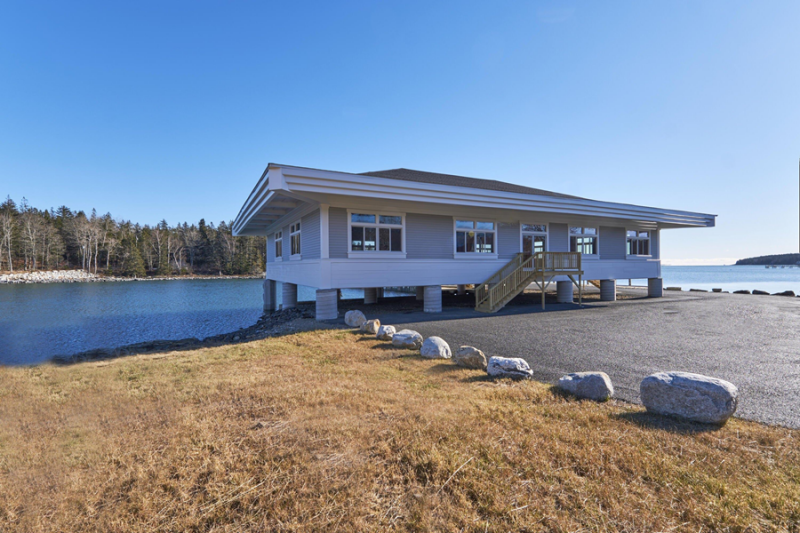
A donated piece of working waterfront in St. George is bringing the Maine Coast Fishermen’s Association (MCFA) back to its roots, while opening the door to new possibilities for Maine’s commercial fishing future.
MCFA received the former Wildcat Lobster Pound property at 125-127 River Road from Barbara Wagner in honor of her late husband, John Wagner. The site includes a 3,726-square-foot newly constructed building and waterfront infrastructure formerly used as a lobster pound. The dock and wharves were damaged during the winter storms of 2024 and still need repairs before the property can be fully used again.
Ben Martens, executive director of MCFA, said the gift is unlike anything the organization has taken on before.
“We have never received a donation of a piece of property before as an organization,” Martens said. “This type of thing, when a piece of property has both historical use and future opportunity, is pretty unique.”
The property sits in St. George, which includes the fishing villages of Port Clyde and Tenants Harbor. Based on recent conversations with commercial fishermen in the Port Clyde area, St. George remains primarily a lobstering community, with roughly 70 licensed lobstermen operating locally.
But MCFA sees the opportunity as bigger than one harbor or one fishery. “The idea of being able to have a footprint in St. George means a ton to the people who started this organization and those of us who have been able to steward it forward,” Martens said. “But the use of this space will benefit coastal communities up and down the state.”
MCFA was founded by fishermen in Port Clyde, including Gerry Cushman and his brothers, to advocate for Maine’s commercial fishing future. Cushman, now MCFA’s board vice chair, said the organization's announcement of accepting the Wildcat property gives the association a chance to “honor those beginnings and have a lasting impact along the coast.”
Martens said that history matters. The organization’s roots were in groundfish, and Port Clyde once had more diversity on the waterfront. Today, Maine’s fishing communities are heavily dependent on lobster.
“Lobster is the bedrock of our fishing communities here in Maine,” Martens said. “But it’s how we start to put layers on top of that. There’s not a lot of diversity in any of our communities anymore when it comes to fisheries.”
That’s where the donated property could play a role. Martens said MCFA is looking at the site as a place that could support diversification, research, fishermen's wellness, training, seafood businesses, and other working waterfront needs.
“This type of building, this type of space, it’s about diversification opportunities, it is about research opportunities. It is about how you think about the state's fishing community beyond just lobster,” he said.
Before deciding on specific use, MCFA launched a community survey to collect ideas from fishermen, harvesters, seafood businesses, scientists, and others tied to the blue economy. The organization said its priority is serving commercial fishermen, harvesters, and fishing-related businesses, while finding a purpose that could benefit the community beyond St. George.
Martens shared that the process is intentionally open-ended.
“I want absolutely crazy ideas. I want half-baked ideas. And I want something that sounds unique,” he said. “But with the fishing community as our north star.”
Ideas so far have ranged from aquaculture and baby lobster grow-out to diver training, research, and private space for fishermen to access health and wellness services.
Martens explained that broad thinking fits John Wagner’s legacy. Wagner had envisioned the property as a place for aquaculture experimentation, including oyster grow-outs and rebuilding the lobster pound in a way that could stabilize water temperatures.
“He was just a problem solver,” Martens said. “He liked chasing interesting, unique problems and putting people around him that would chase these dreams and ideas with him.”
MCFA has not landed on a final vision, but Martens said some repairs are non-negotiable. “The lobster pound and docks need to be fixed,” he shared. “Regardless of the end use of the space, we need that working waterfront rebuilt.
Still, the property gives MCFA a rare chance to protect a part of the state’s working waterfront while thinking creatively about what Maine fishermen will need next.
“We see this as part of our iterative step as an organization on the working waterfront,” Martens said. “We’re trying to figure out what this looks like for a solution, but we know protecting working waterfront needs to be first.”