

Federal funding aimed at strengthening Alaska’s port infrastructure is headed to coastal communities across the state, with more than $115.4 million awarded through the U.S. Department of Transportation’s Port Infrastructure Development Program (PIDP).
U.S. Sens. Lisa Murkowski and Dan Sullivan, along with Rep. Nick Begich, said seven Alaska projects they supported were selected for funding under the competitive grant program, which is administered by the Maritime Administration.
“I am proud to have worked with my partners in the delegation who helped bring this robust funding to Alaska,” Murkowski said. “These investments will help revitalize Alaska’s ports, enhancing our ability to bring our natural resources to market and ensure a secure supply chain for everything from bulk fuel to groceries.”
Sullivan pointed to structural changes that helped Alaska compete for the funding, including provisions tied to the Infrastructure Investment and Jobs Act and reforms in the FY23 National Defense Authorization Act.
“Today’s $115.4 million in Port Infrastructure Development Program grants for Alaska communities underscores the importance of ensuring federal infrastructure programs work for every part of our country– not just the Lower 48,” Sullivan said. He added that changes, including a waiver of certain cost-benefit analysis requirements for noncontiguous states, have helped “level the playing field” for Alaska port projects.
Begich said the funding will support both economic growth and long-term infrastructure needs across the state.
“Major infrastructure investments are coming directly to Alaska,” Begich said. “These projects will modernize critical infrastructure, improve freight mobility, and ensure that Alaska is competitive and prepared as we prepare for economic growth in Alaska.”
The PIDP, created in 2010, funds projects aimed at improving the safety, efficiency, and reliability of goods moving through U.S. ports, with dedicated support for smaller and rural facilities.
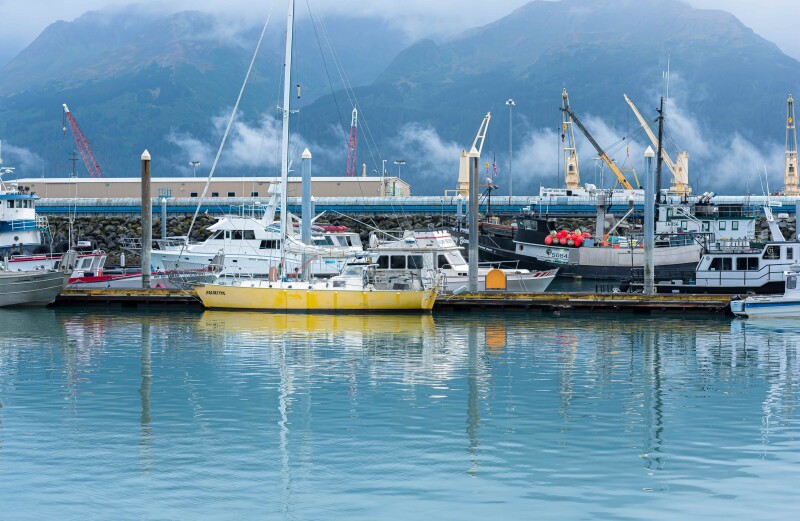
Funded Alaska projects span a range of upgrades and planning efforts, including a $20.4 million effort to improve rail access and double-stack container capability at the Port of Whittier, a $38.6 million industrial dock redevelopment project in Skagway, and a $34 million expansion at Port Mackenzie that includes cargo laydown areas, rail infrastructure, and heavy-lift improvements.
Additional awards include planning and design work for petroleum infrastructure in Anchorage, a barge landing facility in Chevak, float system replacement in Homer, and dock replacement planning in Whittier.
With Alaska’s extensive coastline and heavy reliance on marine transportation, the delegation emphasized that investments through programs like PIDP are critical to keeping goods moving and supporting coastal communities statewide.