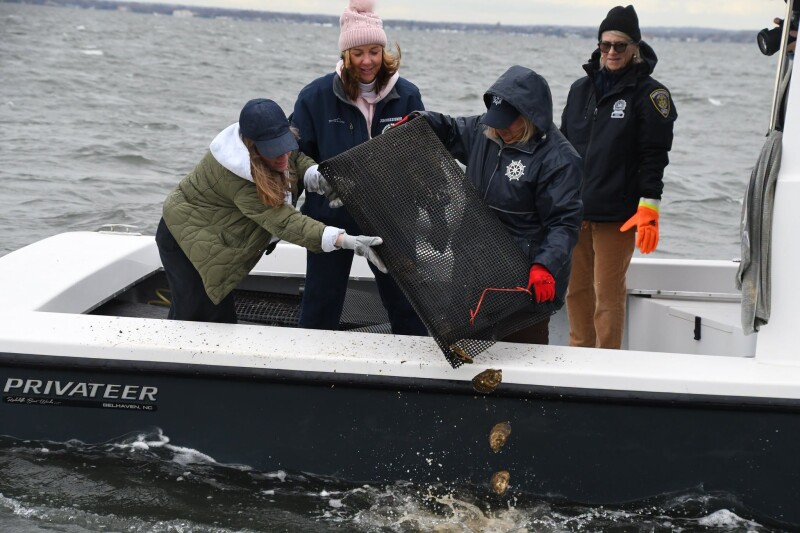
The Town of Islip, on Long Island’s South Shore, has returned about 1 million oysters and 200,000 clams to the Great South Bay, the latest installment in its shellfish restoration program.
The shellfish were produced at the town’s Shellfish Culture Facility, in East Islip, which raises oysters and clams for restoration and to support local shellfish populations. Town officials said the work is intended to support marine habitat, improve water quality, and protect the long-term health of the bay.
The planting comes after a severe winter that hit shellfish across the region. A harsh winter froze the Great South Bay for a full month and damaged boats and harvesting equipment on Long Island. Oyster farmers said the deep freeze wiped out about 30% of the oysters. The state estimated the damage to Long Island shellfish growers at $2.4 million.
The U.S. Department of Agriculture issued a disaster declaration for Suffolk County on May 26, following a request from New York State on April 6. The state has also awarded a $3 million grant to 14 aquaculture operations on Long Island to help modernize equipment and improve harvesting efficiency. That money is part of the state’s Blue Food Transformation Initiative, which has put $4.2 million into the Long Island Aquaculture Infrastructure Program so far.
The town said a single adult oyster can filter up to 50 gallons of water a day. Officials said that filtering improves water clarity and supports the growth of underwater vegetation such as eelgrass. Oyster reefs also provide habitat and shelter for fish, crabs, and other marine species, adding to the bay’s biodiversity.
The town did not say where in the bay the shellfish were placed, when the planting took place, or what the effort cost. It also did not say whether the winter affected the facility’s stock or the bay’s existing shellfish populations.
The Great South Bay, a shallow lagoon between Long Island’s South Shore and Fire Island, once supported one of the largest hard clam fisheries in the country, though harvests fell sharply from their peak in the 1970s. Islip is one of several Long Island municipalities that operate shellfish hatcheries or seeding programs as part of broader efforts to counter nitrogen pollution and habitat loss in the bay’s estuary.
“The Great South Bay is one of our community’s greatest natural resources, and protecting it is a responsibility we take seriously. The work being done through our Shellfish Culture Facility is vital and meaningful as the Town continues to create new avenues for environmental protection, restoration, and local business,” said Islip Town Supervisor Angie Carpenter.
The town said it will continue to invest in the bay’s ecological health through the facility and its restoration initiatives.