

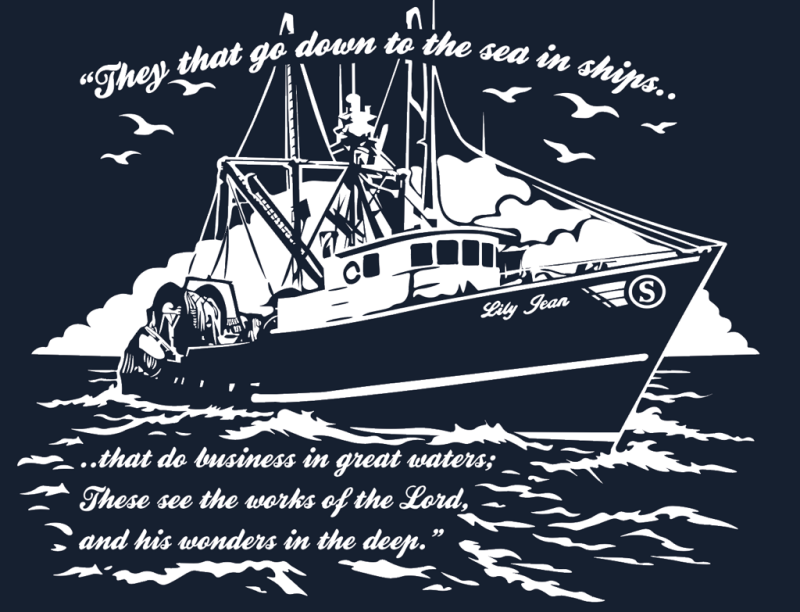
More than a month after the 72-foot groundfish vessel Lily Jean sank 25 miles off Cape Ann, state and federal investigators are still working to determine what caused the loss of the Gloucester-based vessel and all seven people aboard.
The boat sank Jan. 30 without issuing a distress or mayday call. An EPIRB signal alerted the U.S. Coast Guard at approximately 6:50 a.m., prompting a massive air and sea search effort. Crews searched roughly 1,047 square miles in punishing winter conditions- air temperatures near 6 degrees Fahrenheit, wind chills below zero and water temperatures around 40 degrees.
Responders located one unresponsive individual from the water and located a deployed but unoccupied life raft. No additional survivors were found, and the Coast Guard suspended its search the following day.
“All reasonable search efforts for the missing crewmembers had been exhausted,” said Capt. Jamie Frederick, commander of Coast Guard Sector Boston, at the time.
Formal investigation underway
In early Feb., the Coast Guard’s Northeast District launches a formal district-level investigation into the casualty. Lt. Cmdr. Brett is serving as lead investigating officer, supported by a team of Coast Guard personnel and technical experts. The National Transportation Safety Board has also joined the investigation.
A district-level formal investigation is typically reserved for incidents of significant regional importance or those that may raise broader safety concerns within a fleet or vessel class. Investigators will collect testimony and evidence under formal procedures to determine what happened and whether further review by a Marine Board of Investigation is warranted.
The stated purpose of a Coast Guard investigation is to improve the safety of life and property at sea, not to assign civil or criminal blame. Officials have said the process could take months.
The current phase of the investigation includes efforts to locate and examine the sunken vessel, believed to rest in waters up to 400 feet deep. The 2028-foot NOAA vessel Thomas Jefferson conducted multibeam sonar surveys in the target area. According to John Hare, director of NOAA’s Northeast Fisheries Science Center, the sonar data are being analyzed and are expected to be turned over to the Coast Guard.
Capt. Frederick said items recovered from the debris field appeared consistent with gear and materials that could float from a fishing vessel’s deck. “It wasn’t a debris field like something catastrophic had happened to the hull,” Frederick said during a press conference. “We found a life raft that had deployed with no one in it. And then, of course, one person who was not in a survival suit.”
Mass. Senator Bruce Tarr, R-Essex, suggested that freezing spray may have been a contributing factor. “Ice accumulates on a vessel,” Tarr said. “And the additional weight of ice can affect the stability of the vessel.”
Freezing spray warnings were in effect in parts of the region around the time of the sinking, a hazard well known to New England fishermen who work through the winter months.
The crew of the Lily Jean included:
- Paul Beal Sr.
- Paul Beal Jr.
- John Rousanidis
- Freeman Short
- Sean Therrien
- Jada Samitt, a NOAA Fisheries observer
The loss has reverberated far beyond Gloucester’s working waterfront. In communities across New England, fishing families and waterfront businesses have stepped forward to support the victims’ loved ones.
The Gloucester Fishing Community Preservation Fund established the F/V Lily Jean Fund to assist the families. Donations and updates are available at FVLilyJeanFund.org.
On Cape Cod, residents have organized multiple fundraising efforts. A “Game Day” event in Chatham is raising money through entry fees, raffles, and a silent auction featuring donations from local merchants and artisans.
On March 12, the Cape Cod Commercial Fishermen’s Alliance and the Chatham Orpheum Theater will host a benefit screening of the 2025 documentary The Hand that Holds the Line: The Incredible Stories of Those Who Fish on Cape Cod. Proceeds will also go to the Lily Jean families.
“The fishing community is tight-knit, and when tragedy strikes, the loss is felt by all,” the theater’s announcement reads. “The evening is an opportunity to gather in remembrance at this heartbreaking time.”
As investigators continue analyzing evidence, fishing families are left waiting for answers and leaning on one another, as coastal communities do.