

Kelp forests in the United States are under threat and are facing the same stresses as the commercial fisheries that work around them. The Forest of the Sea by David Helvarg, published in May, tells the story of kelp, the importance of healthy kelp forests, and the challenges these habitats face. While this book is not about commercial fishing, it does include fishermen, and its insights are vital to those who make a living harvesting wild fish from a rapidly changing sea.
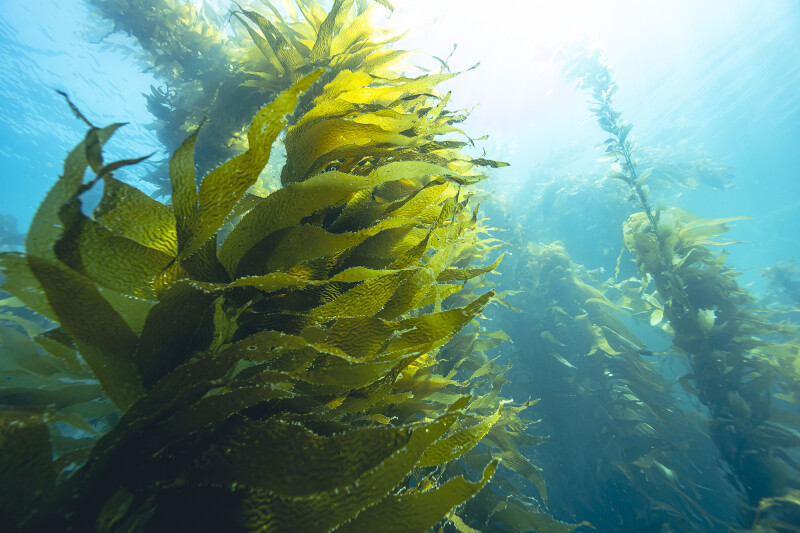
Kelp forests have evolved as the anchor habitat for nearshore ecosystems in the cold waters of temperate climes across the globe. Helvarg dives into the ecological and economic importance of kelp forests, and how they’re under threat as waters warm and other environmental stressors diminish their footprint, often drastically so.
As a commercial fisherman on the West Coast and as a journalist covering fisheries and oceans for more than 15 years, the health of fisheries and the health of kelp forests have mirrored each other from my vantage point. Since the Blob, the extreme marine heatwave that hit the West Coast from 2014-2016, whale entanglements ravaged the California Dungeness crab fishery while 90 percent of the Northern California kelp forests disappeared. This isn’t a situation where one affects the other, but parallel plot lines in the same story.
Helvarg, a veteran journalist who also serves as the executive director of Blue Frontier, an ocean advocacy NGO, uses Fort Bragg, Calif., as an example of just this. The shoreline of the small city nearly 200 miles north of San Francisco has historically been dominated by thick kelp forests teeming with life. It has also been an important commercial fishing port for Dungeness crab, salmon, and groundfish.
But urchin barrens have reshaped the nearshore seascape, where swaths of once biodiverse habitat with abundant sea stars, abalone, and fish living under the canopy of kelp. Commercial fishermen are now working with scuba divers, recreational anglers, and the local hospitality industry to clean up the urchin barrens. In doing so, they are trying to develop markets for the dread purple urchin, whose gonads are smaller and don’t command the same demand as red urchins. These three groups often find themselves at loggerheads along waterfronts, often viewing each other as competitors for scarce resources, but in Fort Bragg they have worked as partners coming to the rescue of the kelp forest they all need to thrive.
Kelp forests of the West Coast also serve as important habitat and protection for newly smolted salmon, making their way from river systems to maturation on the open ocean, Helvarg writes. While probably not the most impactful of habitat loss facing struggling salmon runs, the buffer kelp forests provided have long been a refuge of stability that are now under threat.
Across the continent on the Maine coast, Helvarg meets with lobstermen with side hustles in kelp farming. For then kelp farming isn’t a substitute, but a supplement to their income, and with the lobster harvest moving further offshore as the iconic crustaceans move to colder water, more space is available for aquaculture.
Northeast kelp forests face a similar peril to those on the West Coast, and with it fisheries that are dependent on the habitat they provide. Kelp aquaculture doesn’t replace economic losses the lobster industry faces whether by climate-driven changes or regulatory pressure, nor will it make up for losses of wild kelp habitat. But through both market opportunity and ecological necessity, kelp aquaculture is of growing importance to regions with diminished forests of the sea.
Helvarg might not be a champion of commercial fishermen, but he’s neither an antagonist. Some readers will definitely disagree with his stances on sea otters and marine protected areas, but finding remedies and interventions to promote and protect kelp forests is in everyone’s interest.
.jpeg.small.400x400.jpg)