




When escapement around the Nugashik District meets targets, and the fishery opens, it can be madness. Gillnets fly off the sterns of boats, one corking the other; some boats run aground with nets full of fish and have to get them back somehow. When nets get destroyed, and hydraulic hoses burst, fishermen head to Alaska Net & Supply in Dillingham for a quick fix so that they can get back on the fish.
“When they come to Dillingham with hydraulic trouble, they come to us,” says Liz Sparks Jones. “For nets they can come to us or LFS.” Liz’s father, Mike Sparks, started the company in 1987, and Sparks Jones took over running it three years ago. “My father knew everything,” she says. “We didn’t think he’d ever let it go, but after 40 years, he did. I still call him sometimes to help figure things out.”
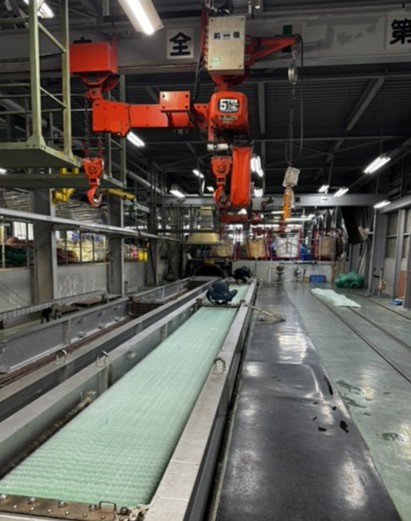
While Alaska Net & Supply does most of the hydraulics repairs in town, half the company’s business is nets, and Sparks Jones sells Tairyo web from Japan. “We sell Tairyo exclusively. We have a lot of guys who love it. Other shops sell other types of web, but we think Japanese web is the best available and we stand by it,” she says. “Tairyo makes all kinds of sizes, from mono to 18 strand. That’s how many thin mono strands are spun together and used to make the web.”
Stark notes that different fishermen and different fisheries make different choices about their web. “Set netters like a heavier web because they’re dragging their nets through the mud, so they tend to like a 12 to 14-strand. Drifters prefer a lighter web between 6 and 10-strand because they believe it catches more fish.” But even among the drift net fishermen, Sparks Jones notes a difference in preferences. “The Russians swear by the 6-strand; they say the fish can’t see it, but they can go through 16 50-fathom shackles in a season. The non-Russian fishermen use 9-10 strand because they want it to last longer.”
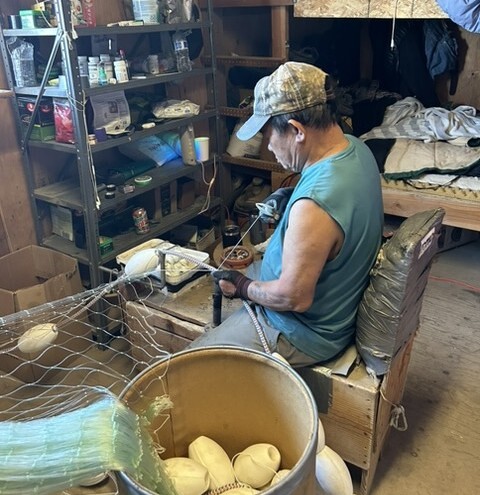
Once Stark gets the web figured out for a fisherman, she talks to them about the corks and lead, noting that everyone has their own particular idea of what works best. “Once we have all the details, we give it to our hangers, and they put it together,” she says. “We typically hire two hangers for the season, and they each hang about 20,000 fathoms in the season. The drifters have their nets hung at two to one, so there’s 100 fathoms of web on a 50-fathom net. They setnetters get theirs hung at 3 to one so they can get more web in the water.”
The season for Bristol Bay fishermen begins in late June, but for Sparks Jones and her crew, it begins in March. “We start hanging all the nets for our customers and making new ones; between that and the hydraulics, it’s 12 to 15-hour days until the end of the season. We come home at the end of July and rest for a week or two and then start selling web wholesale all over.”

.jpg.small.400x400.jpg)
