

Imtra Marine Products in New Bedford, Massachusetts, has been selling bow thrusters since 1992. “Those were hydraulic,” says Peter Nolet, the thruster systems product manager at Imtra. “We worked with a company that would do the installations on the entire system, the tanks, pipes, pumps, everything. But those were single speed, with on-off controls. When they were on, they were full speed, or they were off. That’s hard on equipment.”
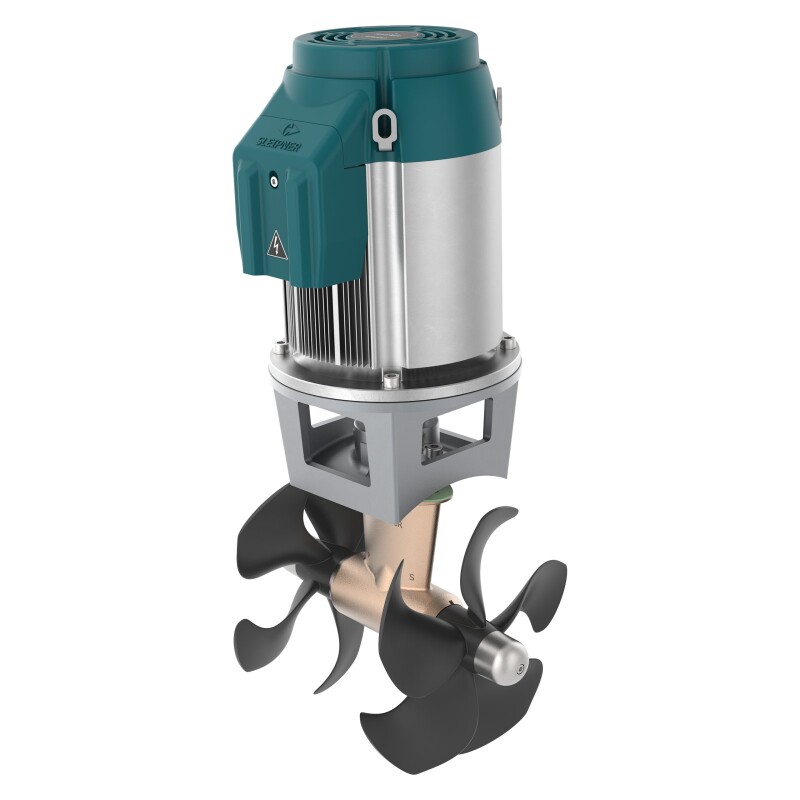
Hydraulic thrusters were the industry standard for decades, but the century-old Norwegian company Sliepner now offers a new line of DC-powered thrusters with many advantages over hydraulic and earlier electric thrusters. “There were some electric thrusters before,” says Nolet. “But they were what I call dumb motor thrusters, a series-wound brush motor. They would operate according to the voltage and generate heat, so they had a limited run time.”
The new Sleipner electric trusters are variable speed and driven by the company’s new, smaller, quieter brushless motor—the E-Vision motor. “They took the standard AC motor that they built and designed it to run on DC power with an inverter,” says Nolet. “But the beauty of this motor is it’s a smart motor, in monitors everything from rpm, torque, loading, amp draw, and more, so it monitors itself to operate within ranges. The only heat it generates is from the inverter, and it has an internal fan to cool that.”
While smaller boats can run Sleipner’s E-Vision motor with their existing battery banks, Nolet notes that they can also run on a dedicated deep-cycle battery bank. That way they don’t get that high voltage surge of a starter motor,” he says. “So now we have unlimited run time, as long as you give it enough battery power, and so we can rival the hydraulic systems. Now you can eliminate all the pipes, pumps, maintenance, and mess of hydraulic.” Other benefits, Nolet notes, are efficiency, quietness, precise proportional control (variable speed), simpler installation, and enhanced safety features like solenoid protection, offering a smoother, quieter boating experience with better maneuverability than traditional thrusters.
“They're also getting bigger,” says Nolet. “Up to 15 inches. And there is a hybrid option where you run it off the battery bank, or they make a PTO driven generator that you can put on your engine and run the thruster as long as your engine is running.
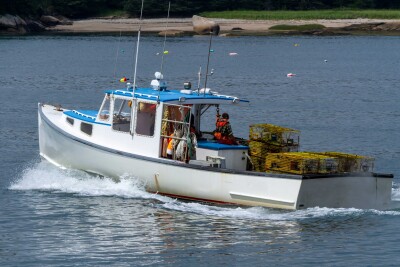
Nolet notes that newer lobster boats are starting to use thrusters. “They use them to keep the boat lined up on the gear when they’re hauling trawls,” he says. “Bow and stern thrusters. I know, I wondered how they would arrange that, but there is a guy in Downeast Maine, Jacob Knowles, and he’s building a new boat. You can see it on Facebook and YouTube. He built a tunnel for the thruster on the transom below the waterline. That’s where they’re going to put the thruster.”