




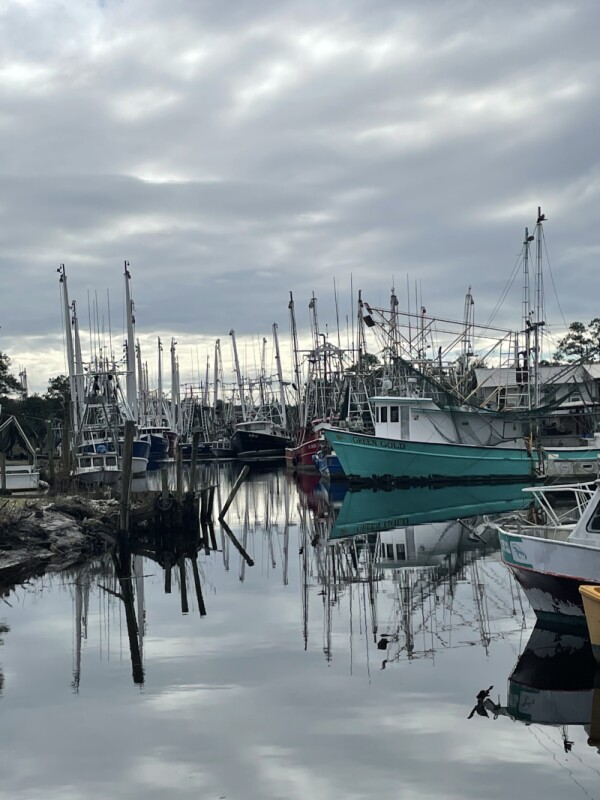
For years, US shrimp fishermen have faced a flood of imported farmed shrimp that has driven down prices and put their businesses in jeopardy. The worst part, according to Jeremy Zirlott, owner of Zirlott Trawlers Inc. in Bayou La Batre, Ala., is that U.S. tax dollars are being used to pay for those foreign shrimp farms.
“We’ve given hundreds of billions to the World Bank since it was formed in the 1940s, and since the 1980s it has poured billions into aquaculture development in places like Ecuador and Indonesia,” he says. “We have the Save Our Shrimpers Act to stop that, but it’s stuck in Congress.”
Zirlott notes that US fishermen are starting to see small price increases thanks to tariffs and increased detection of fraud detection. “But a World Bank report: Harnessing the Waters: A Trillion Dollar Investment Opportunity, released on June 24, 2025, outlines plans for drastically increasing aquaculture spending and production.”
The World Bank plan boasts that “aquaculture could generate as many as 22 million new jobs by 2050, if stakeholders capitalize on the $1.5 trillion dollar investment opportunity in the sector over the same period.” It notes that “development finance institutions… will play a critical role in scaling sustainable aquaculture and reducing investor risks.”
“It’s fine if these countries want to develop their aquaculture industries,” says Zirlott. But they shouldn’t do it with our money. We’re paying to create our own problem.” He adds that using the World Bank “reduce investor risk” means that we are propping up an industry that might not exist without this massive influx of capital.
Zirlott and many others are calling on Congress to pass the bipartisan Save Our Shrimpers Act. Initially introduced by Congressman Troy Nehls of Texas in 2024 and reintroduced in 2025, the SOS Act would end US funding of foreign shrimp farms. “He reintroduced it in March, but it’s stalled in Congress,” says Zirlott. “I think there are some powerful players who want the continued funding of aquaculture in foreign countries.”
The SOS Act would add a condition to U.S. contributions to the World Bank: “a requirement that the funds not be used to finance any activity relating to shrimp farming, shrimp processing, or the export of shrimp in any foreign country.”
The Save Our Shrimpers Act is currently languishing in the House Committee on Financial Services, which, along with the Senate Banking Committee, conducts oversight of the US contributions to the World Bank. Under the Act, the General Accounting Office would be tasked with making sure no U.S. funds were used to support foreign shrimp farming or production of any commodity in oversupply on global markets.
Zirlott sent a letter explaining the situation to Sen. Tommy Tuberville, R-Ala., and he urges all concerned fishermen to contact their representatives. “We have to tell them what’s going on. We’re funding the creation of our problem, and now the World Bank wants to put another $1.5 trillion into it.”
The question Zirlott wants answered is, who benefits from this outpouring of cash into aquaculture? “It’s not some poor people in Ecuador, it’s the big multinationals.”
.png.small.400x400.png)
