


U.S. commercial fishing communities have seen hurricanes, coastal flooding, and severe winter storms that many scientists associate with a warming ocean. Marine plankton populations have dropped by 50% around the world, and major currents are shifting.
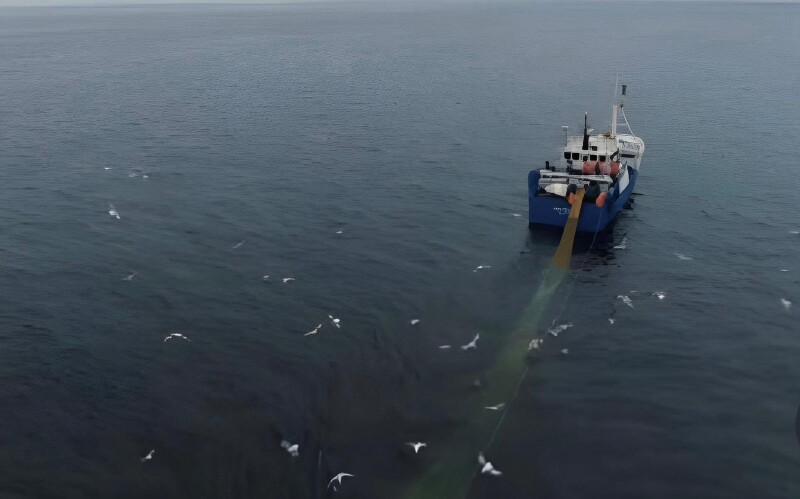
Kieran Kelly, CEO of Ocean Integrity, and his team believe they have developed technology that can change all that, at a profit. “It’s called the Aquatherm Distruptor,” said Kelly. “It’s a large meshless net that uses fluid dynamics to bring cold water up from the bottom.”
According to Kelly, small-scale tests have shown that the Aquatherm Disruptor can lower sea surface temperatures by 3 to 4 degrees Celsius. “It would need 200 to 400 vessels, about 200 feet long, to be built in the US, or 100-foot boats in pairs that would pull these huge nets at 200 meters deep, we could reverse the warming of the ocean,” he said. “You could stop a hurricane with it. The damage from hurricanes and typhoons globally is around $360 billion. Part of Kelly’s economic model includes charging insurance companies around 30 percent of their annual losses to use the Aquatherm Disruptor to stop or steer hurricanes.
“Look, I was talking to the guys in Maine about the shrimp coming back, and I told them, the shrimp aren’t coming back until the plankton come back.”
Kelly is convinced that his company’s technology can help reverse plankton decline all over the world and help restore fish stocks. “Increasing plankton is a win for everything. That’s the goose with the golden egg. How much will governments and fishermen pay for that?” he asked.
“And when you can prove that you're increasing plankton, that generates carbon credits,” said Kelly. “We estimate as much as $100 billion a year in carbon credits. That’s part of what will help pay for it.”
Kelly added that the technology can also save coral reefs. "I’ve seen studies where just 24 hours of cold water on the coral can reverse the bleaching.”
Kelly noted that he has been working on the Aquatherm Disruptor idea since it came to him while pumping herring in Maine. “It’s geo-engineering,” he said.
While the idea sounds ambitious, Kelly noted that others with deeper pockets are working on similar ideas. “Bill Gates has been trying to lower the ocean temperature by using wave energy to pump water up from the bottom, and he’s getting something like half a ton a minute. That’s nothing, right? And he’s got all those pumps. With two vessels, we can pull up one million tons a minute, without the pumps. Our nets are tapered and designed so the water cavitates up to the surface, and there’s no bycatch. There are openings so the whales and fish go right through.”
Ocean Integrity is seeking funding to expand its research and scale up its project. “There’s interest,” said Kelly.