




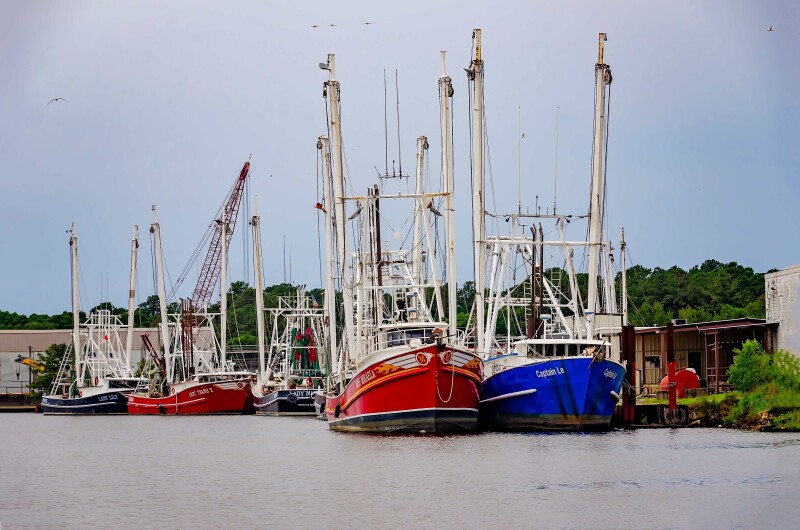
U.S. shrimpers are facing higher fuel prices due to the Iran war, leading to higher operating costs for an industry that is already struggling.
“For a recent 30-day trip, I spent $47,000 on diesel before I even left the dock. That is $20,000 more for a single trip than the previous year,” Zirlott Trawlers owner Jeremy Zirlott said in a release. “U.S. shrimpers operate on razor-thin margins, and right now, the increased cost of diesel makes it nearly impossible to turn a profit in the wholesale shrimp market.”
Zirlott is also a board member of the Southern Shrimp Alliance (SSA), an advocacy group for domestic shrimpers that is highlighting the sky-high fuel prices ahead of the start of commercial seasons in the Gulf of America.
“Fuel is not an optional line item. You cannot shrimp without it,” W & W Dock owner Craig Wallis, another SSA board member, said in a release. “When pump prices spike overnight, U.S. fishermen cannot simply raise their shrimp prices to compensate. Wholesale seafood markets don’t work that way. We absorb those costs directly. The U.S. shrimping fleet is going to be tied to the dock if something doesn’t change; we are already seeing it happen.”
According to an SSA analysis, fuel prices have shot up 54 percent from $3.48 per gallon to $5.37 over a three-month period. That’s only $0.44 below the record high fuel prices seen in June 2022, when fuel prices exceeded shrimp prices. Fuel is the top operating cost for shrimpers, according to NOAA Fisheries.
With commercial shrimping seasons set to kick off in May and June, many shrimpers are considering staying tied to the dock until fuel prices drop.
“You can’t make the math come out right. The gamble I take when putting $55,000 to $60,000 of fuel in my boat is too high. I am going to be tied to the dock, along with my fellow shrimpers, until fuel prices drop,” SSA board member and commercial shrimper Lindsey Burroughs said.
The jump in fuel prices comes shortly after NOAA Fisheries published an economic snapshot highlighting the dire conditions facing the U.S.'s shrimp fleet and its reliance on lower fuel prices to operate at a profit.
“The dominant input into production is fuel (at 36 percent of operating costs), followed closely by labor (27.7 percent). Hence, in addition to the shrimp price, the fuel price is a central driver of the economics of the Gulf shrimp fishery,” the report noted. “Until 2022, the shrimp price always exceeded the fuel price, including by over $1.00 since 2013. In 2022, the shrimp price dropped substantially just as the fuel price rose – leading to a negative difference. This negative difference continued into 2023, in spite of a drop in the fuel price, as the shrimp price dropped further.”
The report’s authors concluded that the domestic shrimp sector “cannot sustainably compete” with imported shrimp products, despite the relative health of the Gulf fishery and warned that any additional negative shocks to the sector would lead to attrition and consolidation in the fishery.
“We know from our regular assessments that shrimp abundance is not the issue here,” Southeast Fisheries Science Center deputy director John Walter said. “We also know that because of declining profits, fewer vessels are shrimping, active vessels are shrimping less, and fewer crew are employed by the industry. This is driving the observed drop in landings and exacerbating revenue declines.”
In Europe, officials have called for emergency action to support commercial fishers struggling with the shock in fuel prices caused by the Iran war, and Spain has already announced $ 29 million in aid for its fleet.
This article is republished with permission from Seafood Source.
.png.small.400x400.png)

