

As the Dungeness crab season winds down on the Washington coast, fishermen are closing out a difficult year marked by low landings and rising fuel costs – pressures now being felt across all U.S. fisheries.
According to reporting from the Chinook Observer, Washington commercial crabbers landed 9,382,410 pounds of crab as of March 23, putting the season on pace to be the lowest-volume year since 2014-2015. At the same time, marine diesel prices are hovering near $6 per gallon, adding strain to an already challenging season.
“Hopefully, we’re at the point where it won’t go up anymore,” F/V Brandy owner and captain Ryan Walters told the Observer before departing on a trip with crew on March 28.
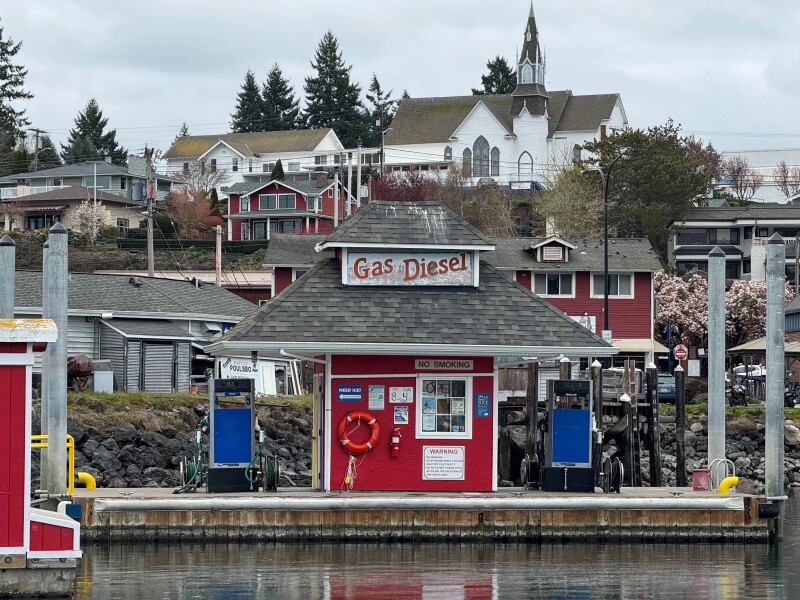
Fuel remains one of the largest expenses for vessels. Crew member Paul Munowich, who has fished commercially for 25 years, said prices are among the highest he can remember. “Fuel is one of our biggest expenses, just one of those things you’ve got to deal with,” he told the Observer, noting their vessel holds 3,000 gallons– putting a full fuel bill at more than $15,000.
While ex-vessel prices have held steady, the lack of volume has made for a tough season. “It’s been slow, a tough year,” Walters said. “The price has been good, just not the volume.”
Even so, fishermen are continuing to fish through the added costs. “It just affects the bottom line,” Munowich said. “That’s the problem with this industry –a lot of it gets dictated out of our control, but we’ve just got to keep fishing,” he told the Observer.
Gulf & South Atlantic
The pressure isn’t limited to the West Coast crab fleet. According to reporting from SeafoodSource, U.S. shrimpers in the Gulf are facing similarly steep fuel increases tied to geopolitical tensions, complicating the ongoing conflict involving Iran.
“For a recent 30-day trip, I spent $47,000 on diesel before I even left the dock. That is $20,000 more for a single trip than the previous year,” Zirlott Trawlers owner Jeremy Zirlott said in a release. “U.S. shrimpers operate on razor-thin margins, and right now, the increased cost of diesel makes it nearly impossible to turn a profit in the wholesale shrimp market.”
Fuel prices for shrimpers have jumped 54 percent in just three months. From $3.48 to $5.37 per gallon according to a Southern Shrimp Alliance analysis cited by SeafoodSource. The increase puts diesel costs near record highs last seen in 2022, when fuel prices briefly exceeded shrimp prices.
“Fuel is not an optional line item. You cannot shrimp without it,” W & W Dock owner Craig Wallis. “When pump prices spike overnight, U.S. fishermen cannot simply raise their shrimp prices to compensate. Wholesale seafood markets don’t work that way. We absorb those costs directly.”
For some shrimpers, the math no longer works. “You can’t make the math come out right,” said commercial shrimper Lindsey Burroughs.
In the Northeast
News Center Maine reported from the coast to the woods, people who rely on fuel to do their jobs say the higher costs are changing how they work and raising concerns about what comes next. Maine lobstermen are rethinking trips on the water, while logging contractors say the math is getting harder across the state.
Sonny Beal of the Maine Lobstermen’s Association told News Center that with diesel hovering around $5 to $6 a gallon, the costs are adding up quickly for fishing crews.
“I can burn 40-50 gallons a day of fuel, and at 506 dollars a gallon, that’s a lot of lobsters you have to catch to pay for that, let alone make a profit,” Beal said. Though the impact is felt personally among Maine lobster boat owners, the impact stretches far beyond just the boats into every part of the industry, including selling and distributing.
From Washington crabbers to Gulf shrimpers and Maine lobstermen, the story is the same–fuel is tightening the margin on an industry already used to working on the edge. Costs will continue to ripple beyond the wheelhouse into processing, transport, and markets. Fishermen across all coasts are being forced to adapt while hoping relief comes sooner rather than later.