
When there were plenty of wooden boats and railways along the shores of Chesapeake Bay, watermen relied heavily on neighborhood railways for annual spring maintenance hauls. Today, neighborhood railways are few and far between.
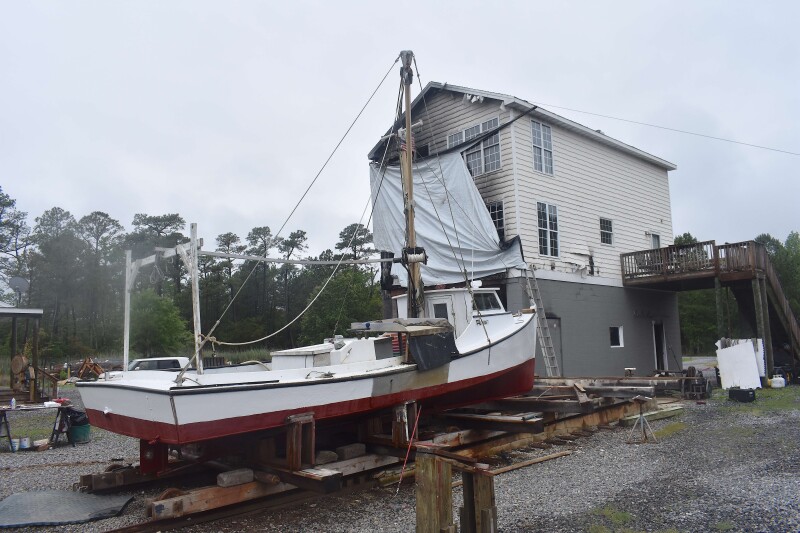
Nelson’s Railway on Antipoison Creek near White Stone, Va., is one that’s still left. An electrical fire in February 2026 totaled the shop and living quarters at the railway, leaving commercial fishing boat customers concerned that spring hauls would be delayed – or not happen at all.
The fire started in the downstairs shop portion of the building, gutting the interior of the shop and upstairs where Frank and Kathy Nelson were living. The building was structurally damaged and in August 2026 declared a total loss. The railway itself, however, was undamaged. The electrical panel located on the side of the shop building that provided juice to power the electric railway motor was fried by the fire.
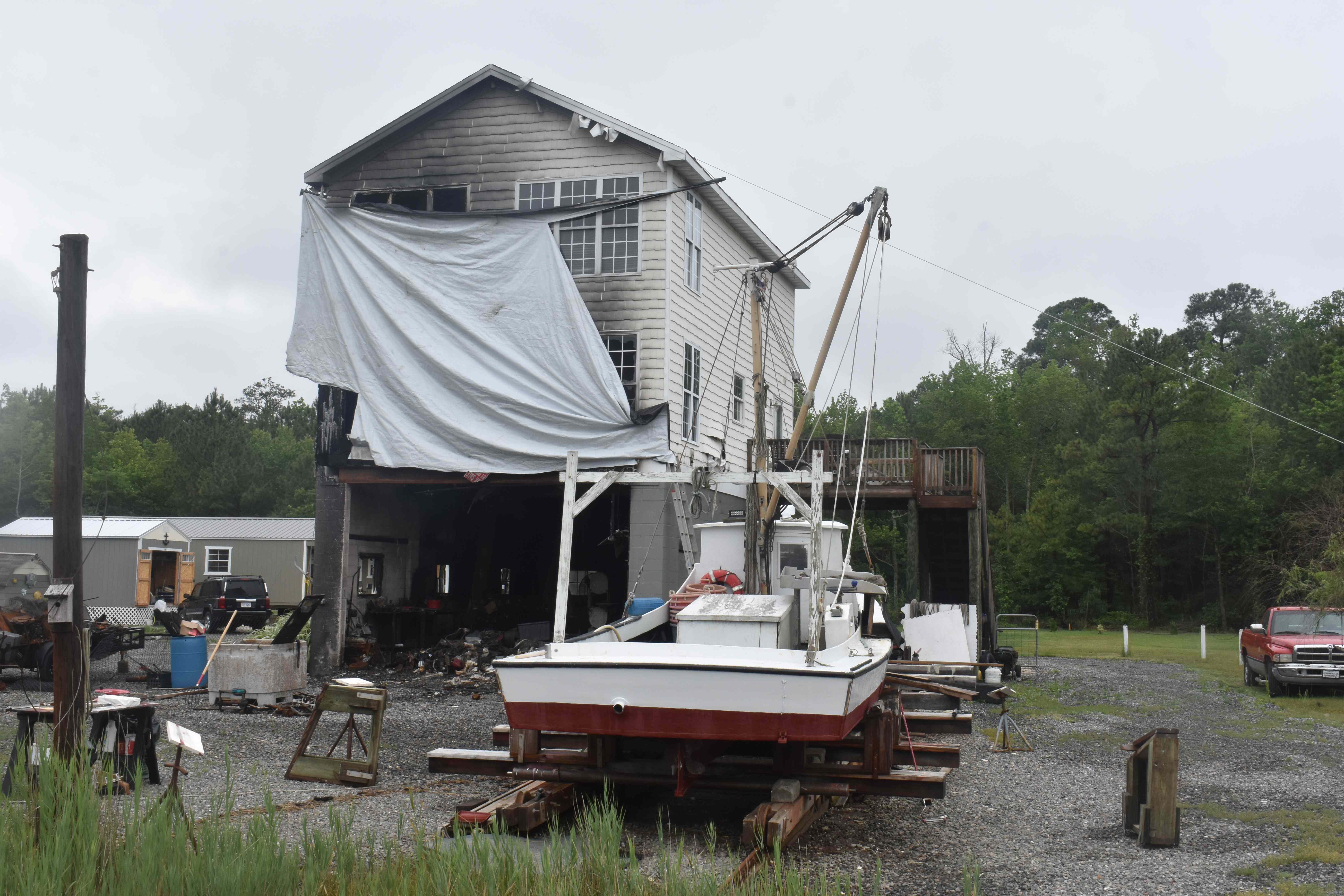
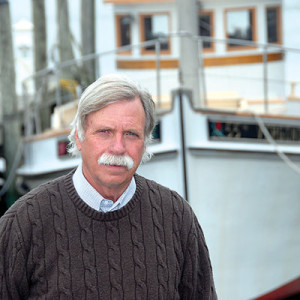
“We had to get down to basics,” says Frank Nelson, owner of the railway. “With just weeks before the fishing season opening, I had five boats lined up for hauls. We hauled the first boat with a Ford 4110 utility tractor.”
Before bringing in the tractor, Nelson tried a portable generator to power the 5 h.p. Farm Duty electric railway motor. “It would run the motor but did not have enough power to pull the railway,” says Nelson.
By the time the first boat was ready to be lowered back into the water, Nelson had gotten power back by trenching and running an electric line to another part of the property that still had power. “We were able to haul every boat and get them back in the water before the fishing season opened,” he says.
“I’m a commercial fisherman myself who works from wooden boats,” he says. “Every year I’m on a schedule to have my boats on the railway and my customers are the same way. The life of a wooden boat is tied to that annual railway visit and watermen depend on us to be available when they need us.”
In August, Nelson reported that insurance issues which had been going on for seven months related to the building itself were resolved. The damaged structure still standing will be torn down and new $480,000 building will be built over the footprint of the old building.
The Nelsons are still negotiating over the value of tools. “This has certainly been a journey,” says Nelson, “but things seem to be coming around. It is always important to have good insurance.”
Nelson has fished commercially for 45 years, from working in the New England scallop fishery to chasing swordfish in waters around Key West, Fla. He owns two wooden deadrise boats that he uses to dredge oysters in the year-round Virginia private oyster fishery.
He owns a Francis Haynie-built 42-foot deadrise boat and a Jerry Pruitt-built 32-footer. The 42-footer is worked in deepwater oyster beds while the 32-footer is worked in shallow water beds where the larger, deeper draft boat cannot go.
In the meantime, boats are still being hauled at Nelson’s Railway!