

A lengthy Department of Justice (DOJ) brief in defense of a veto on the Pebble Mine in Southwest Alaska has opponents of the mine elated and Northern Dynasty Minerals in Vancouver, Canada, promising further legal action.
The Feb. 17 filing in U.S. District Court in Anchorage stands firmly behind the Trump administration’s 2020 decision to deny mining permits for the copper, gold and molybdenum prospect in Southwest Alaska bordering on the world's largest run of wild sockeye salmon.
The EPA's decision exercised its authority under the Clean Water Act to prohibit and restrict discharges related to mining the Pebble deposit, based on scientific and legal analysis emphasizing protection of salmon habitat and ecological resources.
Alaska Department of Fish and Game biologists have forecast a return of 45.32 million red salmon to Bristol Bay in 2026, 21% above the long-term average of 37.4 million fish.
"This brief makes clear that the Trump administration understands the proposed Pebble mine is the wrong mine in the wrong place, posing unacceptable risks to one of America's most valuable fisheries and those who depend on it," said Mary Catharine Martin, speaking for the conservation entity SalmonState.
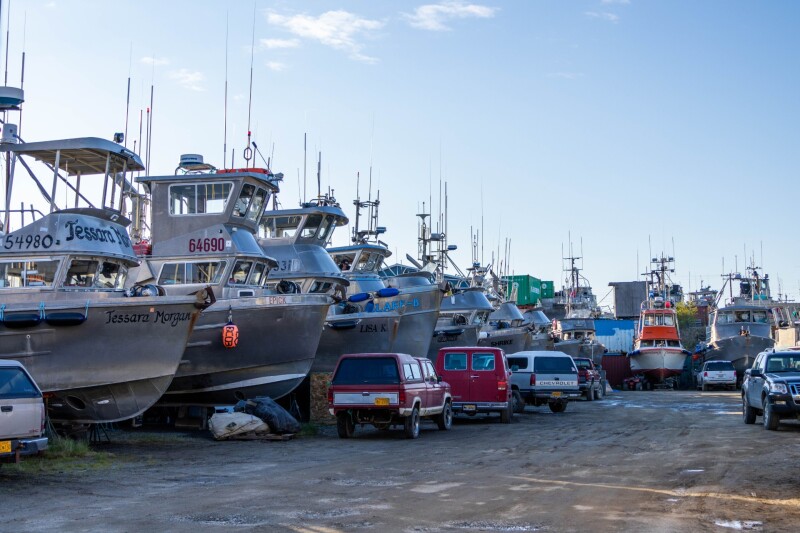
The world-famous red salmon run has an economic value of $2.2 billion in commercial and sport fisheries. Hundreds of other residents and thousands of area wildlife rely on the salmon for subsistence. The sport fishery alone attracts thousands of aficionados from all over the world, including the likes of the president's son, Donald Trump Jr., an avid sportsman who has visited Bristol Bay numerous times to fish for salmon and trout.
A major concern of mine opponents is the potential of mine pollution releasing toxic chemicals with an adverse impact on the salmon.
Northern Dynasty President and CEO Ron Thiessen said on Feb. 19 that the DOJ case is "flawed" and he intends to fight it.
“Our strategy has always been grounded in a solid legal case that this veto was illegal, and a high level of confidence that the court will agree with us," Thiessen said. "This DOJ brief makes many arguments that we have seen before, and that directly contradict the findings of the Final Environmental Impact Statement (FEIS). The flaws in this brief only increase that confidence.
"Our April 15 brief will address the DOJ filing to further establish that the court should order the veto invalid," Thiessen said. "We will, of course, continue to explore settlement with EPA [Environmental Protection Agency] as we prepare our brief, but we will also push for a decision by the court as soon as possible.”
Pebble Partnership CEO John Shively issued a statement saying that development of the mine would impact about 10,000 acres in a watershed that is over 25 million acres in size. "In terms of footprint, we would essentially construct the equivalent of a large airport complex somewhere within the whole state of Ohio. The notion that this will permanently harm the salmon fishery defies common sense," he said.
Over the years, the strength of the Bristol Bay ecosystem and its fishing economy have led a succession of prominent Alaska leaders, including the late Sen. Ted Stevens, R.-Alaska, to speak out against the mine.
With the U.S. Justice Department and Bristol Bay communities and organizations united behind these policy decisions to defend Bristol Bay, the case now proceeds in federal court, SalmonState officials said.