
With China reportedly producing around 90 percent of the world’s supply of rare earth elements, and far ahead in processing technology, the U.S. and other countries are searching for new ways to meet demand, and deep sea mining on seamounts in the Gulf of Alaska is on the list of proposals. The Japanese press reported in July that experimental deep sea mining had successfully extracted rare earth elements such as neodymium, dysprosium, and terbium—all vital for fighter jet and missile guidance systems—from 6,000 feet below the surface.
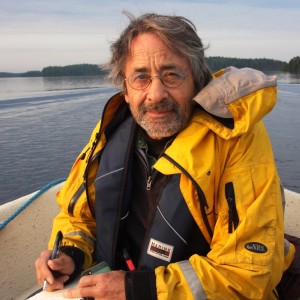
In April of 2025, President Trump issued Executive Order 14285 “Unleashing America’s Offshore Critical Minerals and Resources,” and the Bureau of Ocean Energy Management (BOEM) is evaluating whether to advance a competitive lease sale for minerals on the Alaska Outer Continental Shelf. “We don’t know what impact deep sea mining could have on fisheries, but there is cause for concern,” says retired University of Alaska marine professor Rick Steiner, who now runs a consulting company called Oasis Earth.
Steiner has been analyzing deep sea mining for almost two decades, and he notes that there are three basic types of deep sea mining: nodule collection on abyssal plains, mining sulfide deposits near hydrothermal vents, and mining ferromanganese crusts on seamounts. Steiner first confronted deep sea mining in Papua New Guinea, when the now-defunct Nautilus Minerals sought to extract copper, gold, and silver off the coast there. “The people there were solidly against it,” he says. “I reviewed Nautilus’s EIS in 2009. There would have been huge plumes of sediment, and there was no way to know how those would affect the very rare ecology around these massive sulfide deposits.”
The focus in the Gulf of Alaska is on seamounts. “Picking up the nodules on abyssal plains is one thing,” says Steiner. “But these crusts that contain the rare earth elements are around a meter thick and like concrete, so it takes more aggressive technology to cut into them.”
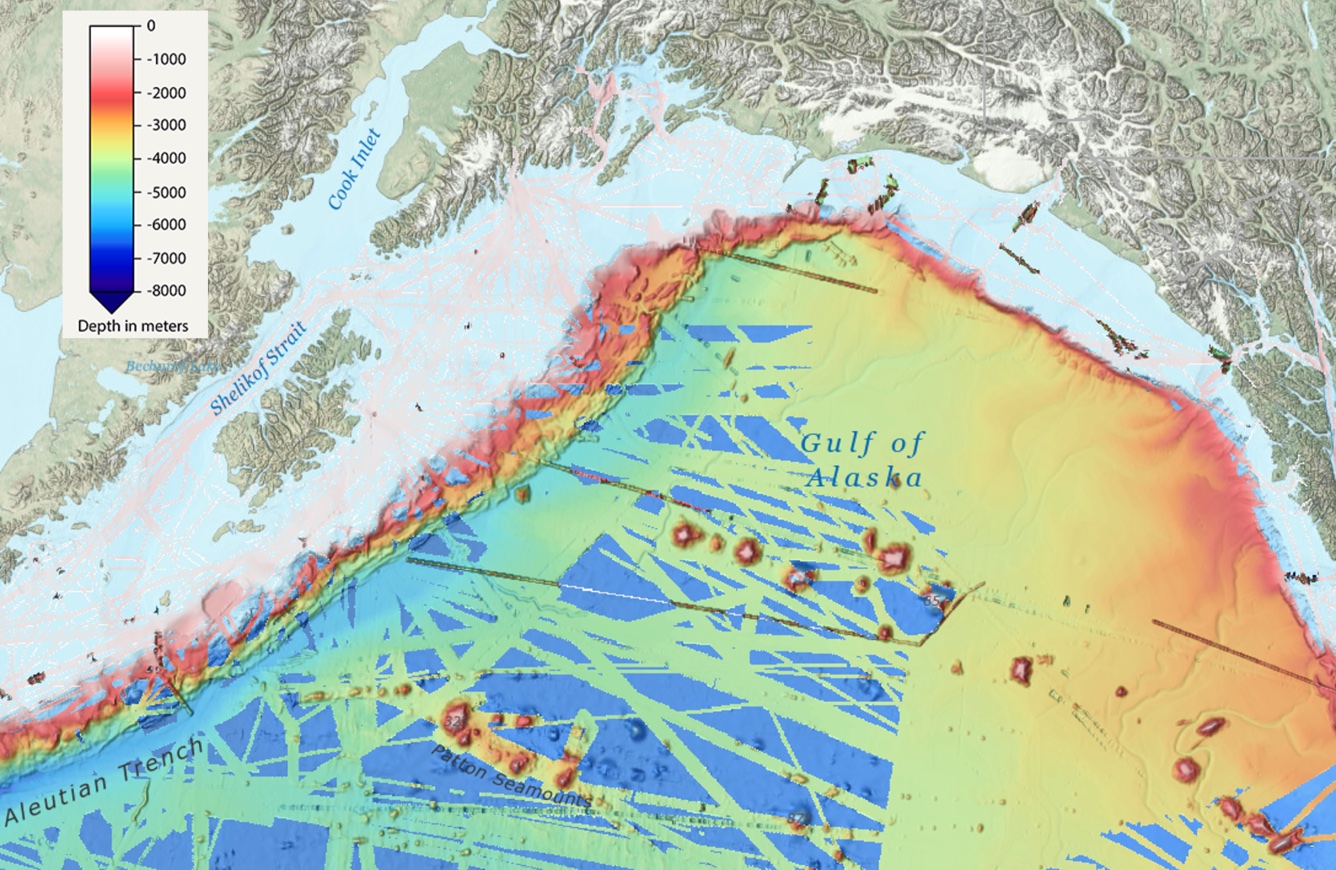
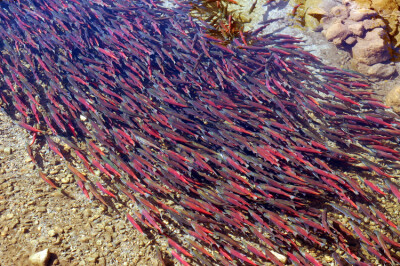
Steiner notes that the potential impacts are unknown and that as far as he knows no one has done any modeling of what could happen. Many salmon species spend part of their life cycles in the northern Gulf of Alaska, and the seamounts there are known to attract marine life. “One thing we think, based on some research that was done years ago, is that sablefish spawn on seamounts and the currents carry the larvae towards shore.”
While deep sea mining could impact Alaska fisheries, Steiner believes fishermen may not have to worry quite yet. “Despite BOEM’s potential lease sale, few companies are ready to take on the cost. I think there are other sources that we can exploit first,” says Steiner. “We can start by improving our material efficiency, recycling the rare earth elements we throw away.”
Indications are that other sources may meet the demand without mining the seamounts. One startup, Phoenix Tailings in Exeter, New Hampshire, has developed a process that separates rare earth elements from mine tailings, essentially turning trash into treasure. The question remains as to which path will offer the best results and be most cost-effective.