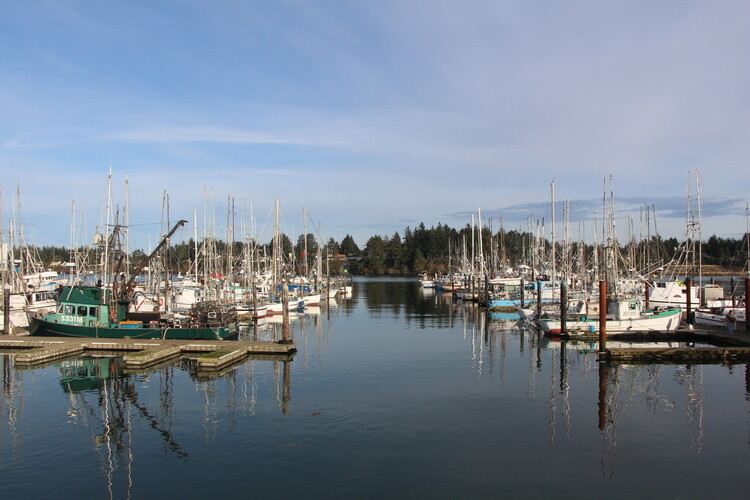
Commercial fishermen in Charleston, Ore., are calling on the International Port of Coos Bay to prioritize repairs to deteriorating docks, marine facilities, and shipyard equipment as the port pursues a multibillion-dollar shipping terminal expansion.
According to Jefferson Public Radio (JPR), fishermen say aging infrastructure and equipment failures are already costing the fleet fishing opportunities, revenue, and access to essential services.
Melissa Clemens, president of Charleston Fishing Families, said her crew missed a three-day halibut opening this summer after the marina’s fuel dock ran out of fuel and its ice plant broke down. She estimated the missed opening cost her boat about $30,000 in revenue.
“The whole fleet is tired of waiting,” Clemens told JPR. “We have been put on the back burner for every other project that the International Port of Coos Bay has, and we’re done.”
At an Oct. 28 Charleston Marina Advisory Committee meeting, about 40 fishermen and maritime workers gathered to voice concerns about deteriorating infrastructure, safety, and the port’s spending priorities.
The port commission reduced Charleston’s spending authority by nearly $400,000 in June, shifting general fund spending authority to help cover railroad expenses. It marked the fourth consecutive year Charleston’s spending authority had been reduced in budget adjustments benefiting railroad operations, with reductions totaling nearly $1.2 million.
Port CEO Lanelle Comstock said Charleston has historically operated at a loss and that the marina and railroad draw from the same general fund. She said the port is not diverting Charleston’s revenue directly to support the railroad.
Meanwhile, problems at the Charleston Shipyard are forcing fishermen to look elsewhere for vessel repairs. Ray Cox, owner of Giddings Boatworks, said deteriorating haul-out equipment has prevented him from getting vessels onto land for repairs. Fisherman Craig Stolz said he expects to take his shrimp boat to Toledo, Ore., for an estimated $50,000 in repairs that could otherwise support Charleston’s maritime economy.
The advisory committee voted unanimously to ask port commissioners to estimate the cost of overdue repairs and establish dedicated funding for Charleston that would be protected from future budget transfers.
Port officials said they have applied for an emergency permit to repair shipyard equipment and planned to rebuild the marine’s ice machine during a November maintenance shutdown. The port has sought nearly $12 million in funding for marine and shipyard improvements since 2024 and secured $1 million in federal funding for the shipyard.
However, Comstock said a permanent fix to the mechanical boat haul-out system could take until 2028, even if the remaining funding is secured. Port leadership maintains that the proposed Pacific Coast Intermodal Port shipping terminal could generate revenue to help sustain existing industries, including commercial fishing.
The main concern is whether the fleet can afford to wait. With missing fishing opportunities, deteriorating docks, and limited access to vessel repairs, fishermen are pushing for investment in the working waterfront that supports their livelihoods today.