




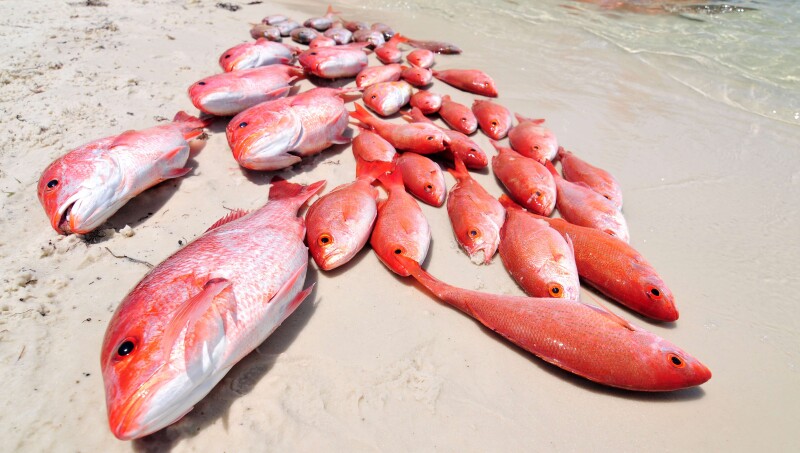
Florida’s push to take greater control over red snapper management is stirring up a familiar divide in fisheries– one that pits access against accountability, and politics against science.
According to reporting from Politico, state officials have applied for an exempted fishing permit (EFP) that would give Florida temporary authority over the Atlantic recreational red snapper fishery. If approved, the measure would expand the current two-day federal season to 39 days this year, with the potential to extend state oversight through 2028.
Gov. Ron DeSantis framed the proposal as a win for anglers. “We know that we can do this effectively, and we know that this is something that could make a big difference for our recreational anglers, particularly in Northeast Florida,” he said during a Nov. press conference.
Recreational fishing advocates have largely backed the move, arguing that federal data underestimates the abundance of the stock. Martha Guyas of the American Sportfishing Association told Politico that anglers are seeing more fish on the water than regulations allow them to harvest. “You’ve had people that are frustrated that they’re seeing lots of red snapper out there, but they’re being forced to be thrown back,” she said. “It’s like you’re wasting a fish.”
But commercial fishermen and environmental groups are raising red flags, warning that expanding access without stronger safeguards could come at a cost.
“Fisheries have to be managed by science,” Bob Zales of the Southeastern Fisheries Association told Politico. “And no matter how bad you want something for political impact… if it doesn’t work with science… you don’t need to go there.”
The Atlantic red snapper stock has been overfished in the past, and according to the latest federal assessment, has not yet fully rebuilt. Critics of the proposal argue that longer recreational seasons could increase pressure on the stock at a critical time.
Mike Merrifield, an Atlantic seafood market owner, warned the ripple effect could extend beyond the water. “If they impact the stock to the point where they say, ‘Well, now we’ve got to rebuild the fishery,’ then that’s going to impact our ability to harvest for the American consumer,” he said.
Environmental groups are also questioning whether the plan aligns with federal law. Jon Paul Brooker of the Ocean Conservancy told Politico the proposal “all but ensures” overfishing, arguing that shorter seasons– while unpopular– are more consistent with rebuilding goals.
The debate mirrors what’s already unfolding in the Gulf of America, where Florida’s state-managed red snapper seasons have expanded dramatically. While recreational access has increased, commercial fishermen report traveling farther for smaller fish– fueling concerns that the long-term health of the stock may be slipping.
NOAA Fisheries is expected to decide on Florida’s Atlantic proposal by May 1.
.jpg.small.400x400.jpg)
