




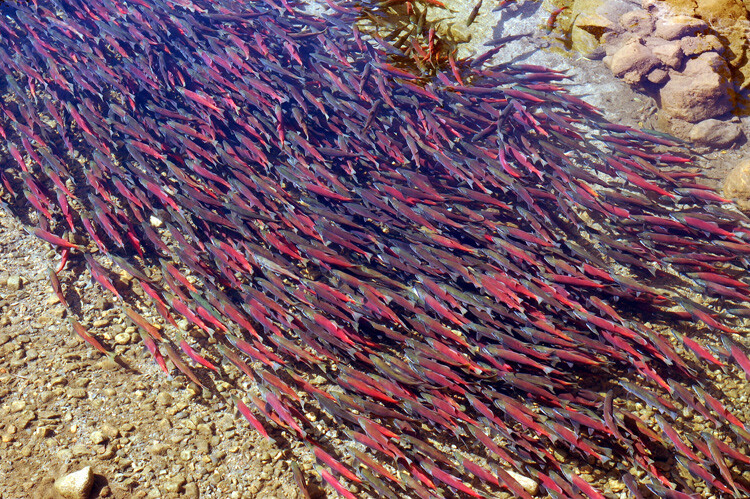
Annual dredging that keeps the Columbia River open to commercial shipping is raising renewed concerns about its potential effects on salmon, steelhead, and other native fish habitat.
Crews spend as much as eight months each year dredging the river bottom to maintain a navigation channel 600 feet wide and 43 feet deep, according to reporting by Yahoo News. The work allows large cargo ships and tankers, some with drafts reaching 40 or 41 feet, to travel the river to Portland.
The Port of Portland-owned Dredge Oregon performs the work under contract with the U.S. Army Corps of Engineers, removing sediment from areas where the navigation channel is becoming too shallow.
But tribal leaders have warned for decades that dredging and other changes to the lower Columbia River could come at a cost to native fish habitat.
“The dredging operations in the lower Columbia must have the health and well-being of Pacific lamprey, salmon and steelhead, who depend on that environment at its forefront,” Kathleen George, tribal council member for the Confederated Tribes of Grande Ronde, said. “Failure to do so puts those populations at an unacceptable level of risk when they are already struggling to survive.”
The Army Corps acknowledged that maintaining the navigation channel can affect fish and aquatic habitat, including through temporary increases in turbidity, disturbance of bottom habitat, and changes in available forage.
“We evaluate those effects and use measures designed to avoid or minimize impacts,” the Corps said.
Before dredging, the Corps formally consults with the National Marine Fisheries Service and U.S. Fish and Wildlife Service under the Endangered Species Act. Concerns about potential effects on fish also informed an environmental review for the Corps’ recently completed 20-year dredging plan.
At the same time, dredged sediment is being used for habitat projects elsewhere along the river. Material removed from the channel has helped create habitat for the endangered streaked horned lark, with crews alternating placement areas on islands to maintain suitable habitat for the birds.
Federal agencies have also experimented with using dredged material to expand shallow-water habitat in the lower Columbia for juvenile salmon.
The U.S. Geological Survey is studying how relocating dredged sediment affects juvenile Chinook and coho salmon, with the Corps saying the research could provide a better understanding of the long-term benefits and tradeoffs.
“Our job is to balance environmental considerations with our responsibility to maintain a safe and reliable Federal navigation channel,” the Corps said. “Protecting fish, wildlife and aquatic habitat is an important part of how we plan and carry out that mission.”
.jpg.small.400x400.jpg)
