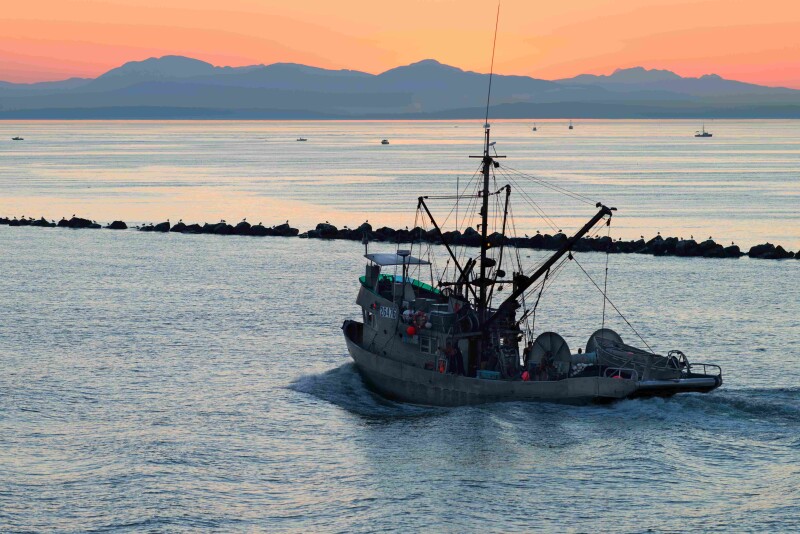
California's commercial salmon fleet is back on the water for the first time since 2022 following a three-year statewide closure, though the reopening remains tightly restricted as fishery managers work to protect rebuilding Chinook salmon stocks.
According to The Press Democrat, state and federal fishery managers reopened the commercial and recreational salmon season in late June after improved rainfall and snowpack during 2023 and 2024 boosted survival rates for juvenile Chinook salmon migrating from the Sacramento Valley to the Pacific Ocean. Those fish have now returned as adults in numbers sufficient to support a limited harvest, though managers continue to closely monitor catches.
The reopening comes with staggered openings and closures intended to limit harvest as salmon populations continue to recover. The Press Democrat reported that about two-thirds of California's allowable commercial harvest of 83,000 Chinook salmon had already been landed as of July 1, according to the state.
Despite the return of the fishery, industry leaders told sources the abbreviated season will do little to offset the economic damage caused by three consecutive years of closures. Bodega Bay Fishermen's Marketing Association President Dick Ogg said many fishermen lost their primary source of summer income during the shutdown, while some left the industry altogether because of rising operating costs and limited fishing opportunities.
"When you look at the cost of a vessel, the cost of a permit, the cost of fuel and then trying to maintain crew and insurance, it's a difficult situation for any young fisherman to get into," Ogg told The Press Democrat.
The reopening follows a difficult stretch for California's salmon fleet, which has also faced shortened Dungeness crab seasons in recent years. NOAA announced $21.3 million in federal fishery disaster assistance for California's salmon industry in June, although industry representatives have argued previous relief funding fell well short of estimated losses from the closure.
Industry advocates shared that while two wet winters helped rebuild Chinook returns, the long-term health of the fishery will continue to depend on water management, river flows and habitat conditions throughout California's major salmon-producing watersheds.