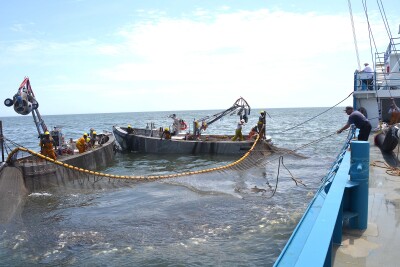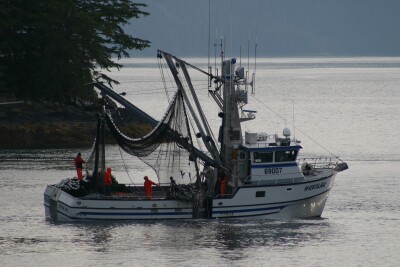


Alaska’s Congressional delegation has proposed new legislation designed to reduce salmon bycatch in commercial fisheries and protect seafloor habitats from trawling operations.
“In recent years, Alaskans have witnessed unprecedented declines among some fish and crab species in parts of the state while, in other parts, runs have been strong and historic,” U.S. Senator Dan Sullivan (R-Alaska) said in a release. “We need to get to the bottom of all potential causes of this increased variability, including concerns about bycatch and trawl gear habitat impacts, to strengthen the sustainability of our fisheries.”
Alaska’s salmon sector has long bemoaned the impact of commercial pollock trawling operations on the state’s salmon populations. According to conservation NGO Oceana, nearly 3 million chum salmon were taken as bycatch between 2015 and 2024. Conservation groups have also warned of the impact trawling gear can have on the seafloor, urging regulators to implement protections that ban gear from touching the seafloor.
The pollock industry has pushed back on claims that their bycatch is the reason for dwindling salmon stocks, arguing that many of the salmon caught up in trawling operations don’t originate from Alaska. Last year, the North Pacific Fishery Management Council (NPFMC) claimed the pollock sector had “reduced its chum bycatch by nearly 95 percent over the past four years.”
Those arguments have done little to assuage frustration in Alaska’s salmon industry.
The Bycatch Reduction and Research Act includes several measures to address bycatch and trawling concerns. The legislation would reconstitute the Alaska Salmon Research Task Force (ASRTF) – a group established by Congress in 2022 to look at the issue of declining salmon returns – and create the new Bycatch Reduction and Research Task Force. The latter task force would review NOAA research on Alaska salmon, the impact of Alaskan trawl gear on the seafloor, and make recommendations for future research.
The bill would also work to improve data collection on Alaska salmon. It would establish a satellite tagging program to track salmon across their life spans and migrations, as well as a genetic sampling grant program to help better identify the stock and age of Alaska salmon caught as bycatch in commercial fisheries.
Other provisions in the legislation will foster innovation in bycatch-reducing gear. The bill would provide a flume tank for testing technology and fishing gear to mitigate both bycatch and the impacts of trawling on the seafloor habitat. It would also provide non-federal financial support for commercial fishers to purchase or modify gear and equipment for the same purpose.
“There is clear and growing concern across Alaska about the impact of bottom trawling on seafloor habitat and the fisheries important to Alaskans,” Alaska Longline Fishermen's Association executive director Linda Behnken said in a release. “Senator Sullivan's bill responds to that concern by providing funding for research and technology to reduce these impacts.”
“Alaska’s fisheries are facing unprecedented challenges as our marine ecosystems are changing faster than ever before,” U.S. Senator Lisa Murkowski (R-Alaska) added in a release. “The Bycatch Reduction and Research Act of 2025 builds on the important work already underway by closing critical data gaps, strengthening research, and investing in practical tools that help fishermen reduce bycatch while protecting critical habitat. This thoughtful, science-based approach brings together researchers, managers, and industry to better understand what’s happening in our waters and ensure Alaska’s fisheries remain sustainable for generations to come.”
According to Sullivan’s office, the legislation would also create a clearer timeline for NOAA’s exempted fishing permits (EFP) process and improve transparency of observer coverage in federally managed fisheries.
“As both a commercial fisherman and a salmon scientist, I see the consequences of changing ocean conditions and management uncertainty on the water and in our communities,” Alaska Marine Conservation Council Executive Director Michelle Stratton – who previously served as a member of the Alaska Salmon Research Task Force – said in a statement. “This legislation comes at a pivotal time. Our coastal communities and food systems need thriving fisheries, and for that, we need thriving ecosystems. The Act is a bridge between the two, supporting marine research, improved transparency, and practical tools for necessary reductions in bycatch and habitat impacts. By directly linking improved data and monitoring to fishery management decisions, this legislation helps ensure sustainable salmon fisheries while protecting fishing livelihoods and food security across Alaska.”
This article was republished with permission from SeafoodSource. Read more here.