A young woman in Valdez, Alaska, buys her first boat and prepares for salmon seining in Prince William Sound.
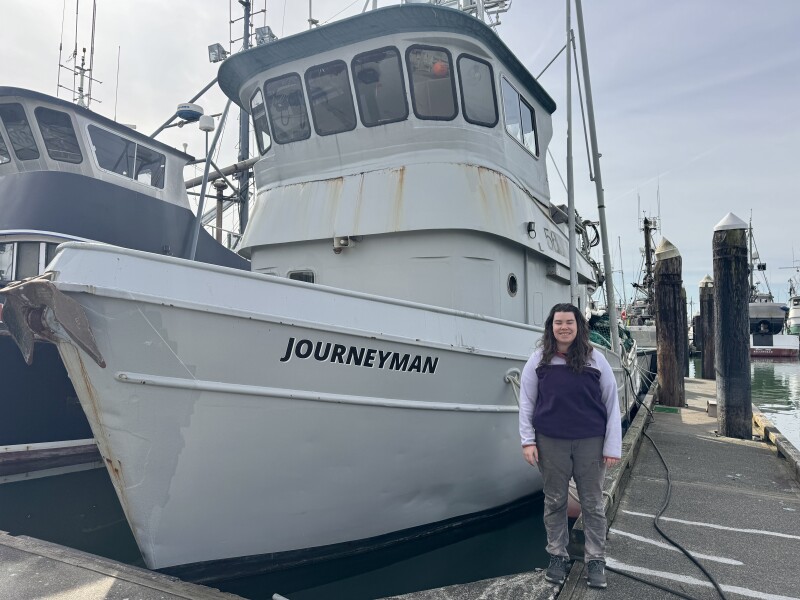
It may have been the Shanti, one of several launched in 1979 from the beach in Moss Landing, Calif. Painted blue with yellow lettering, the Shanti sailed for Hawaii, chasing albacore. I had helped build her and the others. After 47 years, I see what looks like her on the list of boats at Dock Street Brokers in Bellingham, Wash. She’s the Journeyman, and rigged as a salmon seiner, and according to broker Jamie O’Neill, it was the Shanti. “Sold,” says the ad.
"I grew up with the Journeyman,” says the new owner, Rowan Miller. “The guy who owned it, Al Kapp, was in our radio group; we fished together with him. Sadly, Al passed away three years ago. I was 21 at the time, and I knew I wanted to fish, but I wasn’t ready to run a boat and a crew.”
Miller, now 24, grew up on her father’s boat and started working with him for a share when she was 14. “I tried college,” says Miller. “But that was not for me, so I called Ryan Kapp, Al’s nephew and executor of his estate, and asked if they wanted to sell me the Journeyman. He said, we would love to sell you the boat.”
According to Peter Schell at Dock Street, the sale took longer than expected because the government shutdown limited some aspects of the process that involved the U.S. Coast Guard. “We started the sale in November 2025, and finally finished in March 2026,” says Schell.
"I was glad to stop paying the mooring fee,” says Ryan Kapp. “And we’re so glad that Rowan has the boat. Her father and my uncle were good friends.”
Miller was able to take advantage of Alaska’s Commercial Fishing Loan Program, which loans fishermen up to $400,000. The asking price for the Journeyman on Dock Street was around $245,000, though that may not be what Miller paid. With the Alaska program — intended to promote the development of predominantly resident fisheries — she was able to put down 25% and finance 75% at 5.25% fixed interest.
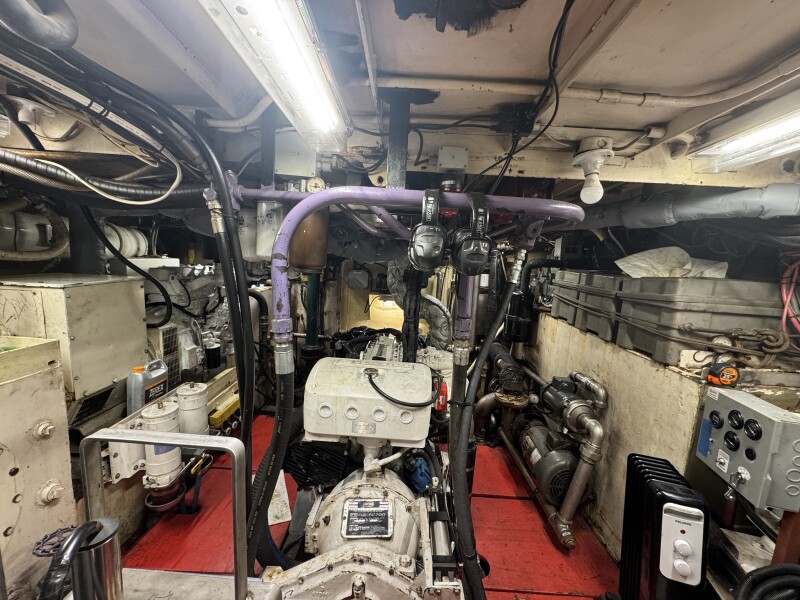
The Journeyman was in the water down in Bellingham when Miller bought it, and she went down to get it ready for the trip north. “I had mechanics go over it,” she says. “They checked all the engines and went over all the systems. It’s an eight-day run up here.” According to Miller, the Journeyman has a John Deere 6090T2 main engine that Kapp put in the boat in 2013. It has a Twin Disc 5114 gear with a 3.43:1 ratio turning a 3-inch diameter shaft, and a 42x29 three-bladed bronze propeller. The engine room also holds two Isuzu gensets. “One is 40kW, and the other is 5kW,” Miller says.
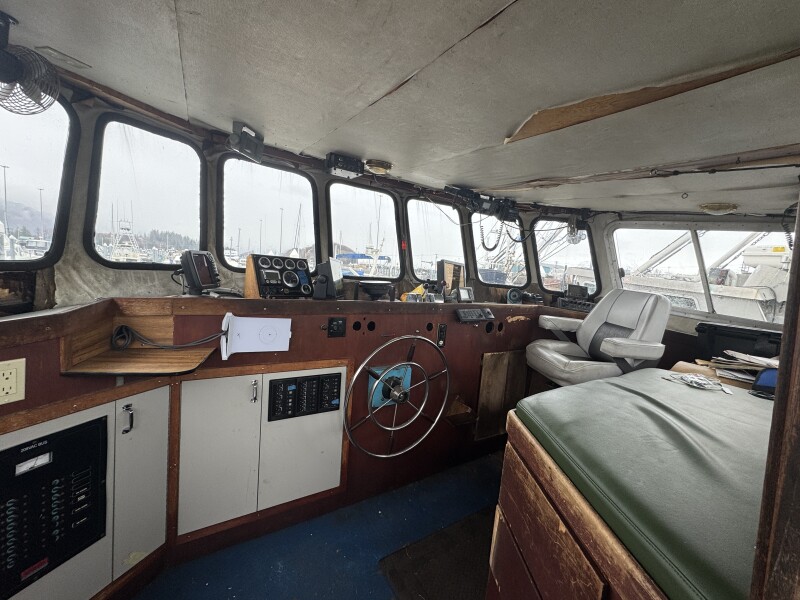
The electronics package is mostly older stuff. “Al bought the best equipment available in 2000,” says Miller. “But he didn’t upgrade much after that. The newest thing on the boat is a Garmin side scanner we put on.” The older suite includes mostly Furuno equipment, including radar, sonar, sounder, and satellite compass.
Kapp was actively fishing and mostly seining pinks in Prince William Sound before he passed away, and Miller bought the boat as pretty much a turnkey operation. “I bought it with all Al’s nets and the seine skiff,” says Miller. “The skiff is about 20-ish feet long and has a Cat engine.”
Having grown up seining pink salmon, Miller has gotten all the on-the-job training she needs to run her own vessel. My dad has always been good about explaining his thought process to me,” she says. “He involves me in the decision-making process and tells me why he does things the way he does.”
Reaping this harvest of generational knowledge gives Miller an edge, and she now has a boat that will enable her to put what she’s learned to work.
Miller was also able to move a permit from her father’s boat to her new boat. “Because the law allowed us to run more net with two permits on the boat, my father had bought a second one, and I was able to buy that from him,” she says.
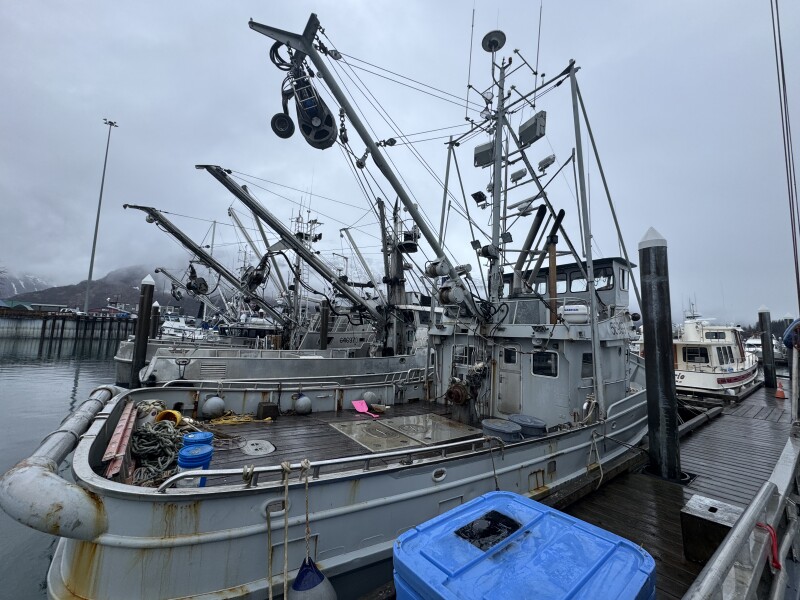
The deck layout to get fish aboard is basic. “It’s got a Marco power block, and two winches on the boom, and a Kolstrand winch on deck,” says Miller. “There’s no picking boom and no slider for the block. The slider allows you to move the block up and down the boom as you haul. My dad has one. I’ll probably add one, and I’ll add a picking boom. That’ll be a winter project.”
For paint, Miller will keep Al Kapp’s color, a shade of gray. “It’s the color of the water and the weather here,” she says. “Kind of camouflage. I like that.” Before the season starts, Miller plans to haul the boat and check it out below the waterline, and maybe change some zincs. “And I have some work to do on the top house,” she adds. “There are places where the plywood and fiberglass are separating from the steel of the original flying bridge.”
The top house was an add-on from the original build, which had the wheelhouse on deck level and a flying bridge for hunting albacore. The original wheelhouse has had steel welded over most of its windows and has been converted into a three-bunk stateroom and galley. As far as Ryan Kapp recalls, his uncle Al bought the boat that way in the late 80s, so the changes had been made before then.
A more recent upgrade is the fish hold that I insulated and fiberglassed in 1979. “They redid that four years ago,” says Miller. “It has a 20-ton refrigerated seawater (RSW) system, and I can put 40,000 in the forward hold. There’s another smaller hold that we call the Sunday hold, aft. But Ryan says I shouldn’t fill it because the back deck will be eight inches underwater.”
Despite all her time on the water, Miller has not seen any emergencies on board. “Dad runs a pretty tight ship, so we’ve never had any problems,” she says. “We did rescue a couple of boats that were sinking.”
To further increase the safety factor on board, Miller and her father have done Alaska Marine Safety Education Association safety training for fire prevention and other emergencies. “And we did the drill instructor training,” she says. “So, we can conduct the safety drills on our boats.”
While seining pinks has been identified as one of the most efficient salmon fisheries in the U.S., in Prince William Sound, the fishery depends on hatchery returns. “The forecast isn’t so good for this year,” says Miller. “Two years ago, there were fewer returns, and the hatcheries didn’t get enough broodstock. But the price has been going back up, so hopefully it’ll be higher.”
Miller has been in the business long enough to see good times and bad and is investing in a career rather than a season. She expresses a readiness for whatever comes.
To keep her life simple, Miller is recruiting an all-women crew. She notes that some guys may not want to take orders from a woman skipper, let alone a young woman skipper. “I have an experienced friend who’s going with me, and we have a young woman from Utah who has never been fishing. I just need one more.”
Miller notes that working with all women seems easier for her in terms of keeping a happy ship. “And I’d like to offer women who want to fish a safe place to get into it,” she says.
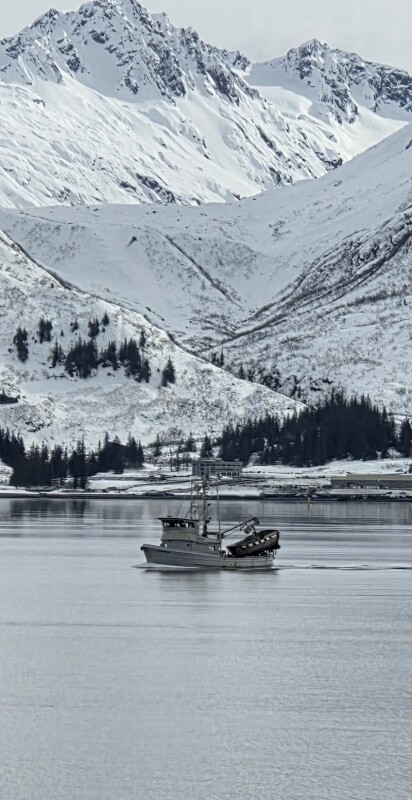
Name of Boat: F/V Journeyman
Home Port: Valdez
Owner: Rowan Miller
Builder: Built on the beach in Moss Landing, California, by the original owner and a mixed crew that included author Paul Molyneaux
Hull Material: Steel
Year built: 1979
Fishery: Salmon seiner
Length: 50 feet
Beam: 16.4 feet
Draft: 7.6 feet
Main Engine: 330-hp John Deere 6090T2
Power Train: Twin Disc 5114 at 3.43:1, 3-inch diameter shaft, 42x29 three-blade bronze propeller
Gensets: Isuzu 4BG1-B 40kW, Isuzu 3CH1 5kW
Fuel Capacity: 400-gallon port tank, 250-gallon starboard tank
Water Capacity: 400 gallons
Hold capacity: insulated hold with 40,000-pound capacity, and 20-ton RSW
Crew accommodations: 7—3 bunks down forward, 3 bunks in main deck stateroom, one bunk in top house.
Electronics: Comnav commander auto pilot, Furuno CH300BB 85/215 KHZ sonar, Icom IC-M59 VHF, Furuno satellite compass, IC-M604 VHF, Bridgewatch Furuno GPS, Garmin plotter, Furuno depth sounder, Starlink communication system, Furuno Radar
Deck Gear: Pullmaster M8 boom lift, Pullmaster M-12 boom lift, PL-4 topping lift, Bloom vang winch, Marco open power block with gripper, Kolstrand deck winch, and sheave.