As summer approaches in Downeast, Maine, there is a certain sadness about visitors who no longer arrive in the border waters shared with Canada and the Passamaquoddy Tribe. For tens of thousands of years, big cod, pollock, and haddock swam into what we now call Cobscook Bay, Passamaquoddy Bay, the St. Croix River estuary, and surrounding waters. And for thousands of years, the Passamaquoddy Tribe, the people of the pollock, lived a rich life harvesting these fish.
"By 1988 it was all over,” says Jane Cowles, who with her late husband, Rick, once bought fish from the mosquito fleet in Eastport, Maine. “We were there for about ten years,” she says.
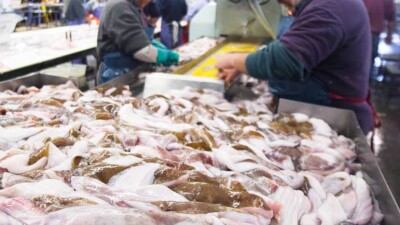
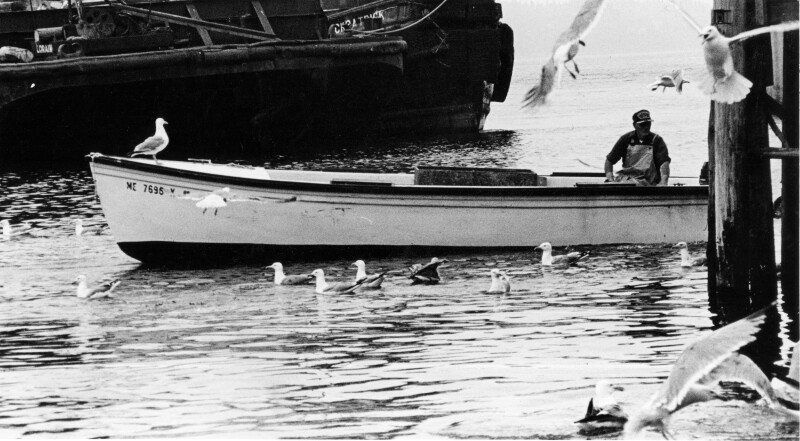
"I imagine you can still catch some to eat,” says Edward French, owner and editor of the Quoddy Tides, the easternmost newspaper in the USA. In 1998, French interviewed Reid Wilson of Eastport, Maine. Wilson had been a leader of the mosquito fleet—about twenty fishermen who buzzed out of the harbor before dawn, racing their outboard skiffs to fishing spots no one knows the names of anymore. They’d be back by noon, unloading hundreds of pounds of large and whale cod, pollock, and haddock. Eastporters loved the haddock but not the cod. “Too wormy,” they said. You couldn’t give cod away in Eastport; it all went down the road to processors in Portland and Boston. Those high-quality fish, less than 24 hours out of the water, sold for the same price as 10-day-old cod from the offshore draggers.
Wilson blamed the draggers for the disappearance of the fish. “There was a place called the Peg Hole to catch haddock,” he told French. “That was a place you could catch four to five hundred pounds, with good bait. The flat bottom off the Eastport breakwater also used to be a good ground for haddock.”
However, in the early 1970s, the Maine Legislature passed a bill opening the waters north of West Quoddy Head to dragging. Wilson recalled that draggers from the westward came up and would drag up even the small haddock, which were shoveled overboard. “That was the beginning of the end of the haddock, right there,” Wilson said.
Others, like Passamaquoddy fisherman Fred Moore III, believe offshore draggers got them. “They left in the holds of Canadian trawlers and came back in a truck,” Moore says.
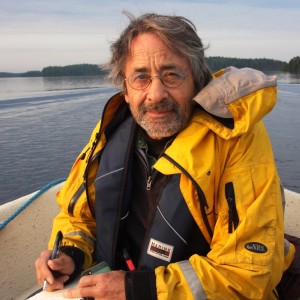
Ted Ames, who brought his little dragger, the Dorothy M, to the St. Croix estuary in October of 1986, was the last draggerman to come Downeast. He believes the absence of groundfish may be due to a lack of alewives coming downriver in the fall.
Little research has been done; only a few tagging studies by the Canadians. A 1956 report notes that a cod tagged in the area in the summer of 1938 was caught on the Northeast Peak of Georges Bank in February 1939. A third of the Passamaquoddy Bay cod tagged in a 2004 study ended up on the West Scotian Shelf, which gives credence to Moore’s belief. But most of the cod in the 2004 study stayed in deeper waters just offshore in the western Bay of Fundy, pointing to other possible causes of their demise. The Grand Manan, New Brunswick, longline fishery for groundfish, for example, may have had an effect on the stock.
While the 2004 Canadian study was aimed at examining the possible impacts of cod farming on wild cod, no studies have ever been done on the effects of salmon farming on wild cod, although salmon farming in the waters began at the same time the groundfish stopped coming in significant numbers.
Whatever the cause, the fish are gone, and because the economic impact is negligible, no regulators or researchers have given the disappearance of this small stock much attention. Only the older locals remember, and the Passamaquoddy through their stories.