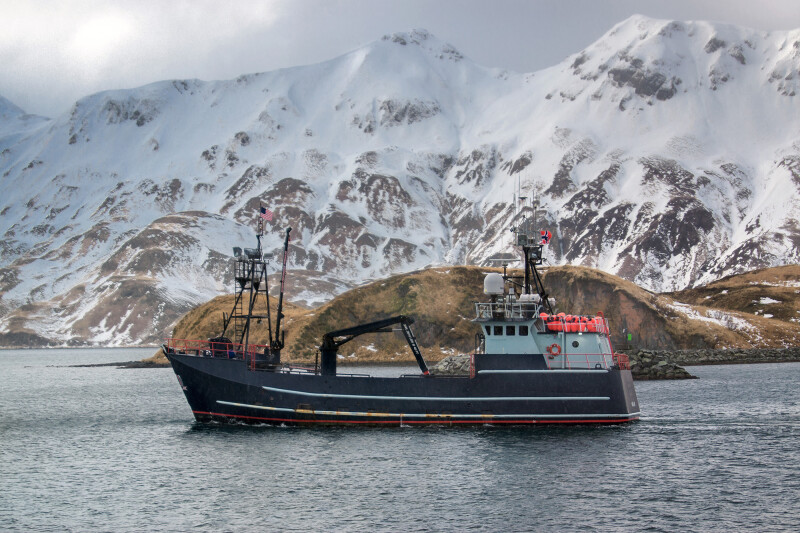
Bering Sea commercial snow crab fisheries will open on Oct. 15 with a total allowable catch (TAC) of 9.3 million pounds, nearly double the TAC allocated for the 2024-25 season.
The Alaska Department of Fish and Game apportioned the catch to include 8.37 million pounds for individual fishing quota (IFQ) and 930,000 pounds for community development quota (CDQ), based on the 2025 estimate of total mature snow crab biomass above the required threshold.
"With the snow crab harvest levels roughly doubling for the upcoming season, crabbers are relieved to see the stock improving," said Jamie Goen, executive director of Alaska Bering Sea Crabbers. "Boats are gearing up, and crabbers are ready to go fishing," said Goen, who was appointed to the North Pacific Fishery Management Council in August of 2024, to the Washington seat vacated with the death of Kenny Down.
The state fisheries agency said that due to their unprecedentedly high abundance that they increased the TAC to an additional one million pounds for the target hybrid Chionoecetes crab.
The season is to close on May 15 in the eastern subdistrict and on May 31 in the western subdistrict, ADF&G officials said.
A year ago, after two consecutive years of closure due to a drastic population decline, ADF&G set the Bering Sea snow crab TAC at 4.72 million pounds.
The Bristol Bay red king crab fishery is also up for the season, opening on Oct. 15, with a TAC of 2.68 million pounds, including 2.4 million pounds for IFQ and 268,000 pounds for CDQ fishermen. A year ago, the red king crab fishery opened with a TAC of 2.31 million pounds.
The Bering Sea Tanner crab season, again opening Oct. 15, is up substantially this year, with a TAC of 10.12 million pounds for the western Bering Sea and a 1.13-million-pound quota for the eastern Bering Sea. That includes 9.1 million pounds for IFQ and 1 million pounds for CDQ in the western sector and 1 million pounds for IFQ and 113,000 pounds for CDQ in the eastern sector.
A year ago, for the western sector, the quota was 4 million pounds for IFQ and 450,000 pounds for CDQ, while in the eastern sector, fishermen were allocated 1.59 million pounds of IFQ and 177,000 pounds for CDQ.