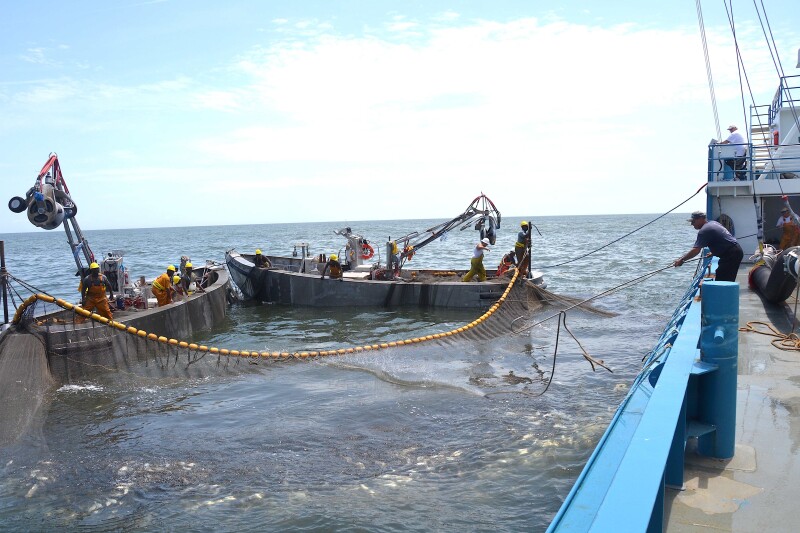
Debate over Atlantic menhaden management in Chesapeake Bay is continuing to intensify following a recent decision by the Atlantic States Marine Fisheries (ASMFC) to delay action on Draft Addendum II.
At its May meeting, the ASMFC’s Atlantic Menhaden Management Board voted to hold off on advancing the addendum for public comment, instead opting to form a work group to further refine the proposal. As previously reported by National Fisherman, the draft includes potential measures aimed at addressing concerns about menhaden availability in the Chesapeake Bay, including changes to harvest caps and seasonal management approaches.
The decision has drawn drastically different responses from stakeholders. The Menhaden Fisheries Coalition characterized the pause as a “responsible” step, arguing that the addendum is technically complex and requires further development before entering the public process.
In a May 13 statement, the group said the Board’s action reflects “basic due diligence” and allows managers to address “real-world implementation questions” and unresolved assumptions within the proposal.
The Coalition also pushed back on recent claims form the Chesapeake Bay Foundation (CBF), which had warned of “dire warning signs” in the Bay, including declining osprey productivity and reduced bait availability. According to the Coalition, those concerns are not clearly linked to the commercial menhaden fishery and should not be treated as settled cause-and-effect.
The group pointed to comments made during the ASMFC meeting by Maryland commissioners H. Russel Dize, who cautioned against attributing ecosystem challenges to a single source. Dize said during the discussion that the Board should look more broadly at factors affecting menhaden distribution and availability, rather than “blame this one group.”
CBF, however, has taken a different view. In earlier statements, the organization described the Board’s decision as a delay in addressing urgent ecological concerns, citing issues such as osprey chick survival and localized bait shortages as indicators that stronger protections may be needed in the Chesapeake Bay.
Those differing interpretations reflect a broader divide that has been building in recent months.
As previously covered by National Fisherman, two recent analyses have challenged the so-called “gauntlet theory,” which suggests that concentrated fishing pressure in Virginia waters limits the number of menhaden reaching the upper Bay. Researchers involved in those studies argued that the available data does not clearly support that conclusion, adding further complexity to the ongoing debate.
At the same time, an analysis from the Menhaden Fisheries Coalition has raised concerns about how economic impacts are weighed in management decisions, suggesting that ASMFC commissioners may have applied inconsistent standards when evaluating tradeoffs between conservation measures and industry effects.
Meanwhile, the ASMFC’s decision to delay Addendum II came amid continued discussion over how best to balance ecological concerns with fishery operations. The addendum under consideration includes options that could alter harvest caps or introduce new seasonal frameworks designed to address perceived regional availability issues in the Chesapeake Bay.
The menhaden fishery itself remains under existing management measures that incorporate ecosystem-based reference points, which are intended to account for the species’ role as a key forage fish. In March, the Atlantic menhaden fishery was also recertified under the Marine Stewardship Council sustainability program, following an independent assessment process.
For now, the ASMFC work group is expected to further develop Draft Addendum II before the Board considers next steps. That process will likely include refining the problem statement, evaluating available data, and clarifying how any proposed measures would be implemented and enforced.
As the debate continues both industry representatives and environmental groups are calling for decisions grounds in science, though they differ on how current data should be interpreted and what actions, if any, are warranted in the near term.