

While Arctic sea ice reached its lowest seasonal peak on March 15, conditions in the Bering Sea told a very different story this winter– with ice expanding farther south than fishermen have seen in more than a decade.
According to reporting from KMXT, sea ice in the eastern Bering Sea continued growing for another week after the Arctic-wide peak, ultimately reaching its greatest extent since 2013. Ice pushed south past Bristol Bay and the Alaska Peninsula, extending to Cold Bay, Unimak Island, and even the Pribilof Islands
"The Bering Sea is the only place in the Arctic where sea ice is above normal," Rick Thoman said to KMXT. “To our west, in the Sea of Okhotsk, so west of Kamchatka, it’s the lowest sea ice extent of record [as of March 19].”
Thoman attributed the unusual pattern to a persistent high-pressure system over the Bering Sea that trapped cold air and promoted ice growth locally, while simultaneously steering warmer, southerly winds into Russian waters, limiting ice formation there.
Despite the broader extent, much of the ice remains relatively thin. According to the National Weather Service’s Alaska Sea Ice Program, ice near Cold Bay and False Pass measured up to 10 inches thick – thinner than historical norms.
“That water is quite warm,” Thoman told KMXT, noting areas south of St. Matthew Island. “As soon as the weather pattern changes, we’re going to see the Bering Sea ice extent decrease rapidly because the ice…is very thin.”
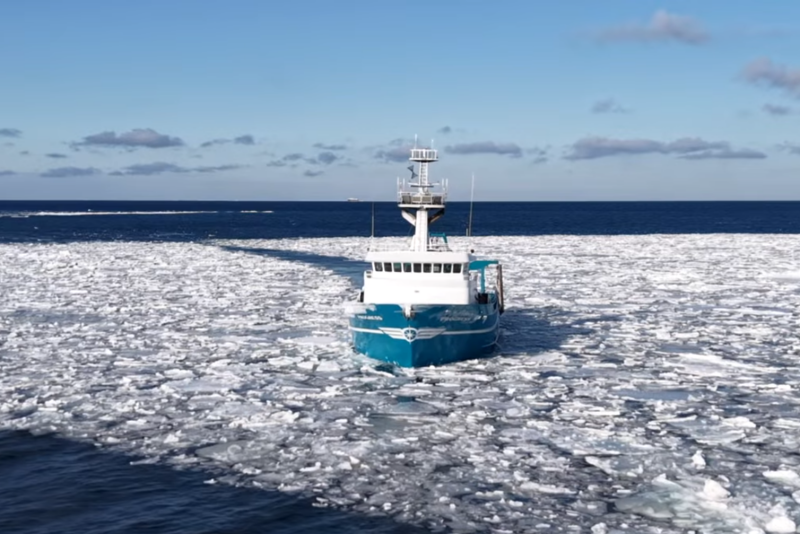
Even so, the ice has already begun affecting fishing operations. United Catcher Boats, which represents much of the Bering Sea inshore pollock fleet, shared footage of vessels navigating through ice in the southeastern Bering Sea.
“Ice changes everything. It takes constant awareness, experience, and extra effort to operate safely,” the group said in a Facebook post. Beyond the immediate safety concerns, the ice could also influence fish distribution. Sea ice plays a key role in shaping marine ecosystems, often pushing temperature-sensitive species like Pacific cod into new areas. According to United Catcher Boats, high-ice years raise questions about how summer fisheries in the region may unfold.