On the eve of July 4 and a plethora of holiday barbecues, Alaska's commercial salmon harvest had already brought in over 14 million wild sockeye salmon, with the big surge coming from Bristol Bay.
Silver Bay Seafoods and Trident Seafoods posted $1.60 a pound for chilled, bled sockeye, 30 cents more than last year's pre-season price and considered a conservative starting price for the 2026 season, said Janis Harsilla, business manager for the Bristol Bay Fishermen's Association.
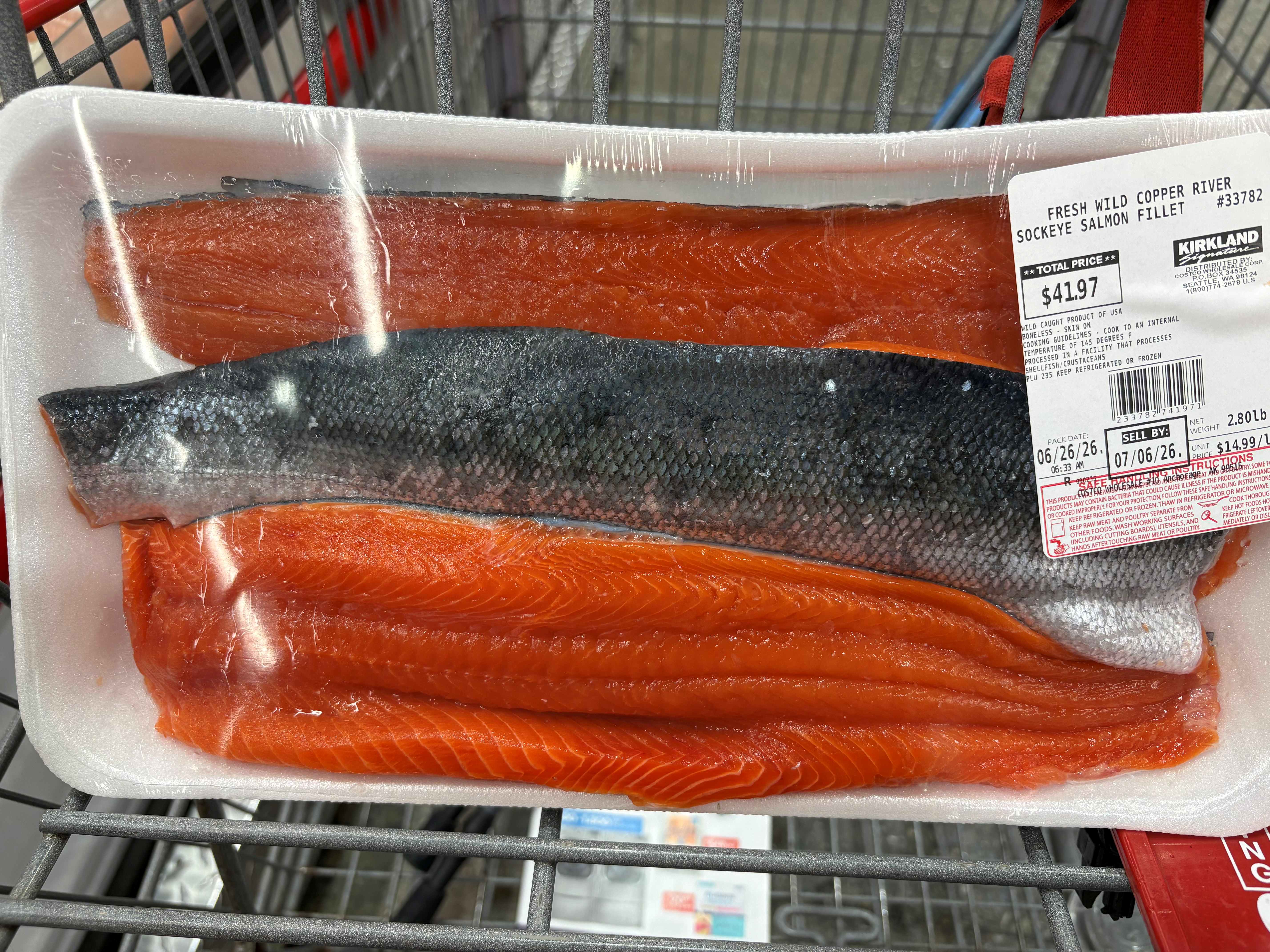
Retail sales were steady, with prices ranging between $16.99 to $18.99 a pound at King Soopers supermarkets, between $23 and $29.99 a pound at some online direct-to-consumer shops, $15.99 a pound at Anchorage Fred Meyer, part of the Kroger chain, and $20.99 a pound at Anchorage Carrs-Safeway supermarkets. The best deal in town was still $14.99 a pound at Costco warehouses in Anchorage for fresh Copper River reds.
The online seafood purveyor FishEx, also in Anchorage, had fresh Copper River portions for $149.95 a pound.
Pike Place Fish Market in Seattle had dropped their prices for Alaska sockeye fillets several dollars to $29.99, and fishmongers there said they were selling a couple hundred pounds of Alaska red salmon a day just online.
The statewide preliminary commercial salmon harvest total calculated by the Alaska Department of Fish and Game, as of June 30, stood at 9.2 million reds, including 7.2 million sockeyes, 1.1 million chum, 880,000 coho, and 34,000 Chinook salmon. According to McKinley Research Group, which provides weekly in-season reports on the Alaska salmon harvest for the Alaska Seafood Marketing Institute, the Bristol Bay harvest as of June 27 was down over 50 percent from the same date a year ago.
While most of the harvest has taken place in the east-side districts of Egegik and Ugashik, west side fishing quickly ramped up following the first commercial opening on June 27 in the Nushagak District, which was forecasted to produce the largest 2026 sockeye runs in the region, the McKinley Research Group said.
By July 2, the overall Bristol Bay harvest had climbed to 9.2 million fish, including 9.6 million reds, 100,000 chum and 1,000 king salmon. The kings were all caught in the Nushagak District along with 3.8 million sockeyes and 86,000 chum, according to the ADF&G preliminary report, but veteran harvester Robin Samuelsen of Dillingham, a former member of the North Pacific Fishery Management Council, said commercial fishermen were losing out because of how escapement goals were being handled this season. "Our rivers have met their escapement goals and fishermen should be fishing a lot more," Samuelsen posted on social media, arguing that instead of managing by biology, the fishery is not managed by politics from Juneau.
The Port Moller Test Fishery reported the strongest daily catch of the season on June 27, indicating an early peak to the Bristol Bay runs is becoming less likely. The test fishery catches sockeye at the mouth of Bristol Bay, 5-7 days before they reach commercial districts, providing run timing and composition data.
The sockeye salmon season has opened up over the last two weeks in Kodiak and Chignik, with sockeye harvests up by more than 100% from a year ago. Sockeye escapement to date on both the Chignik River and the Ayakulik River in southern Kodiak has been the largest to date since at least 2017.
In Prince William Sound, the Copper River District has remained closed since June 11 to conserve Chinook salmon, although some harvest has occurred in other districts, according to McKinley Research Group.