


When Alabama shrimper Jeremy Zirlott talks about imported shrimp, he makes one thing clear: the issue is not where the product comes from.
The problem, he says, is that consumers are often told they’re buying something they’re not.
“I don’ t have any problem with a foreign product,” Zirlott said. "But when you’re using local restaurants portraying that that product is from local fishermen [when it’s not], that’s where the problem comes in.”
That distinction has become increasingly important as shrimpers across the Gulf — already squeezed by a flood of cheaper imported shrimp from Asia and Latin America — continue pushing for stronger seafood transparency laws and greater accountability in restaurant marketing.
For Zirlott, whose family has deep roots in the fishing industry, the debate over seafood transparency has become one of the defining issues facing Gulf shrimpers today.
Like many Gulf shrimpers, Zirlott has spent the last several years navigating some of the toughest market conditions the industry has seen. Domestic shrimp prices fell sharply as imports flooded U.S. markets, leaving many fishermen struggling to stay profitable.
According to Zirlott, the downturn began around 2019 and worsened in the years that followed. “It really bottomed out in 2023,” he shared. The collapse was driven by a combination of factors, including the lingering effects of the Covid-19 pandemic and a surge of imported shrimp entering U.S. cold storage facilities.
Many fishermen initially benefitted from increased direct-to-consumer sales during the pandemic as more families cooked meals at home. Zirlott and many independent seafood businesses saw strong retail sales during the heigh of the pandemic. “My sales actually increased then,” Zirlott said.
But the boost was short-lived, and international market disruptions ultimately redirected large volumes of imported shrimp into the United States, creating additional pressure on an already struggling domestic market. “It created that deluge right behind that,” he said.
Over the last two years, however, Gulf shrimpers have found an unlikely ally in genetic testing. SeaD Consulting, working on behalf of the Southern Shrimp Alliance, has conducted DNA testing at restaurants throughout the Gulf Coast and Southeast, uncovering repeated instances where imported or farm-raised shrimp was marketed as local, Gulf-caught product.
The testing effort has drawn national attention to seafood substitutions and helped fuel new labeling laws in several states. Recent SeaD investigations have produced mixed results.
Recently, follow-up testing conducted by SeaD in Mississippi this spring found that 64 percent of sampled restaurants were serving authentic American wild-caught shrimp, a significant improvement from the company’s 2024 findings. Meanwhile, testing in Baton Rouge, La., found one in five restaurants were still explicitly misrepresenting shrimp products, while the latest retest in Savannah, Ga., found that most sampled dishes still contained imported or farm-raised shrimp despite being marketed as local.
For Zirlott, the impact of testing goes beyond the numbers. “It’s brought a lot of media attention,” he said. “We need the public on our side.”
He believes that greater awareness is already influencing the market. “The price difference has increased,” he shared. “And I think we have to attribute it a lot to the testing and the media attention that this brought and kind of pushing the market with some truth and labeling.”
Though the progress has been encouraging, Zirlott believes substantial challenges remain. “There’s still a lot of work to be done,” he said.
Much of that work now centers on transparency. Several Gulf and Southeast states have adopted seafood labeling requirements in recent years, while federal lawmakers continue debating measures such as the Save Our Shrimpers Act. The legislation recently passe the House and would limit federal support for foreign shrimp aquaculture operations.
The issue for Zirlott and local shrimpers is straightforward. Restaurants can serve imported shrimp if they choose to. They simply need to be honest about it. “If you’re proud of an imported product and that’s what you want to sell, just inform your customers what it is and then let them make the decision,” he stated.
Across coastal communities where many families rely on commercial fishing as their primary source of income, when consumers choose domestic shrimp, they are supporting much more than just a single fisherman.
The benefits ripple through net shops, marine supply companies, shipyards, fuel docks, processors, truck drivers, and countless other businesses that depend on the working waterfront. “It’s a huge network of businesses that we rely on to keep these boats fishing,” Zirlott said. “It’s not just about people eating domestic product..”
The products consumers see in seafood cases and coming out of restaurant kitchens often represents weeks of work at sea.
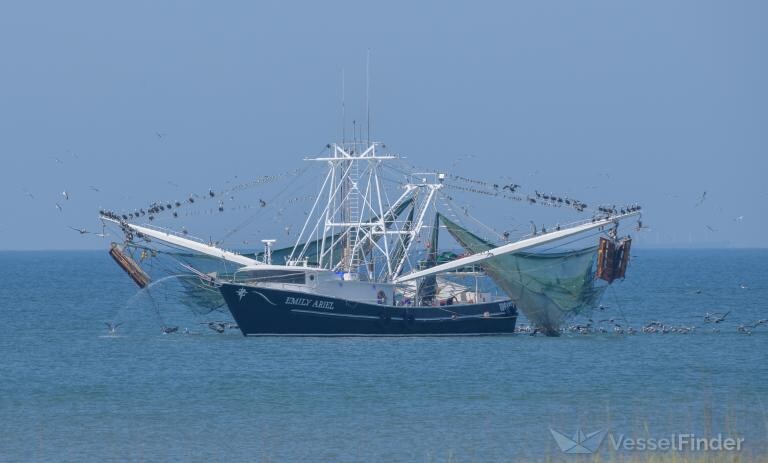
Unlike many smaller day-boat operations, Zirlott fishes aboard a shrimp vessel equipped to process shrimp immediately after it’s harvested. Once caught, the shrimp move through a chilled seawater system before being packed into trays and frozen on board. This results in a retail-ready product that can be marketed directly without additional processing.
“Once frozen, it’s ready for the market right then,” he shared.
Most of Alabama’s shrimp fleet now consists of larger freezer vessels capable of extended trips. Zirlott’s trips typically last between 30 and 35 days, allowing crews to maximize production and store product until market conditions become more favorable.
Other Gulf regions continue to rely heavily on smaller day-boat shrimpers and skimmer vessels that return to port every few days and often rely on processors to peel, package, and market their catch.
Regardless of vessel size, fishermen across the Gulf share many of the same concern about imports, transparency, and the future of the domestic shrimp industry.
For Zirlott, that future depends on consumers receiving accurate information when they sit down to order seafood. The goal is to not eliminate imported shrimp from the marketplace. The goal is simply honesty.
“Why wouldn’t you be proud of what you’re selling?” Zirlott said.
For Gulf shrimpers fighting to compete in an increasingly global seafood market, that question may be at the center of the entire debate.