.JPG.medium.800x800.jpg)
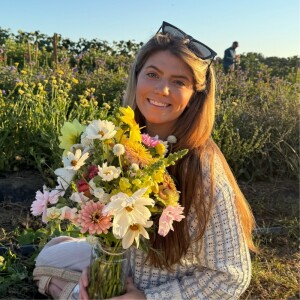
When Ellen Goethel first called New Hampshire's congressional delegation in the late 1970s, she wasn't looking to become a spokesperson for the commercial fishing industry. She simply wanted to make sure a handful of local fishermen had the opportunity to explain the challenges facing their businesses.
At the time, her husband, David, was transitioning from the party boat fishery into commercial fishing, and the couple was beginning to understand how complicated the regulations governing New England's fleet could be. Goethel also noticed that New Hampshire's fishermen, many operating small family businesses, had little representation when decisions affecting their livelihoods were being made.
So she picked up the phone.
"I just called and said who I was and that there was an issue and we really needed to set up a meeting," Goethel recalled. "And they agreed."
When congressional staff asked her to bring three or four fishermen to explain their concerns, she offered names. Then they asked whether she would be attending, too.
"I said I had planned something. You know, I was calling for them," she recalled. "They said, 'No, no, you have to come.'"
That meeting helped launch nearly five decades of advocacy, fisheries management, conservation and education, all rooted in the belief that the people working on the water deserve to be heard by those making decisions about it.
Goethel is being recognized as one of National Fisherman's 2026 Highliners, an honor acknowledging her contributions to New England's commercial fishing industry and the often-unseen work that helps keep fishing families and working waterfronts going.
A life built around fishing
Goethel's introduction to fishing began in 1976, when she met David while working at the New England Aquarium. She earned a degree in zoology from the University of New Hampshire and worked in the aquarium's education department, as well as for Normandeau Associates while an undergraduate.
David, a biologist himself, was working part-time at the aquarium during the winter while involved in the party boat fishery. After the couple married, Ellen occasionally worked as his mate when he needed another hand aboard.
"I kind of had an ease into the fishery," she said.
But when David transitioned to commercial fishing, Ellen began to see the industry differently. The investment was substantial, regulations were increasingly complicated, and management decisions carried significant financial consequences for small operators.
As David spent more time offshore, Ellen increasingly became the one attending meetings and speaking on behalf of fishermen who couldn't afford to leave their boats to participate.
"David was fishing, and he was fishing hard, and he couldn't make meetings," she said. "So I would go to the meetings for him, and I would speak out, and I ended up on quite a few different committees over the years."
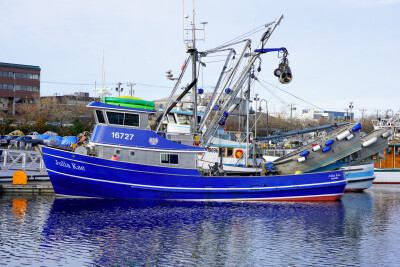
In 1982, David had a 44-foot stern trawler built by John Williams Boat Company in Hull, Quarry, Maine. He named the vessel the Ellen Diane. The boat remained central to the family's life until David retired from commercial fishing in 2021.
Like many fishing families, their household operated around the industry's unpredictable demands. There were children to raise, jobs to work, and unexpected calls from the boat when something broke, or supplies were needed.
"He would call in the middle of the day, or, you know, four in the morning after you've been out for a couple of hours and say, 'You've got to go pick up oil for me,' or 'I blew a piston,'" she recalled.
Sometimes that meant driving to Rhode Island or Portland, Maine, to find parts while juggling her own responsibilities. Over the years, Ellen taught figure skating, worked as a substitute teacher, and developed marine science programs for schools while continuing to take on fisheries management and conservation responsibilities.
It was a demanding combination, but one that gave her a perspective few people sitting around a fisheries management table could claim. She understood the science, the regulations, and what happened when those regulations reached the deck of a working fishing boat.
Earning trust on both sides of the table
Goethel's scientific background helped her navigate the technical side of fisheries management, but she believes her connection to working fishermen gave her something equally valuable: their trust.
"One thing that it's allowed me to do is to talk to fishermen and to find out truly what is going on on the water," she said. "How they feel, what they see, and how different aspects of rules and regulations affect them."
Those conversations provided insight she never would have gained through science alone. "They trust me so I can get honest answers," she said. "And I think that's really important."
Goethel has worked with the Northeast Seafood Coalition since its inception and served on the New England Fishery Management Council, the New Hampshire Advisory Committee on Marine Fisheries and the federal Marine Protected Areas Federal Advisory Committee. She has also served on the boards of New Hampshire Fishing Sectors XI and XII and the nonprofit Granite Fish.
Throughout those roles, she became known for being direct, particularly when proposals that appeared reasonable on paper failed to account for the realities of working at sea.
"I was very blunt," she said of her approach to fisheries management. "And specific. Absolutely specific."
For Goethel, effective advocacy required understanding a proposal, identifying its practical consequences and explaining those concerns with evidence.
"That's where my scientific background came in. You need data. You need to have specifics," she said. "It can't be anecdotal, and it has to be actual data."
She also understood how difficult that could be for fishermen whose businesses and families were directly affected by management decisions. She encouraged fishermen to focus on the facts, even when their livelihoods were at stake.
"When you go to a microphone at a meeting, you have to be specific," she said. "Don't make it personal against the people who are on the board or panel that you're speaking to. You just need to state your case succinctly."
That approach began with her earliest conversations with elected officials. Ellen and David made a point of providing lawmakers with contacts who held opposing views on fisheries issues, believing officials needed to understand the full picture.
"I think by doing that, we developed a really good reputation for being honest," she said.
Making cooperative research truly cooperative
Among the contributions Goethel considers most important is the work she and David did to strengthen cooperative fisheries research.
David, himself a previous National Fisherman Highliner, spent years participating in cooperative research projects aboard his fishing vessel. Ellen worked on the other side of those efforts, serving on panels and helping develop protocols that would allow fishermen and scientists to work together more effectively.
She wanted cooperative research to be a genuine partnership, not simply a situation in which a scientist hired a fishing vessel as a research platform.
"I sat on a whole bunch of panels and meetings developing protocols for the cooperative research and helping fishermen and the scientists understand how to approach it so that it really was cooperative rather than a scientist renting a platform to do their research," she said.
One of the biggest obstacles, she recalled, was the language separating fishermen and scientists. Both groups had valuable knowledge, but they did not always know how to communicate it to one another.
"I think we had that language barrier that was really substantial," she said. "And I think that's broken down in quite a few places, which is good."
She also emphasized the importance of understanding fishing gear, something she believes is too often overlooked in management discussions. Having spent time working on the back decks of fishing boats, Goethel knows that even seemingly minor regulatory changes can have substantial consequences aboard a moving vessel.
"Most scientists really don't understand gear," she said. "And managers never understand the gear unless they've physically been out on a boat and worked as a crew."
Her conservation work extended beyond commercial fisheries. She helped draft Hampton's original wetlands ordinance and spent more than 20 years serving on the town's Conservation Commission, including time as chair and vice chair.
In 2014, Ellen and David received the Gulf of Maine Council's Industry Award for their efforts to conserve and protect the Gulf of Maine and its resources.
Watching a fleet disappear
After nearly 50 years working alongside New England's fishing industry, Goethel has witnessed enormous changes in the region's commercial fleet. Few have troubled her more than the transition from days-at-sea management to catch shares in the groundfish fishery.
"It changed from days at sea to catch shares," she said. "And the point at which that happened and how it happened was absolutely life-changing for every single fisherman on the water and for every family on the docks."
She is particularly concerned about what those changes have meant for small, family-owned groundfish vessels. Goethel recalled that New Hampshire had more than 150 full-time groundfish boats in 2009, before the transition to catch shares. Today, she estimates there may be only eight remaining, and not all fish full time.
The shrinking fleet represents more than a decline in vessel numbers. To Goethel, it is the loss of fishing families, businesses, working knowledge and opportunities for the next generation.
"I still think that New Hampshire is probably going to be the first state in the nation to lose its ability to fish groundfish in federal waters," she said.
Her concerns extend to the aging fleet and the difficulty younger fishermen face trying to enter the industry. She recalled a time when fishing businesses could be passed from one generation to the next, but after decades of increasing costs, regulatory complexity, and uncertainty, she said many fishermen have actively discouraged their children from following them into the industry.
"In the past three decades, the commercial fishermen have told their kids not to go into commercial fishing," she said. "They've stressed not to be involved because you just can't. It's too much. It's too hard on the family. It's too hard to make a living."
Even for young people determined to fish, the financial barriers can be overwhelming. Permits, quota, vessel expenses, monitoring requirements, and administrative costs all add to the difficulty of operating an independent fishing business.
Goethel worries that as older captains retire, there will be fewer people willing or able to replace them. She is also frustrated by what she sees as a growing disconnect between available fishing opportunities and the fleet's ability to pursue them. Some stocks, she believes, could support additional harvest, but there are no longer enough vessels positioned to take advantage of those opportunities.
Yet even after decades of difficult management meetings, Goethel has not lost her conviction that fishermen deserve a meaningful place in the process. She worries that many have stopped attending public meetings because they no longer believe their testimony will make a difference.
"Whenever you have an open meeting, you need to let every single person who wants to speak speak," she said. "If you have to extend your meeting, then that's what you do."
For someone who spent much of her career encouraging fishermen to speak up, that change is particularly troubling. "We've lost some of the ability to listen to each other," she said.
Bringing the ocean into classrooms
While Goethel was advocating for fishermen in council meetings and congressional offices, she was also building a second career introducing children to the marine environment.
Beginning in the early 1980s, she started bringing live marine organisms into schools, giving students an opportunity to encounter creatures they might otherwise never see outside a textbook.
The traveling marine education program eventually became Explore the Ocean World, a business that allowed Goethel to share her knowledge of marine science with students across New England. For years, Ellen and David collected marine organisms that she maintained in aquariums before bringing them into classrooms. At one point, she was visiting roughly 80 schools annually.
She also developed a marine science 4-H program that grew to more than 60 children, with students helping operate and maintain a small marine laboratory through Rockingham County 4-H. Her educational efforts earned her the 1994 National Fisheries and Wildlife Volunteer Award.
In 2013, Skip and Deb Windemiller provided space for Goethel to establish a permanent hands-on museum at Hampton Beach.
The Explore the Ocean World Oceanarium became a place where families could encounter marine life up close while learning about the ecology of New England waters. It brought together the different parts of Goethel's career: her scientific education, her commitment to conservation, and her understanding of the commercial fishing industry.
Her work also earned recognition from the Gloucester Fishermen's Wives Association for her contributions to protecting the future of New England's fishing industry. In 2009, the New Hampshire Coastal Conservation Association named her Conservationist of the Year.
More recently, Goethel said her museum was voted the best museum in New Hampshire, another honor that came as a surprise.
An unexpected honor
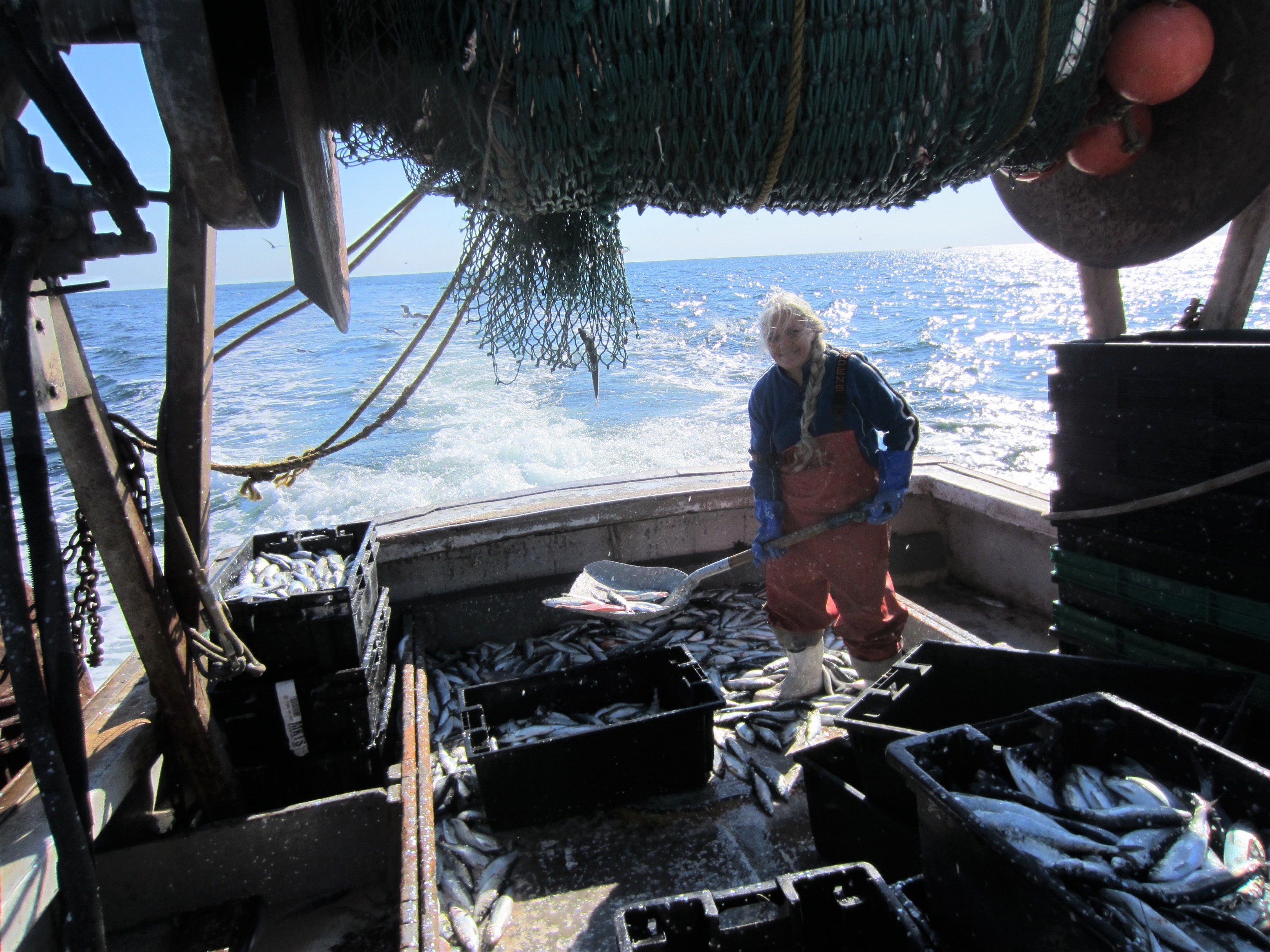
When Goethel learned she had been selected as a 2026 National Fisherman Highliner, she was nowhere near the New Hampshire waterfront. She was hiking in Utah with a childhood friend, visiting Bryce Canyon, Canyonlands, and Arches National Parks on a trip the two had been planning for years.
With limited cellphone service, she had no idea the announcement was waiting for her. David eventually reached her by phone.
"He said, 'Have you read your emails?' And I said, 'No, I've been busy,'" she recalled.
When she finally read the message, her first reaction was disbelief.
"Is this a fluke?" she remembered asking.
Goethel said she was stunned by the recognition, particularly because she had never set out to build a career in fisheries advocacy. For her, involvement in commercial fishing was something that grew naturally out of the life she and David built together.
"It's like a family farm," she said. "Your whole family is involved in the business; there's no way out of it."
"I've been working with the commercial fishermen in one way or another my entire adult life, but I never expected anything like this to happen," she added.
Her recognition comes years after David received the same honor, bringing attention to two people whose contributions to New England's fisheries have often gone hand in hand.
But Ellen's work has never been simply an extension of David's. She developed her own expertise, earned the trust of fishermen, and became a respected voice in rooms where the realities of small fishing businesses were not always understood.
Her career reflects the many roles that sustain a commercial fishing community, including those that rarely receive the same recognition as the people heading offshore. Sometimes that work means standing before a fisheries council and explaining why a proposed regulation will not work on the deck of a boat. Sometimes it means driving hours to find a replacement part so a vessel can get back to fishing. And sometimes it means placing a marine animal in a child's hands and opening the door to a lifelong interest in the ocean.
For nearly 50 years, Goethel has done all three, guided by the same principle that prompted her first call to New Hampshire's congressional delegation: fishermen deserve to have their experiences understood and their voices heard.