For as long as Caitlin Townsend can remember, she wanted to be on the boat.
Whenever her father got ready to untie from the dock and prepare to head fishing, she’d ask the same question. “Can I go?”
More often than not, the answer was yes.
Long before she became an advocate for working waterfronts, before she traveled thousands of miles each summer to fish Bristol Bay sockeye salmon and before she found herself speaking on behalf of fishermen and fishing communities across New England, Townsend was a kid from Truro, Mass. growing up on the back deck of her father’s lobster boat.
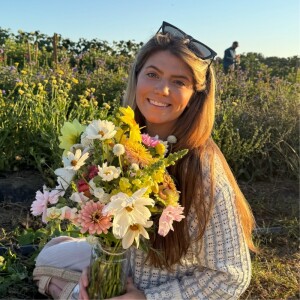
Today, Townsend serves as working waterfront outreach coordinator for the Cape Cod Commercial Fishermen's Alliance, while continuing to fish commercially in both New England and Alaska. It is a role that allows her to remain connected to the industry that raised her while helping navigate the challenges facing the next generation of commercial fishermen.
But her story begins generations before her.
Townsend comes from a fishing family deeply rooted in Cape Cod’s commercial fishing history. Her grandfather, Dave Townsend, was involved in the early bluefin tuna fishery during a period when fishermen were beginning to export tuna directly to Japan. Her father started fishing as a young teenager, learning the trade as a deckhand before eventually building his own commercial fishing career.
By the time Townsend was born, fishing was already woven into every part of family life. As a child, she spent countless days fishing alongside her father and learning lessons that couldn’t be taught in a classroom.
“I remember every time I got to go on the boat, I was so excited,” Townsend said.
Some of her earliest memories involve cod and haddock trips, strapped safely into the captain’s chair while her father worked the boat. “He’d buckle me in and hand me a fishing rod,” she recalled. “I’d sit there and fish while they worked.”
As she grew older, those childhood trips evolved into real responsibility.
By the time she was in her early teens, Townsend was regularly working as a deckhand aboard her father’s lobster boat. Some years she worked alongside another sternman and other years she was her father’s only crew member.
Fishing was never presented as a hobby or a romanticized lifestyle. It was just work. More importantly, it was a business. Townsend credits her father with being transparent about both the rewards and realities of commercial fishing.
“He never hid anything from me,” she said. "Whether we were making money, whether we weren't making money, regulation changes, challenges in the industry. We talked about all of it."
Those conversations shaped her understanding of the fishing industry at an early age.
She remembers watching the fleet around her change. Each year, there seemed to be fewer boats tied to the docks. Fewer fishermen. Fewer tradesmen serving waterfront communities.
One memory in particular still stands out.
When her family needed new bait irons, there wasn't a local marine supply store nearby that carried what they needed. Instead, they turned to a local welder who fabricated replacements by hand.
Experiences like that highlighted something Townsend continues to worry about today: the gradual loss of both fishing businesses and the working waterfront infrastructure that supports them.
“I remember thinking, what are we going to do,” she said. “We’re losing fishermen and we’re losing tradesmen.” That concern would eventually help shape her career. But first, another fishery captured her imagination.
When Townsend was a teenager, her father told her about a family friend from Cape Cod named Jess Normandeau who was fishing salmon in Alaska. The idea immediately stuck.
At the time, Townsend described herself as an awkward teenager who loved fishing but didn’t see many examples of women building careers on deck. Then she learned that not only was Normandeau fishing in Alaska, but she was fishing with other women.
“I remember being out lobstering with my dad when he told me,” Townsend said. “And I remember thinking; I’m going to do that someday.”
Years later, she did.
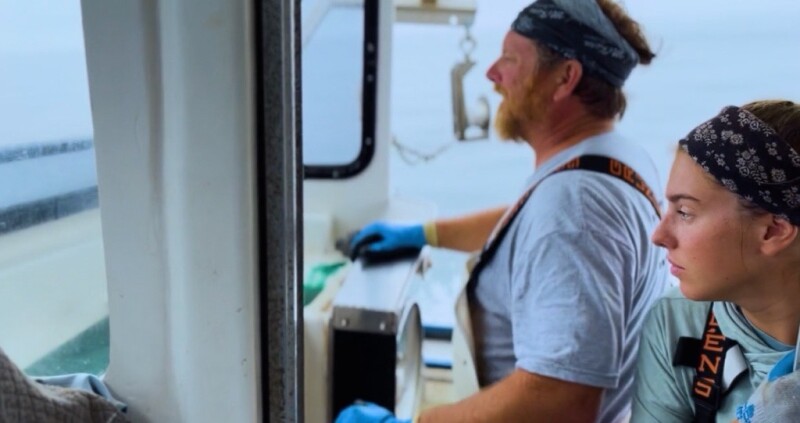
Today, Townsend spends part of every summer fishing Bristol Bay’s world-famous sockeye salmon run aboard the F/V Leila M, a 31-foot aluminum gillnetter. What began as a dream sparked by a passing conversation on a lobster boat has evolved into one of the most important experiences of her fishing career.
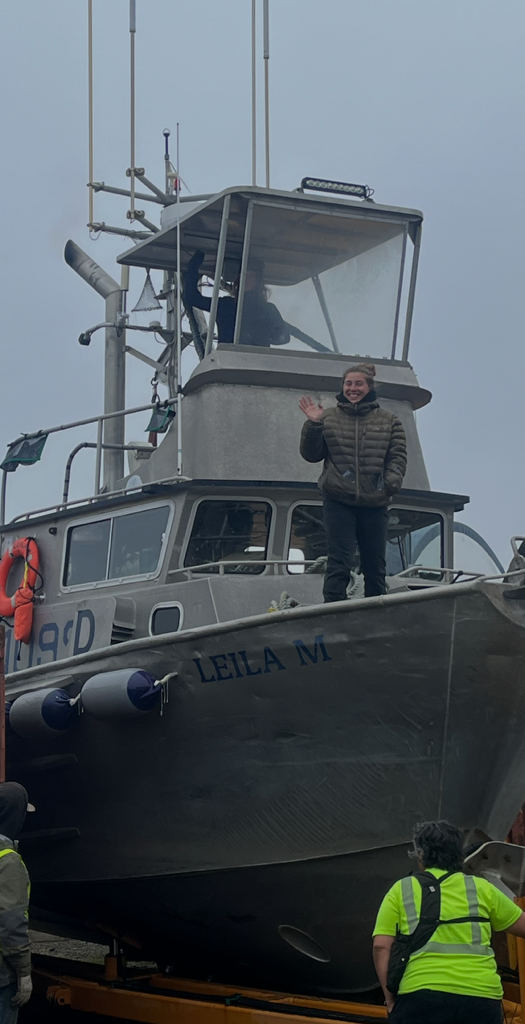
While Normandeau may have first caught Townsend’s attention because she was a woman fishing in Alaska, it wasn’t until years later, when the two began fishing together, that she truly understood what made her captain special.
"I didn't really know Jess growing up," Townsend said. "I just knew she was this really cool skier who was fishing in Alaska with a bunch of women, and I thought that was the coolest thing ever."
Today, Townsend sees something much deeper.
Unlike many fishermen who inherit boats, permits, or generations of fishing knowledge, Normandeau built her career from the ground up. A first-generation fisherman, she learned by asking questions, working for experienced captains and refusing to give up.
"She doesn't have a family fishing legacy to draw from," Townsend said. "Everything she's learned came from captains she worked for and from her own determination to keep learning."
That work ethic continues to inspire her. Whether it's taking diesel mechanic classes to better understand her vessel or constantly looking for ways to improve fishing operations, Townsend says Normandeau approaches every challenge with curiosity and determination.
Fishing alongside her has reinforced something Townsend feels strongly about: the industry needs pathways for people who didn't grow up in fishing families.
"Fishing with Jess makes me want to fight even harder for opportunities for people to get into this industry," she said. "People like her have built incredible careers through hard work and dedication alone."
Over the years, the relationship has evolved into something closer to family.
"I think of her as an older sister," Townsend said. "I'm so grateful to have someone I admire so much as both a fisherman and a friend."
Some of Townsend's favorite moments happen during the season itself, standing on the back deck watching a decision pay off. "I love when she tries a new idea and it works," she said. "When we catch a bunch of fish because she trusted her instincts, I get proud.”
For Townsend, those moments represent more than a successful fishing trip. They represent what is possible when experience, persistence and mentorship come together.
Fishing in Alaska over the past few years has opened an entirely new world for Townsend. While many East Coast fishermen grow up hearing stories about Alaska’s fisheries through television shows and dockside lore, Townsend quickly discovered that the reality was different from what many imagine.
She laughed when discussing the assumptions fishermen on both coasts make about each other. Many New England fishermen view Alaska as the ultimate test of toughness. At the same time, she shared that many Alaskans view New England fishermen in exactly the same way.
“They think the way we grew up fishing is pretty badass,” she shared referring to the way we were both raised. The similarities between fishing communities often outweigh the differences.
Regardless of geography, fishermen share many of the same values: independence, resilience, long hours and a deep connection to the water.
Yet one difference stood out immediately. The number of young people actively participating in Alaska’s salmon fishery surprised her. Compared to many New England ports, Bristol Bay’s fleet includes a significant number of younger captains and crew members.
Townsend believe part of that stems from how younger fishermen are increasingly building careers. Rather than relying entirely on one fishery, many move between fisheries, piecing different regional fishing seasons together, along with other jobs throughout the year.
For younger fishermen looking to build a future in commercial fishing, flexibility has become essential. Townsend shows this reality firsthand.
In addition to lobstering and salmon fishing, she has worked as a scallop deckhand, participated in marine debris and gear recycling projects, helped direct-market seafood and now works full-time supporting fishing communities.
Each experience has expanded her understanding of the industry. "It's another tool in the toolbox," she said.
Perhaps the biggest lesson Bristol Bay taught her, however, had little to do with fishing itself. It was about community.
She described a culture of cooperation she experienced in Alaska that left a lasting impression. Because the salmon season is short and the fishery operates in such a remote environment, fishermen often rely heavily on one another.
The result is a level of camaraderie that can feel more like family than competition. “It’s such a short season, but everybody becomes family,” she said.
Townsend believes there are lessons in that culture that can benefit fishermen everywhere. Too often, she says fishermen find themselves divided by region, fishery, gear type or management issues.
Yet the challenge facing fishing communities are often remarkable similar. Whether she is talking with fishermen in Alaska, Maine, North Carolina, Texas or Massachusetts, many concerns remain consistent.
Rising costs. Access to fisheries. Working waterfront loss. Recruiting younger generations. Keeping fishing businesses viable. Protecting a way of life.
“The way fishing looks on Cape Cod is different than it does in Maine or Alaska,” Townsend said. “But at the end of the day, we’re all going out on the water and catching food.”
The belief has become central to both her fishing career and her advocacy work. Earlier this year, Townsend joined the Cape Cod Commercial Fishermen's Alliance as working waterfront outreach coordinator.
The position allows her to work directly with fishermen, waterfront businesses, municipalities and community members on issues affecting coastal communities throughout the region.
When she interviewed for the position, Alliance CEO John Pappalardo spent much of the conversation asking about salmon fishing. Looking back, Townsend believed he wanted to understand her passion for the industry and the perspective she had gained by working in multiple fisheries. She got the job, and more importantly found an organization that encouraged her to continue fishing.
Rather than viewing time on deck as separate from the professional responsibilities, the Alliance recognized it as one of her greatest strengths. The more boats she works aboard and the more fishermen she talks to, the better she understands the challenges communities are facing.
For Townsend, advocacy begins with listening. It begins on the dock, on the back deck, around fish totes and bait barrels, in wheelhouses and waterfront coffee shops. It begins with conversations.
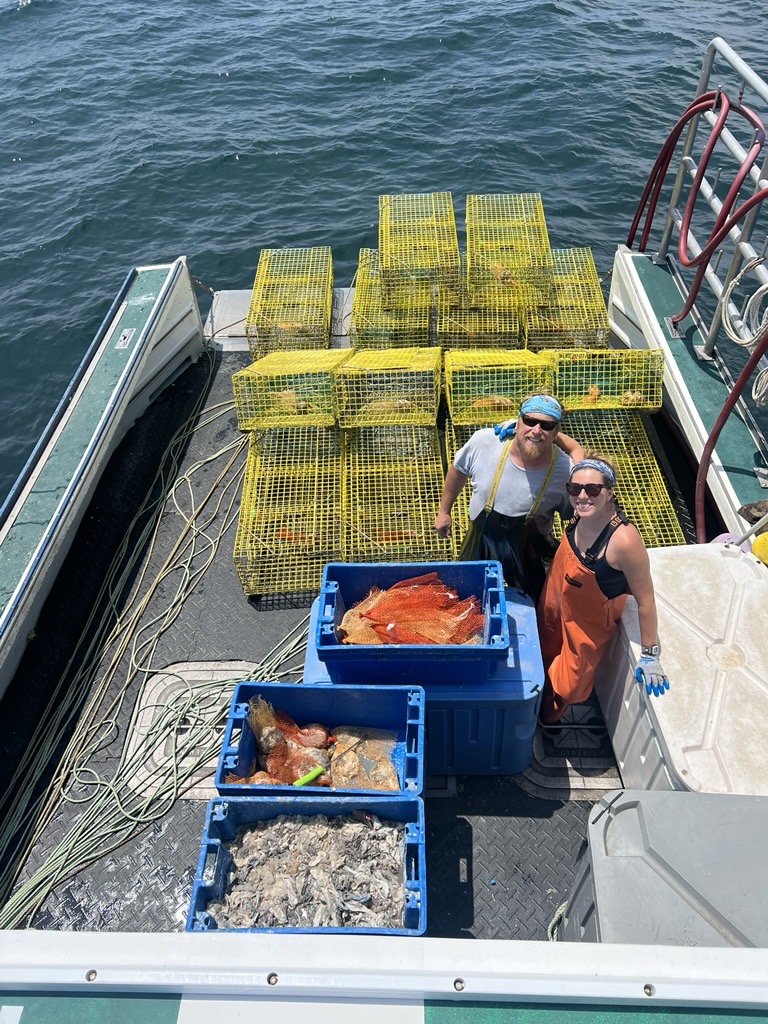
The same kind of conversations she grew up hearing as a child aboard her father’s boat. The same conversations she now hears from fishermen across the country.
The stakes feel personal because they are. There are moments she shared that she becomes emotional discussing the future of commercial fishing, not because she is pessimistic, but because she cares deeply about what is at risk.
Fishing isn’t simply an occupation. For many coastal communities it remains the foundation of local identity, culture, economy and family history. Townsend sees that every day. And she knows preserving that future will require more than individual fishermen working alone. It will require collaborations, and fishermen supporting one another across fisheries and regions. It will require younger generations stepping forward to become both fishermen and leaders.
Each June, the return to Bristol Bay feels less like traveling to a distant fishery and more like coming home. "You fly into King Salmon on a plane full of fishermen," Townsend said. "Usually you know somebody sitting next to you."
The familiar routine begins before the bags even reach the carousel.
"The baggage claim is chaos in the best way," she laughed. "People are yelling names across the room, throwing bags around, making sure coolers, groceries and gear all made it."
Many of those bags contain items difficult to find in rural Alaska: fresh produce, spare parts, warm clothes and supplies that will help fishermen prepare for the season ahead.
Back at the boatyard, another reunion begins. "It reminds me of college," Townsend said. "You're walking around saying hi to people you haven't seen in a year."
By the time she arrives, Normandeau is often already hard at work getting the Leila M ready for another season. Then begins the annual ritual of preparing the boat.
Days are spent mending nets, organizing provisions, loading gear and making sure every system aboard is operating properly before the first opener. One of the most important jobs each year is starting up the vessel's refrigerated seawater system (RSW).
"The RSW startup is one of the most important and stressful parts of preseason," Townsend said. Like many fishermen, she has a few jobs she'd happily skip if given the choice. Packing the stuffing box. Installing the chiller cap. Putting in the boat plugs.
"They're all jobs the boat can't fish without," she said.
The tasks are often small but critical, and Townsend and Normandeau routinely double-check one another's work before moving on. "We'll look at each other and ask, 'Did we do that? Are you sure we did that?'"
The workdays are long. During Bristol Bay's summer months, daylight seems endless. "We'll start at eight in the morning and just keep going," she said. "Because of the midnight sun, sometimes you don't even realize how late it's gotten."
Despite the workload, the atmosphere remains one of excitement. Fishermen debate run forecasts released by the Alaska Department of Fish and Game and the University of Washington. They discuss where they'll fish, what they're hearing on the grounds and what the season might bring.
Just as important are the reunions with members of their radio group and neighboring crews. Those relationships have become one of Townsend's favorite parts of the fishery.
"They feel like family," she said.
The offseason stories eventually give way to new memories, shared meals and long conversations after work is done.
"It feels like what life is supposed to be," Townsend said. "You work hard all day, and at the end of it you're not sitting around a television. You're sitting down to dinner with people you care about or having a beer together, completely unplugged."
For Townsend, that sense of community is one of the most valuable lessons Bristol Bay has offered. "It's pretty special," she said.
And that future remains worth fighting for. Whether she’s hauling lobster traps off the Cape, setting a salmon net in Bristol Bay, helping recycle end of life fishing gear, or working to strengthen working waterfronts across New England, her mission remains the same.
Protect the communities that built her.