

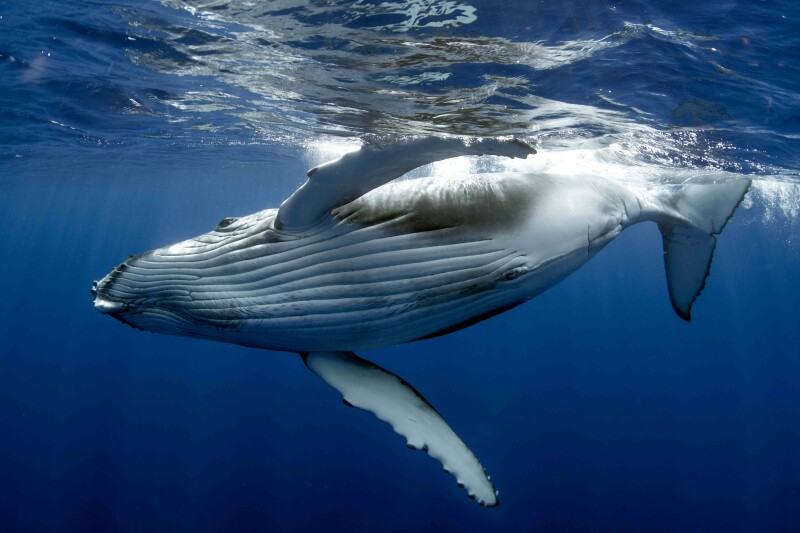
A young humpback whale beached on the central Oregon coast and entangled in old Dungeness crab fishing gear was euthanized on Nov. 17, after efforts to get it to the water at high tide failed.
"Once the high tide came and went out, it became clear that the rescue effort was not going to be successful, and there was no need to try it again because we had already tried it and we didn't have any other options," said Lisa Ballance, director of the Marine Mammal Institute at Oregon State University. "At that point, the decision is, what do we do with the animal? That is the most humane thing. We can leave it alone, or we can try to euthanize it."
Ballance, who had been down on the beach at San Marine State Park with others who came to help try to get the juvenile humpback back into the water, said she was heartbroken.
The Dungeness crab fishery has been working with us for many years to lower the entanglement rate and to learn when and where the whales are, so we can inform commercial fishermen about which areas to avoid, she said.
Pop-up pot gear now being tested in California include pots with no ropes that are dropped into the ocean to fish on the bottom and when the vessel is ready to retrieve them, the pots are brought to the surface remotely. This gear modification is something being widely experimented with here and on the East Coast with lobster fisheries, she said.
California is getting close to authorizing this gear for the 2026 fishery, while Oregon fisheries officials said they want to test the gear with Oregon fishermen for a couple of years.
The doomed whale on the Oregon coast, which weighed about a ton and a half, beached on Nov. 15 and had been there for over 48 hours. "It's hard to watch, hard to experience," Ballance told Oregon Public Broadcasting. The Marine Mammal Institute, federal and state agencies, police and others had tried to get the whale back into the waters off the state park, just north of Yachats, Oregon.
Ben Enticknap, fisheries campaign director for the environmental entity Oceana, said he had confirmed via an email with the Oregon Department of Fish and Wildlife, that the humpback entrapments included three Dungeness buoys and buoy tags from the 2023-2024 Oregon Dungeness fishery. The whale was "severely wrapped up," he said.
Ballance said that the young whale had a rope around its left pectoral fin and through its mouth.
A necropsy will be conducted to try and determine why the whale came up on the beach alive and whether disease or environmental changes in the ocean were contributing factors, she said. The beach stranding of a live whale is relatively rare.
Last year was the highest number of whale entanglements to date on the west coast, including three humpbacks entangled in Oregon fishing gear.
West coast waters attract grey whales and orcas in summer months, but most frequently humpbacks. The humpbacks listed by federal fisheries officials as threatened are those that breed off of Mexico and migrate north to California, Oregon, and Washington to feed. Endangered pods of humpbacks breed in Central America and come north to feed off the west coast.
"The whale's death is a painful reminder of a preventable problem: entanglement in fishing gear," Enticknap said. "Experimental trials in the California Dungeness crab fishery show that pop-up gear is profitable, reliable, and safe for whales." He urged the National Marine Fisheries Service and the Oregon Fish and Wildlife Commission to take stronger action to protect threatened and endangered whales.