




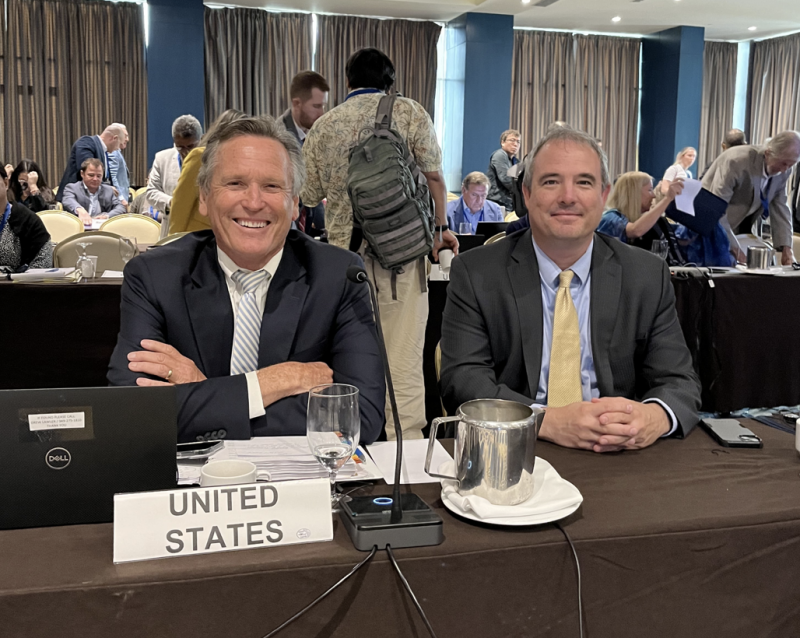
The 2025 Inter-American Tropical Tuna Commission meeting closed Sept. 5 without changes to Pacific bluefin and bigeye tuna management sought by environmental groups. The returned U.S. delegation took credit for “prioritized American interests by enhancing conservation efforts, strengthening monitoring programs, and expanding opportunities for American fishermen.”
Meeting in Panama City, Panama, the 21-nation tuna commission dealt with tropical tuna management, the recovery of derelict fish aggregating devices (FADs) and regulatory simplification, according to a summary this week from the National Oceanic and Atmospheric Administration fisheries division.
Working with the American Tunaboat Association, the commission adopted an expanded resolution and funding to streamline FAD retrieval, promote biodegradable materials, and deploy tracking devices to protect marine environments.
Discussions on managing bigeye, yellowfin, and skipjack tuna secured $1.8 million in funding for the Regional Tuna Tagging Program. “This U.S.-backed initiative will enhance understanding of tuna distribution and stock health, ensuring sustainable harvests that support U.S. fishermen,” according to NOAA Fisheries.
The U.S. sought creation of the Integrated Port Sampling Program to merge traditional and enhanced monitoring efforts, and reduced closure days for purse seine vessels “without compromising sustainability.”
The U.S. also supported the creation of a South Pacific Albacore Joint Working Group with the Western and Central Pacific Fisheries Commission, extending measures to protect silky sharks, and establishing a Dorado Working Group to assess stock health.
“America’s leadership at the IATTC demonstrates our commitment to sustainable fisheries that protect our oceans and empower our fishermen,” said Andrew Lawler, NOAA’s principal deputy assistant secretary for international fisheries. “These measures strengthen our economy, enhance conservation, and position the U.S. as a global leader in responsible fishery management.”
Environmental advocates with the Pew Charitable Trusts said they had hope for more “science-based, precautionary management for bigeye or Pacific bluefin tunas. However, managers have committed to redoubling their efforts in 2026, which could pave the way for a critical year of decision-making for eastern Pacific fisheries.”
“Pacific bluefin and bigeye tuna fisheries must now wait another year for science-based, precautionary harvest strategies,” said Dave Gershman, who works on international fisheries for Pew. “These would have moved the fisheries away from short-term, reactive decision-making to long-term plans for sustainability, and it is disappointing that IATTC members have again delayed action."
"Although advancement of harvest strategies for Pacific bluefin and bigeye has stalled, IATTC members have expressed a willingness to reconvene next year to finalize a path forward. If successful, comprehensive harvest strategies will be adopted for both fisheries in 2026.”
.png.small.400x400.png)

