




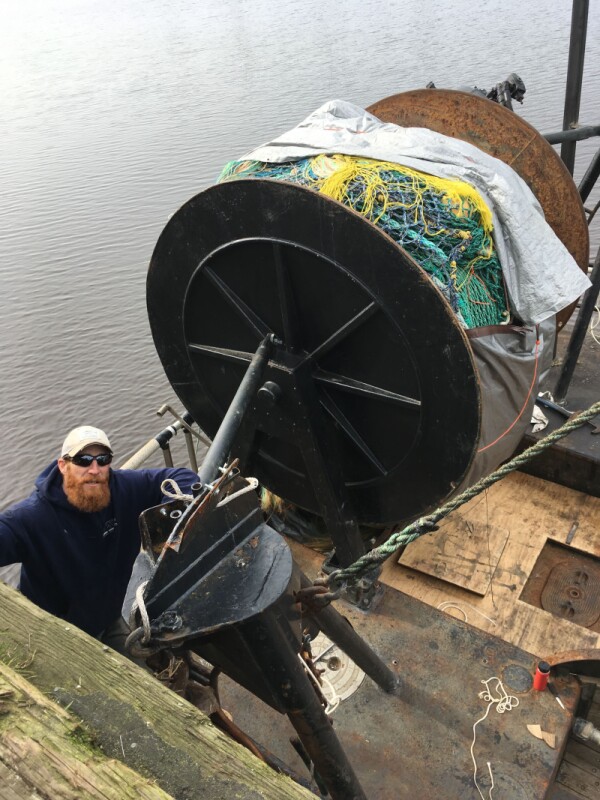
Some years ago – never mind how long precisely – I thought I would wander about a little and see the watery side of Warrenton, Ore. Under the assumption that American whaling had ended in the early 1900s, I did not take it into my head to talk with anyone about a whaling voyage.
But I chanced to meet Marvin Johnson, then captain of the Pacific Wind—an 80-foot shrimper/groundfish trawler—and his crewman, Geoff Brunick. “My father was a whaler,” Brunick said in the course of our conversation. “And so was Marvin’s grandfather. They went whaling here in the ‘60s.” Brunick’s father and Johnson’s grandfather would have been crew aboard the Tom & Al, one of the last American whaling vessels.
In 1961, the brothers Frank and Eben Parker – owners of the Tom & Al – went into business with the company, Bio Products, in Warrenton, to produce large amounts of whale oil for America’s space program.
The National Aeronautics and Space Administration (NASA) was ramping up the space program at the time. President John F. Kennedy and Soviet Premier Nikita Khruschev were racing to the moon.
Yet the launch of the space age depended on old-fashioned whale oil to lubricate critical moving parts on the rockets, the reason being that whale oil could maintain its viscosity in the extreme cold of space and the extreme heat of launch and re-entry.
According to reports from the time, Bio Products bought a 90-mm harpoon gun from Norway and gave it to the Parkers, who mounted it on the Tom & Al and set out in search of sperm and other species of whales. Like Kristjan Loftsson’s whaling operation in Iceland, the crew of the Tom & Al killed whales offshore and then towed them back to the Bio Products processing plant in Warrenton.
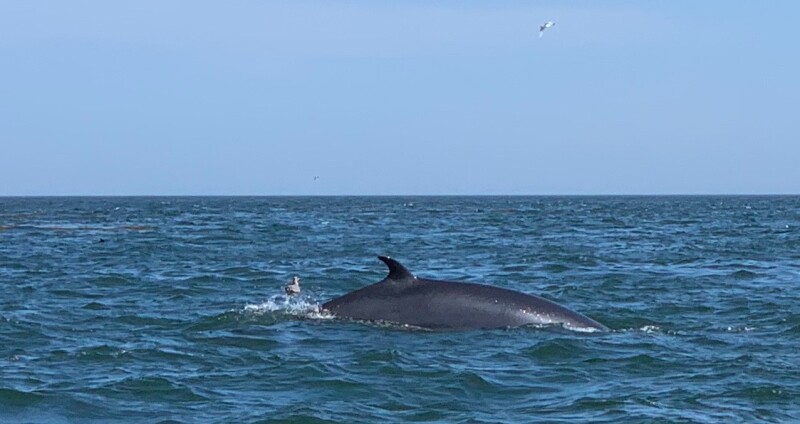
There, Bio Products flensed the whales, rendered the oil, and sold it to NASA. The meat is said to have gone as feed to local mink farms – an ignoble end for a mighty whale.
After the Parkers and Bio Products gave up whaling, Del Monte Foods continued to run a whaling station at Point San Pablo, Calif., near San Francisco. Del Monte processed several species of whales including fin, sperm, and humpback up until 1971, just prior to the 1972 ban on whaling.
While the understanding that Bio Products sold whale oil to NASA seems to be common knowledge on the docks of Warrenton, since 2010 NASA has denied using whale oil, calling the story an “urban legend.” But for guys like Geoff Brunick and Marvin Johnson, it’s family history.
.png.small.400x400.png)

