
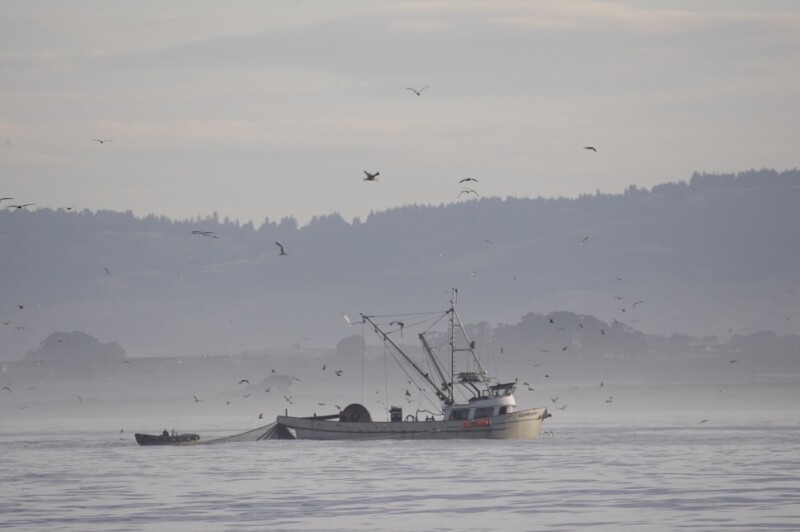
Researchers studying ecosystem dynamics in Pacific albacore and bluefin tuna documented by movement of fishing fleets during heat waves say the data can also be used to understand ecosystem health.
"Fishermen are increasingly recognized as top predators and have many of the qualities of effective ecosystem sentinel, " said Heather Welch, an associate project scientist at the University of California Santa Cruz, who led the study. These fleets serve as apex predators, effectively locating their prey.
The study summary discusses the ecological impact of Northeast Pacific marine heatwaves between 2010 and 2024 primarily off Oregon and Washington, mainly within the U.S. Exclusive Economic Zone, but also on the high seas. The study examined one million satellite-based locations of 600 U.S. fishing vessels to determine whether such predator geolocation data could help assess the ecological impact of Northeast Pacific marine heatwaves during that period.
Welch said on Friday, Dec. 19, that researchers plan on sharing their results with fisheries managers. "Because Vessel Monitoring System (VMS) data are continuously collected, this type of work could produce real-time inferences on how marine heatwaves are affecting the ecosystem," Welch said.
The U.S. West Coast is an upwelling region, she explained. "Cool deep currents hit the continental shelf and are redirected upwards, cooling nearshore waters. Many species use these cool waters as refuge as the rest of the ocean warms.
The study found that fishing fleets were correlated with northward shifts in albacore and bluefin tuna during heatwaves, as well as extreme albacore tuna shifts toward shore.
"Knowing albacore has shifted north provides insights into change port usage and processing infrastructure needs," she said. "Knowing that albacore have shifted inshore provides insights into increased accessibility. Not only can large commercial vessels catch them, but so can small commercial vessels and recreational fishermen which typically fish closer to shore."
Fishing fleet data showed anomalously low albacore tuna availability during a heatwave in 2023, more than a year in advance of a formal fisheries disaster request.
Fleet data also captured instances in which marine heatwaves were not accompanied by changes in tuna distribution or availability, even when sea surface temperature data predicted such changes.
Researchers said their findings illustrate how geolocation data could be used for real-time monitoring of ecosystem shifts. The study could help manage transnational fish population movements and aid communities affected by fisheries disasters, they said.
Co-authors of the study with UCSC are affiliated with the Pacific States Marine Fisheries Commission, San Diego State University, Woods Hole Oceanographic Institution, University of Kent, the Pacific Islands Ocean Observing System, and the Canadian Integrated Ocean Observing System.