




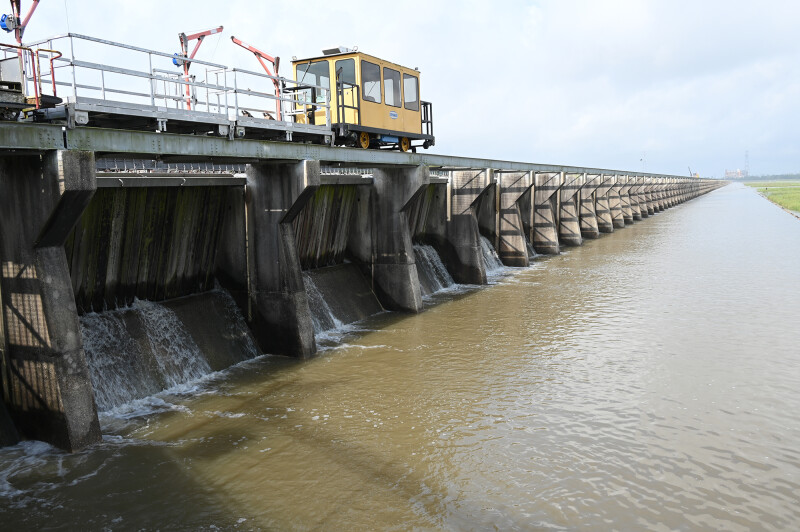
A U.S. court of appeals has ruled the Court of Federal Claims was correct in dismissing a lawsuit brought by Louisiana oystermen who were seeking damages for the destruction of their oysters by the Bonnet Carre Spillway openings in 2019.
The U.S. Army Corps of Engineers opened the spillway twice for a total of 123 days in 2019 to help alleviate flooding; however, the sudden torrent of nearly 10 trillion gallons of freshwater lowered salinity levels in the Mississippi Sound ecosystem and caused massive damage to the commercial fisheries residing therein.
The Louisiana Department of Wildlife and Fisheries estimated its commercial fishing industry suffered $258 million in losses from the incident. The U.S. Department of Commerce later allocated just $88 million in fisheries disaster program funding for commercial fisheries impacted by the spillway opening, though that funding was split between four states.
The flood decimated Louisiana’s oyster stocks and beds, with mortalities of 50 to 100 percent reported at reefs. The state estimated losses of nearly $122 million for private lease oysters and $20.5 million for public ground oysters.
Three lawsuits were filed by commercial oystermen and businesses in 2020 seeking damages from the U.S. government, claiming the loss of their oysters should be considered a taking under the Fifth Amendment of the U.S. Constitution. Those lawsuits were later consolidated and taken up by the Court of Federal Claims, which agreed with the federal government’s argument that the Louisiana state law governing oyster leases precluded the oystermen from suing. The case was dismissed in 2024.
The oystermen appealed the ruling, arguing that the court had relied on a 2016 revision of the oyster leasing statute, whereas it should have used the wording of a 2006 version, since many leases were signed prior to the revision.
On 21 May 2026, the U.S. Court of Appeals for the Federal Circuit ruled that the Court of Federal Claims was correct in dismissing the case for failure to state a claim.
The appeals court ruled that the opening of the spillway in 2019 was done for the purpose of “coastal protection, conservation, or restoration” as defined under the 2006 version of the Louisiana law.
“Because we conclude that it was, we also conclude that appellants have failed to allege a cognizable property interest for purposes of the Fifth Amendment and thus affirm the Court of Federal Claims’ dismissal of appellants’ complaint,” the court stated. “Louisiana has enacted a statutory scheme that regulates the state’s oyster industry. This statutory scheme limits the property rights of oyster lessees and prevents them from raising certain claims against the United States.”
The relevant Louisiana statute clarifies that the property rights of oyster lessees are subordinate to the rights and responsibilities of the federal government, the court noted.
“Thus, appellants have failed to state a claim under the 2006 amendments, which subordinate appellants’ oyster leases to the Corps’ operation of the Spillway and place limits on claims against the United States,” the court concluded.
This article has been reprinted with permission from Seafood Source.
 (1).jpg.small.400x400.jpg)
