Out of Empire, Louisiana, the menhaden fleet doesn’t just catch fish. It sustains families, funds local businesses, and anchors one of the few steady industries in low Plaquemines Parish. And when something goes wrong on the water, Casey Devillier is the one who fixes it.
The Louisiana Commercial Fishing Coalition shared Devillier’s story. He has worked for Westbank Fishing for 23 years, and though his title is vessel manager, the role goes far beyond the name. “I handle anything electrical on the boats. And that ends up being a lot.”
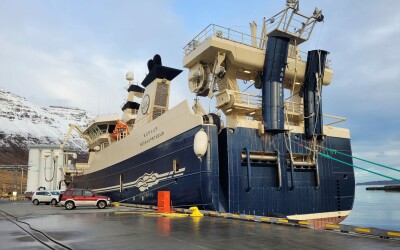
He oversees 12 menhaden fishing vessels and 24 smaller purse boats, each relying on interlocking systems- engines, generators, refrigeration, hydraulics, radar, autopilot, steering controls, and onboard electronics. When any one of them fails during the short fishing season, the clock starts ticking immediately.
“The main engines are critical,” he says. “But refrigeration is just as important. If that goes down, you have serious problems.”
Devillier grew up in Grand Prairie in central Louisiana, far from the coast, where his father farmed cattle and raised livestock. He started trade school as a sophomore studying air conditioning repair and was running service calls in Lafayette by graduation. A path through offshore and industrial electrical work eventually brought him to Empire — and to the docks.
His first trip aboard a menhaden vessel didn't go smoothly. "I got seasick," he laughs. "The crew had a good time with that." Today, he lives a half mile down the canal from the dock, and the fleet is woven into his daily life.
During the off-season, Devillier plans ahead — inspecting components, replacing worn parts, and making reliability upgrades. Once the season begins, the work turns reactive. His phone rings at all hours from captains and crews offshore. If a vessel can't make it back to the dock, he loads parts and heads out on a responder boat to handle the repair at sea. The reason is straightforward. "That's where the crew make their money," he says. "Not tied up at the dock."
Over the years, he has absorbed responsibilities once handled by outside specialists. As older contractors retired, he learned their trades by shadowing them. Now he moves fluidly from generator diagnostics to steering repairs to coordinating engine overhauls. "It's constant problem-solving," he says. "You switch disciplines all day long."
He's also mindful of what the crews face offshore — working heavy equipment in heat, humidity, and rough seas, often for days at a stretch. "What they do physically out there is hard," he says. "We rely on each other."
That mutual dependence extends to the broader company culture. Many of Westbank's employees are second- or third-generation fishermen, with fathers and sons having worked side by side for decades. "This isn't just a job people pass through," Devillier says. "It's families."
That dynamic reflects the economic reality of the region. In lower Plaquemines Parish, the menhaden industry is one of the most consistent employers around, offering industrial wages without requiring workers to leave home. The ripple effects reach local grocery stores, fuel suppliers, marine vendors, and small businesses throughout the parish.
"If this industry contracted – or worse still closed – there's nothing down here to replace it," Devillier says.
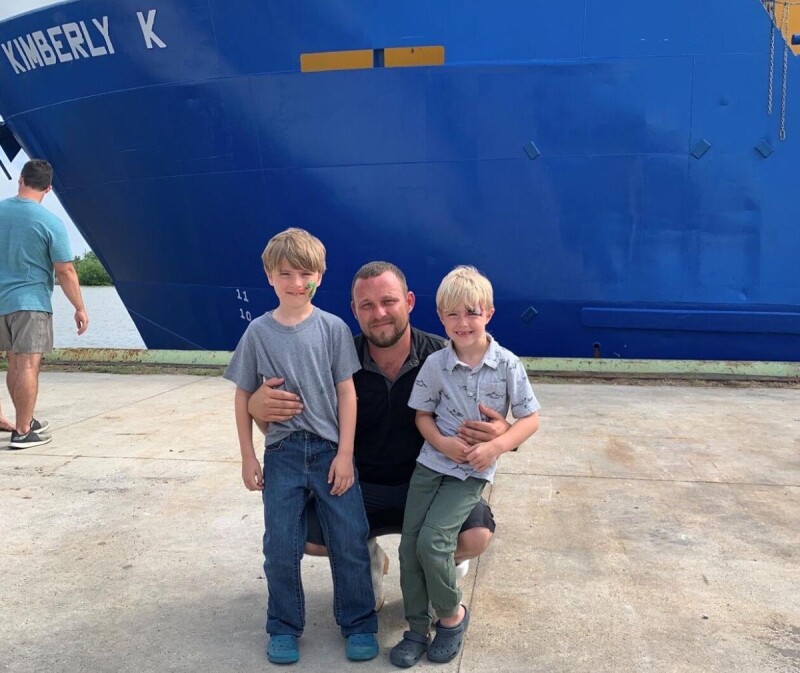
For him personally, the industry has delivered stability. He owns a home near the canal, where his children fish off the dock and watch the boats pass. He and his wife are raising four children, with one already in college. "This job means everything to my family," he says. "It's how we provide."
As long as the fleet is running, Devillier intends to keep it that way.