A lone Scotsman is pioneering the risky business of fishing under electric power only, and it’s paying off.
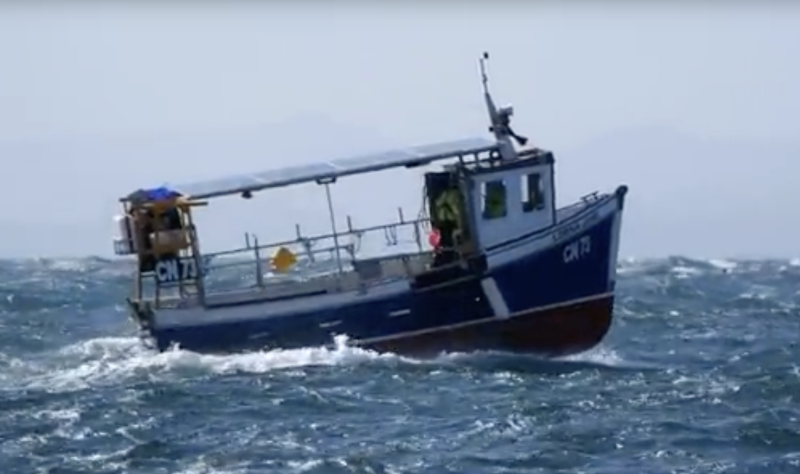
On the west coast of Scotland, Hans Unkles, a 62-year-old lobsterman, has converted a 21-foot decked lobster boat into his electric dream machine and launched it in May 2023. “It’s a risky business move,” says Unkles. “I’m on a high wire with no safety net—one major breakdown away from catastrophe.”
But he’s carrying on despite the toll the project has taken on his finances and health. “About halfway through the project, I found myself in the hospital with a heart condition. The hardest part is dealing with the government funding system, the bureaucracy; they have so many rules now.”
Six years ago, Unkles bought the Lorna Jane, a 1978 Cygnus 21 fiberglass boat with a Vetus M4.17 40hp diesel engine from a fisherman in Derry, Southern Ireland, and brought it home to Tayvallich, with the intention of converting it into a fully electric lobster boat. “The first step was the batteries. I had to raise the deck, and I put in five 48-volt, 9kWh, LiFePo marine batteries from ePropulsion, a UK-based company. Then I built a new honeycomb and fiberglass deck to reduce weight.”
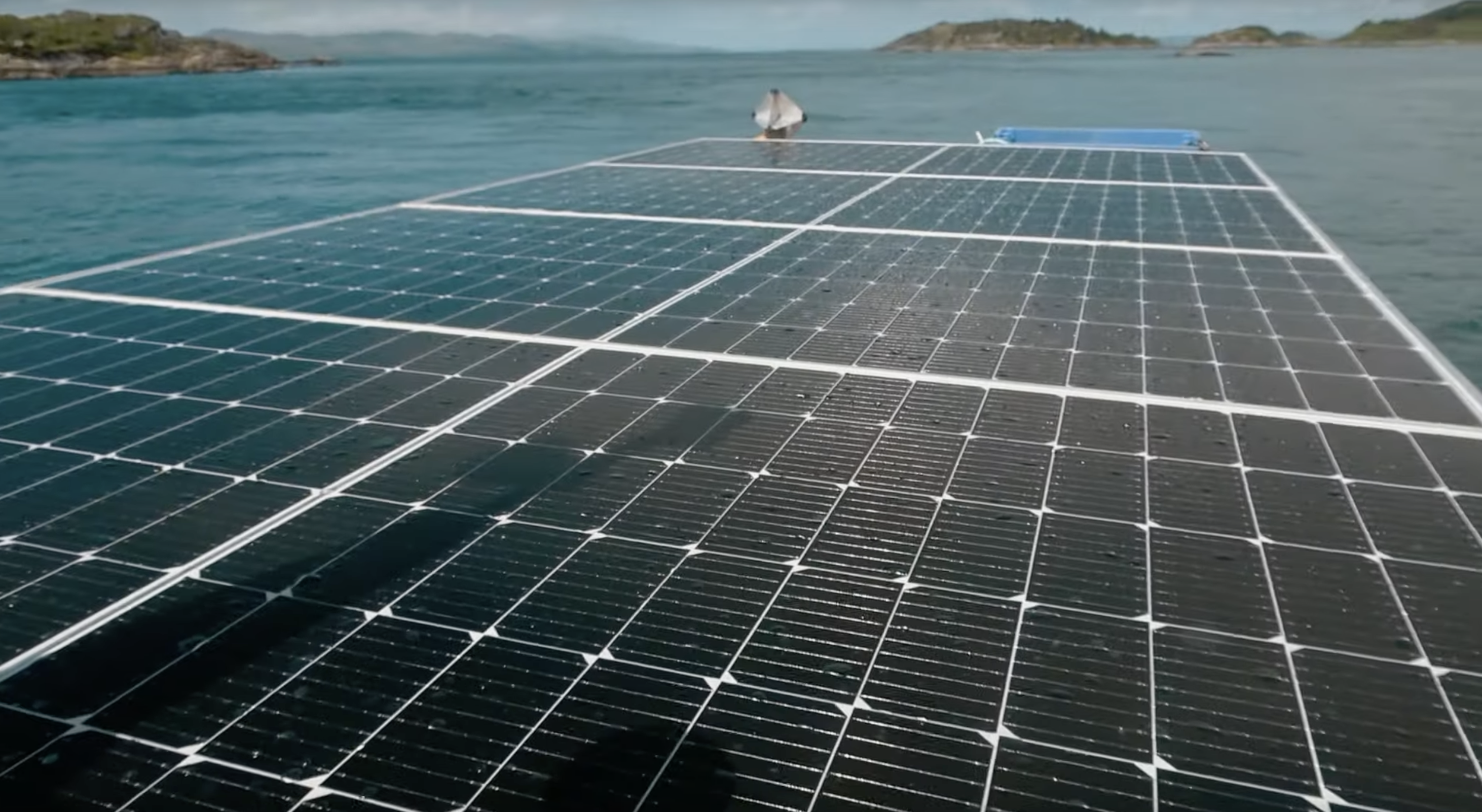
Unkles charges the batteries with four solar panels that create a roof over the deck of the boat, “I get 1860 watts from the panels. They’re wired to a Victron MPPT solar controller to charge the batteries. But they’re not what I rely on. They’re more supplemental. I rely mostly on charging with shore power.”
Unkles averages 24 miles a day during the summer. “I get about 40 miles a week from the solar panels, almost nothing in the winter.” In Carsaig, a harbor near Tayvallich, Unkles installed a 3.3kW single-phase charging port that enables him to recharge his batteries at the dock. “If I go 60 miles, it takes 15 hours to recharge, but for 24 miles it's 8 to 10 hours,” he says. Unkles notes that Scotland is running on almost 100 percent renewable energy. “We have wind, and some local hydropower.”
Unkles’s battery package weighs in at 450 kilos, which may seem like a lot for a 21-foot boat, but he notes that he also has 600 kilos of ballast. “The beam is 9 feet and it draws 3 feet,” he says. “It’s a solid, stiff little boat.”
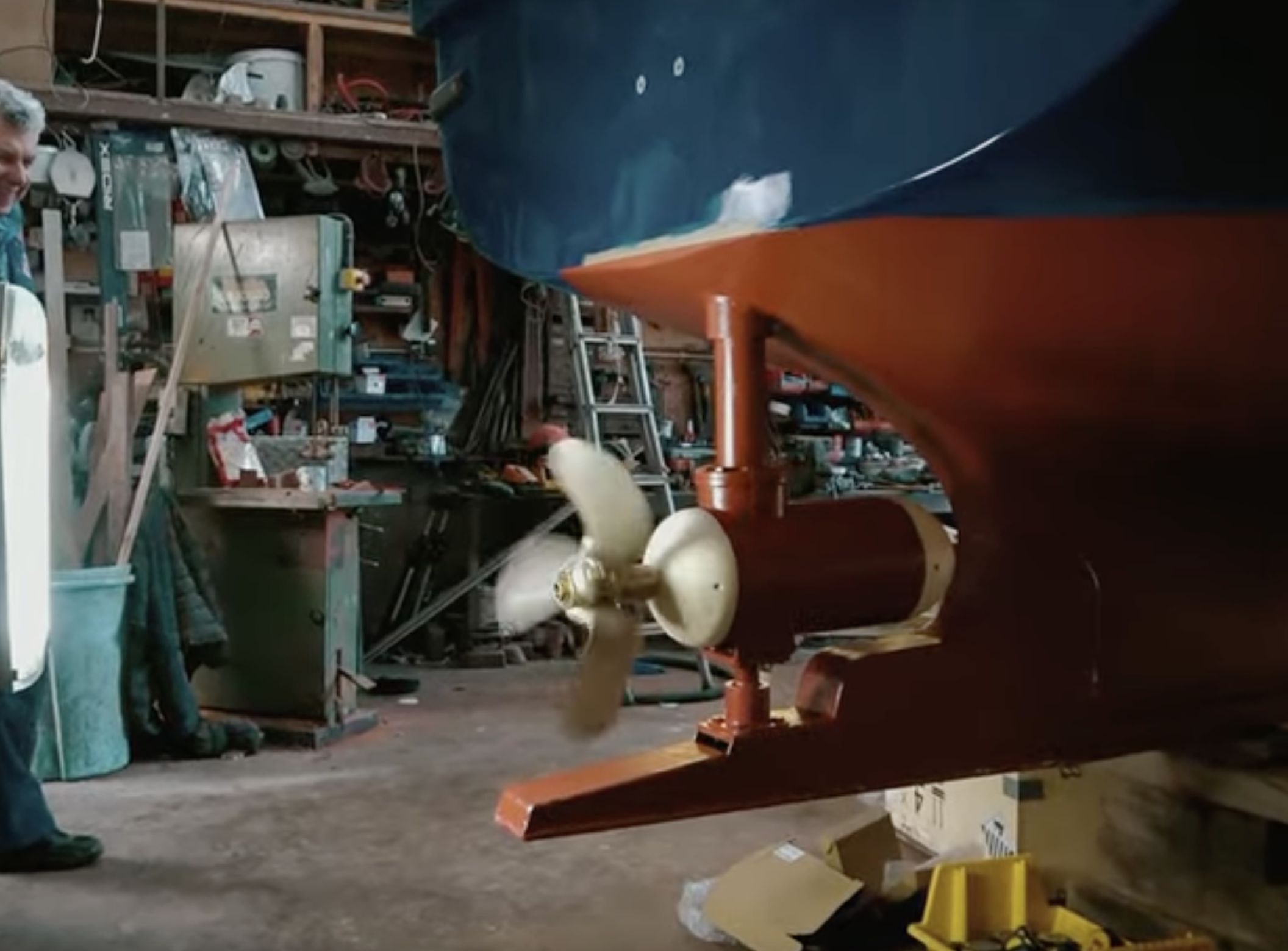
Unlike many electric prototypes, the Lorna Jean has no backup power. “The batteries power everything on the boat,” says Unkles. “Above 48 volts is considered lethal, but with 48 I can power a 20kW motor, which is plenty.” Unkles put a Fischer Panda Aziprop 20 kW 1200 rpm pod drive on the Lorna Jean. “It’s a German company, very reputable. I chose the pod drive to leave more room for the batteries,” he says. “It comes with a control box to invert the voltage from 48vdc to 48vac 3 phase. This allows the 6 x 70mm2 cabling to carry the amps needed to power the motor. With the self-adjusting propeller, I think what I have is easily comparable to a 40-hp diesel.”
The one downside of the pods, Unkles notes, is when you get rope or plastic bags in the propeller. “It shuts down automatically,” he says. “Then I have to go over the side to clear it, and that’s not for everyone.”
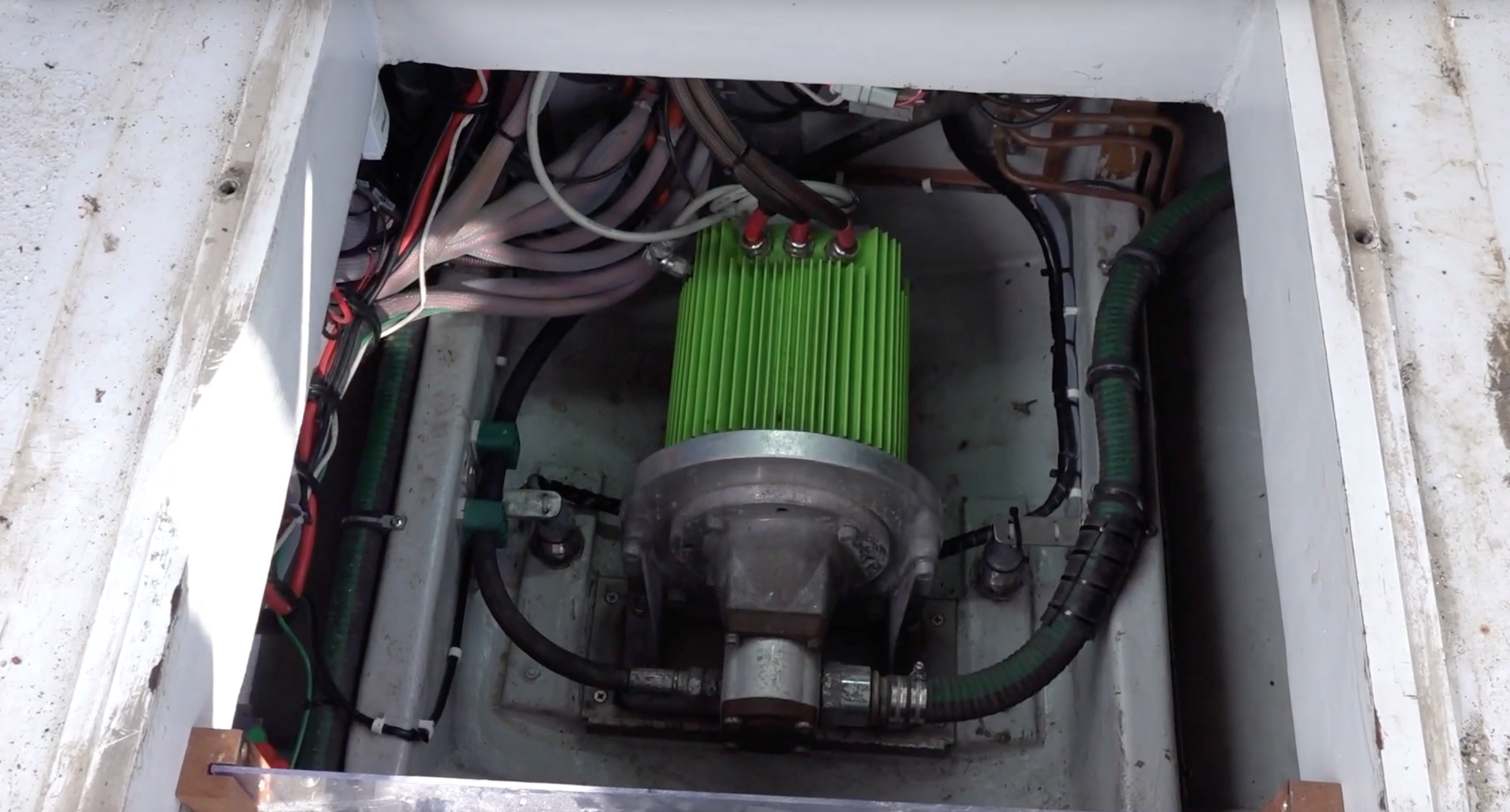
For hauling his gear, Unkles drives a hydraulic hauler with a 10kW electric motor reduced to 4kW. In addition to the hauler, Unkles powers an extensive suite of electronics. “I have a Lowrance HDS9 chartplotter with Navionics Platinum; a Lowrance elite9 side scan and 50/200 tx; Navitron Autopilot; Icom dsc vhf; Olex PC based plotter; AIS; Furuno bottom definition sounder; Navico speed log; and a Furuno GP40 GPS.
Unkles uses a Victron 3kw inverter to power a 1kw kettle, 300W toaster, and 300W infra-red heater. With a Victron 48/12 dropper 30amp, he powers his lights, including wheelhouse roof spreader lights, deck lights, nav lights, fishing lights, and battery room lights. “Basically, a lot for a 21-foot boat,” he says.
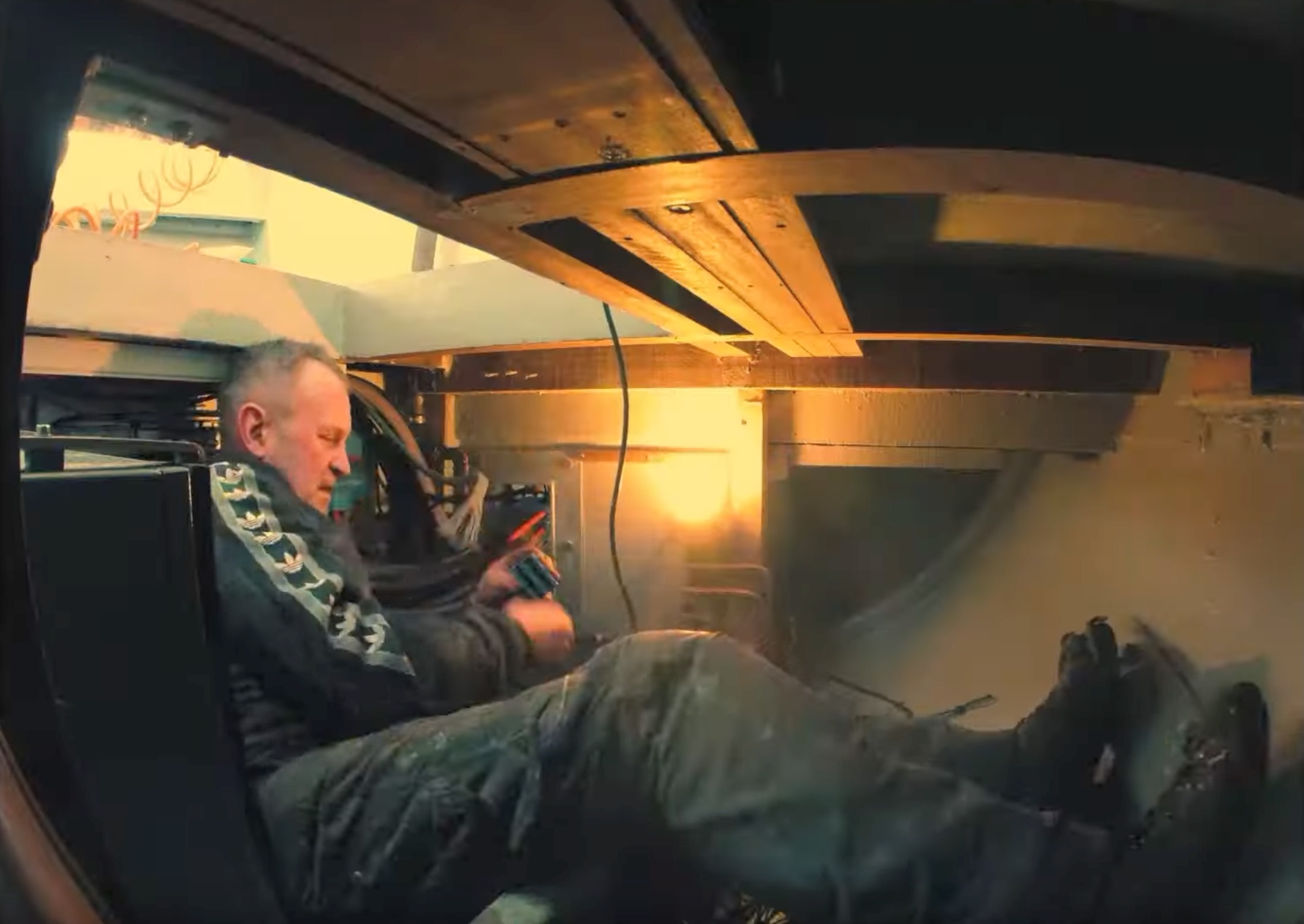
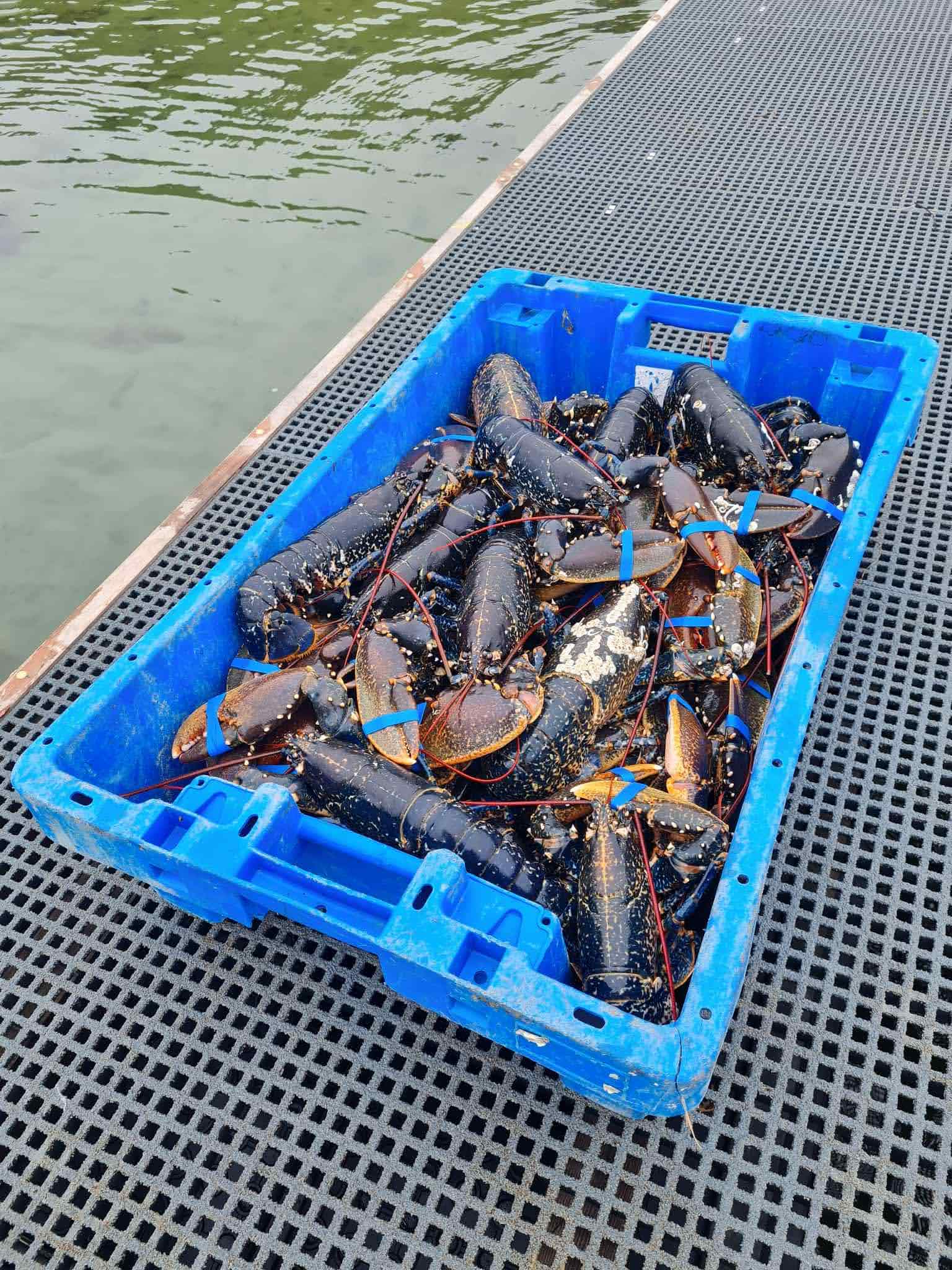
When it comes to fishing, Unkles dives for scallops with two crewmen, and working alone, he hauls 45 lobster pots, or creels as they are known in Scotland. “I run at 5 knots, which gives me about 7 and a half hours. On my best day, I made 800 pounds (over $1,000). Scalloping, we make up to £1300 a day.”
He does alright, but Unkles has 134,000 British pounds invested in a 21-foot by 9-foot boat. That includes his life’s savings and a 34,000 British pound grant from the government. All the numbers on his website, here. “The thing is, I can’t sell the boat for five years, or I have to pay that back.” So Unkles keeps going, and not just for the money.

"For forty years, the fishing industry has given me everything. I want to give something back. What I noticed is that we are not reducing emissions enough, and we’re going to end up in trouble. Globally, we’re off the pace.”
Unkles is doing everything he can to get the word out and promote electric-powered fishing, and while the government has provided some support, Unkles has veered away from getting entangled with universities and studies. “I could have had the entire project financed, but then you get bogged down with all their requirements,” he says. “I want to keep this as a fishermen’s project.”
To demonstrate the viability and setbacks of all-electric lobstering, Unkles maintains his it'll never work boat website, which tells the story of the Lornia Jean in detail and contains several videos as well as a project cost breakdown. “We did a documentary on the entire process that you can watch online for less than a coffee, says Unkles, who is also giving talks at sold-out venues all over Scotland. “I’m going this week to talk to a group of 90 people.”
While many people express interest in the project, so far none have adopted the technology that Unkles is pioneering. “The bulk of the responses are positive, but nobody’s joining us,” he says. “Besides the bureaucracy, I think two things are getting in the way of people adopting it. One is confidence. People aren’t familiar with the technology. It’s a brave move, and there is no support system if you have problems. The other thing is the initial outlay. To refit a boat is almost the cost of a new boat. But I like the idea of refitting existing boats. I think purpose built electric boats can lose some sea keeping qualities.”
While it took Unkles, a professional boat builder in his own right, several months to convert the Lorna Jean, he believes that once a turnkey package is developed, small boats could be converted in a couple of weeks, and though the initial cost may be high, the payoffs are immediate and ongoing. “I basically spent everything I had working to get away from everything I hate,” says Unkles. “I haven’t changed oil filters, done an oil change, or been up to my elbows in grease and diesel fuel in 2 and a half years. And the quiet, you can’t put a price on that.”
According to Unkles, his maintenance and repair costs for 2025 at up to 71 pounds ($95). “And my summertime daily operating expense for the boat is about 2 pounds, less than $3. Really, the only time I take up the hatches is to show people the batteries.”
While Unkles is all-in on his project, as he notes, few others are jumping onto the electric bandwagon. But he believes that in time, the idea will start to sell itself. “I spent a lot on the Lorna Jean because I want her to be the best example of how this can work,” he says. “The only thing I’d like to add is a bunk so I can stay out longer.”
Spec Box:
Name of Boat: Lorna Jane
Home Port: Tayvallich, Scotland
Owner: Hans Unkles
Builder: Cygnus/Hans Unkles
Hull Material: Fiberglass
Year built: 1978/2023
Fishery: Lobster/scallop diving
Length: 21 feet
Beam: 9 feet
Draft: 3 feet
Motor: Fischer Panda Aziprop 20kw 1200rpm pod drive
Battery Bank: 5-9kWh, 48V batteries from ePropulsion
Solar panels: 1860 watts, JA bi-facial panels
Top Speed: 7.5 knots
Cruise: 5 knots
Lobster Pot Carrying Capacity: 16 80-pound pots
Electronics: Lowrance HDS9 chartplotter with Navionics Platinum; a Lowrance Elite9 side scan and 50/200 tx; Navitron Autopilot; Icom dsc vhf; Olex PC based plotter; AIS; Furuno bottom definition sounder; Navico speed log; and a Furuno GP40 GPS.
Deck Gear: Spencer Carter CL2 11-inch hydraulic hauler